
Handheld Fish Finder Portable Fishing Kayak Fishfinder Fish Depth Finder Fishing Gear with Sonar Transducer and LCD Display
4.2Editor score
Portable and lightweight design
Battery powered operation
Suitable for kayak fishing
Finding a reliable cheap depth finder does not require breaking the bank. Modern sonar technology has become more affordable, allowing anglers to access critical water data without expensive investments. Whether you fish from a kayak or a small boat, the right tool helps you locate fish and structure efficiently.
We compared ten top-rated models based on performance, durability, ease of use, and value. Our analysis focuses on essential features like depth range, display clarity, and transducer quality. Each product offers unique benefits for different fishing styles and budgets, ensuring you find a fit for your specific needs.
Each pick highlights key strengths and limitations to guide your decision-making process. Remember that prices and availability can change frequently on retailer sites. Always check current listings before purchasing to ensure you get the best deal for your chosen depth finder model today.
4.2Editor score
4.6Editor score

4.5Editor score
As an Amazon Associate we earn from qualifying purchases.
The following table provides a side-by-side overview of all ten models. It highlights core specifications and unique features to help you compare performance and capabilities at a glance.


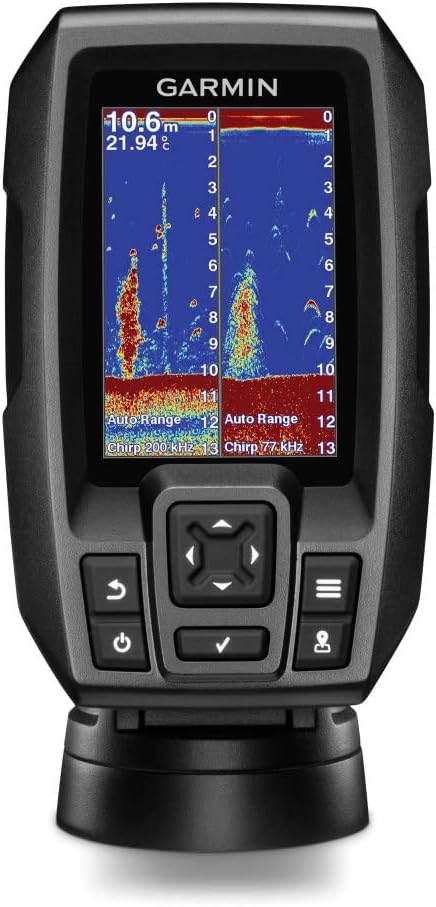
The Garmin Striker 4 stands out as a top choice for anglers seeking a reliable and affordable depth finder. With a 4.5 out of 5 star rating, it balances performance and price effectively. Its Clear Vu scanning sonar provides near photographic images of underwater structure and fish, offering clarity that exceeds many competitors in this range.
We may earn a commission when you buy through this link, at no additional cost to you.
Key strengths include its Chirp Sonar technology, which delivers crisper fish arches and better target separation compared to traditional sonar. The dedicated buttons make operation straightforward, even while wearing gloves on a moving boat. Additionally, the built-in flasher format is ideal for ice fishing or vertical jigging, adding versatility to its standard fishfinding capabilities.
While the 3.5 inch display is compact, it remains readable in sunlight due to the IPX7 water rating protecting against splashes. Some users may find the screen size limiting for detailed map viewing, but for pure depth and fish detection, it performs exceptionally well. The trade-off is acceptable given the price point and feature set.
This model is best for boat owners or serious anglers who need accurate data without high costs. It simplifies navigation with waypoint mapping and offers precise depth readings up to 1600 feet in freshwater. If you want a proven device with easy installation and intuitive controls, the Garmin Striker 4 is a highly recommended investment.
Clear Vu scanning sonar provides detailed images that help identify structure and fish size quickly.
Switch between standard sonar and classic flasher views to suit different fishing techniques.
We may earn a commission when you buy through this link, at no additional cost to you.
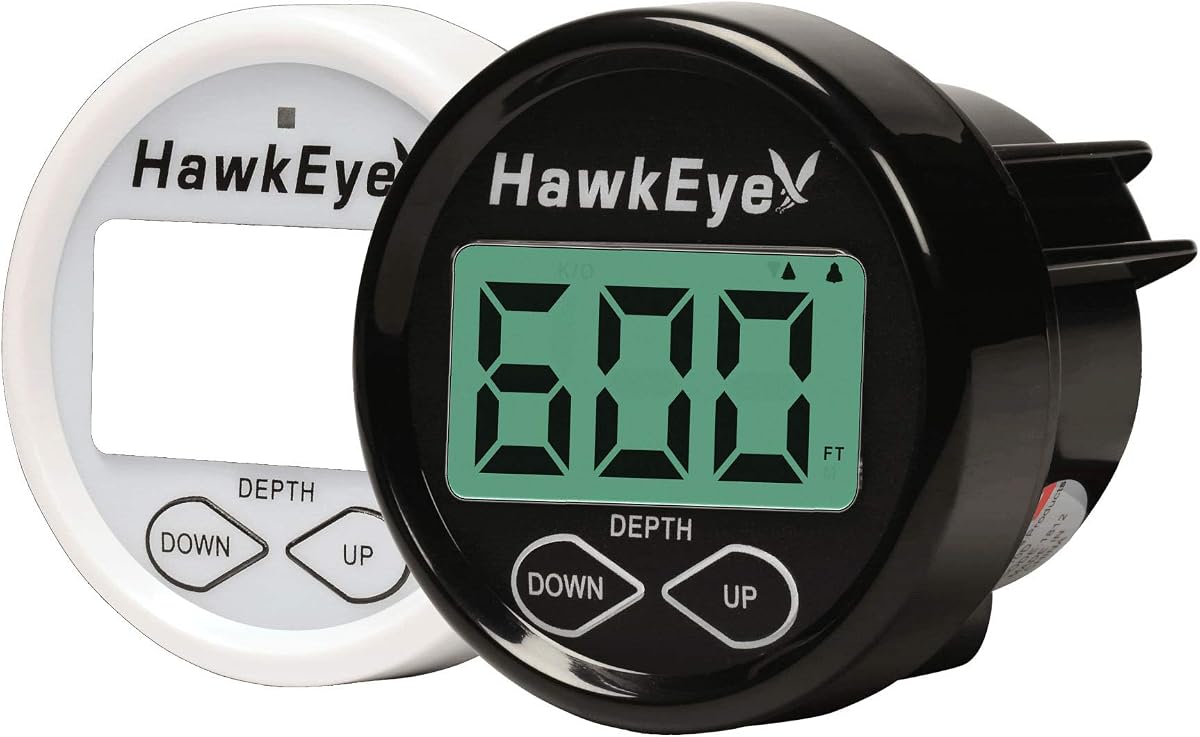
The DepthTrax 2B offers a specialized solution for boat owners needing a permanent in-dash depth display. It delivers uninterrupted readings up to 600 feet, ensuring you stay informed about water depth while navigating at speeds up to 60 mph. This makes it particularly suitable for faster vessels where quick data is crucial.
We may earn a commission when you buy through this link, at no additional cost to you.
Its standout feature is the 3-stage Advanced Warning System, which combines audible alarms, bright red LED lights, and LCD indicators. This multi-sensory approach ensures you never miss critical depth changes. The polarized LCD icon display reduces glare, allowing clear viewing even without sunglasses in bright conditions.
Installation requires careful consideration as the glue-in option is limited to non-cored fiberglass or thin aluminum hulls. Transom mount options provide flexibility but may require more tools. While the setup can be complex, the resulting precision and speed tolerance make it a strong contender for dedicated boat users.
Buyers prioritizing a fixed installation with high-speed stability will appreciate this model. It filters false readings through algorithmic programming, providing trustable data. If you need a reliable depth gauge integrated into your boat dashboard, the DepthTrax 2B meets professional standards.
Engineered to maintain accurate readings while traveling at boat speeds up to 60 mph.
Audible, visual, and LED alerts ensure warnings are noticed even in noisy environments.
We may earn a commission when you buy through this link, at no additional cost to you.
The Hawkeye DT1H is a straightforward handheld device designed for anglers who value portability. It displays water depth up to 300 feet along with water temperature, providing essential data for adapting fishing tactics. Its simple interface ensures anyone can start using it immediately without complex setup steps.
We may earn a commission when you buy through this link, at no additional cost to you.
Strengths lie in its ease of use and compact form factor. You can toss the transducer into the water and see results instantly on the LCD screen. The temperature reading helps identify thermoclines where fish might be holding, adding strategic value beyond basic depth measurement. It is ideal for shore fishing or small boats where space is limited.
While the cable length may restrict reach in larger bodies of water, the device remains robust and waterproof for everyday use. The display is clear enough for general purposes but lacks advanced features like sonar imaging. These limitations are acceptable considering its affordability and targeted design for casual users.
This unit is perfect for beginners or those needing a backup depth tool. It offers essential functionality without unnecessary complications. If you want a basic, reliable depth finder that fits in your pocket and provides temperature data, the Hawkeye DT1H delivers solid value.
Built-in thermometer helps you track water temp changes to locate active fish zones.
Compact size allows easy storage in tackle boxes or pockets for spontaneous fishing trips.
We may earn a commission when you buy through this link, at no additional cost to you.
The Venterior Portable Fish Finder offers incredible value for budget-conscious anglers. It detects depth from 3 to 328 feet, making it suitable for most shallow to medium depth fishing scenarios. Powered by 4 AAA batteries, it lasts around 4 to 5 hours, sufficient for short fishing trips without needing complex wiring.
We may earn a commission when you buy through this link, at no additional cost to you.
Its portability is unmatched; the included neck strap allows hands-free use while handling a rod or navigating a kayak. The 200 kHz sonar provides reliable detection of fish locations and bottom structures like weeds and rocks. You can adjust sensitivity to avoid clutter in murky waters or enhance range in clear areas.
Battery life is a limitation for long days on the water, but carrying spares mitigates this easily. The interface is straightforward, though it lacks GPS or advanced mapping. These trade-offs are minor given the price, making it an ideal entry-level device for shore or kayak fishermen.
Choose this model if you need a basic tool to confirm depth and fish presence without breaking the bank. It is lightweight and durable for casual use. If you want an accessible option for quick checks while fishing from a kayak or dock, this Venterior finder meets the need perfectly.
Five selectable sensitivity levels help adapt to different water conditions for clearer readings.
Optional backlight ensures visibility during early morning or late evening fishing sessions.
We may earn a commission when you buy through this link, at no additional cost to you.
The LUCKY FFC1108 is specifically designed for castable fishing, making it a great companion for kayakers and shore anglers. You can tie the transducer to your line and cast it into promising spots, getting readings without attaching a transducer to the hull. It displays fish depth, water depth, and bottom structure clearly on its LCD screen.
We may earn a commission when you buy through this link, at no additional cost to you.
Its fish and school alarms alert you to activity instantly, allowing you to focus on reeling in rather than watching the screen. The ability to switch between feet and meters adds flexibility for international users. Additionally, the backlight ensures readability in low light or bright sun, enhancing usability across conditions.
While it depends on batteries, the 4-5 hour run time supports most casual trips. Some users note that signal range in turbulent water can be tricky to manage. However, its portability and ease of use outweigh these issues for those who prefer freedom from fixed setups.
This model is best for those seeking a flexible tool to explore different water spots. It turns guesswork into actionable data. If you enjoy kayak fishing or need a portable sonar for shore casting, the LUCKY FFC1108 provides reliable performance at a reasonable cost.
Attach to fishing line and cast directly to target areas without boat mounting.
Backlit display shows icons and depth numbers clearly in various lighting conditions.
We may earn a commission when you buy through this link, at no additional cost to you.
The Humminbird PiranhaMAX 4 delivers strong performance with its Dual Beam Sonar technology. You can choose between narrow beams for detail or wide beams for coverage, helping you identify fish and structure efficiently. The included transom-mount transducer ensures stable data, while the tilt and swivel mount allows easy viewing from different angles.
We may earn a commission when you buy through this link, at no additional cost to you.
A key strength is the intuitive interface that prioritizes fishing over complex settings. The icons clearly show fish locations relative to depth, making interpretation straightforward. Although the display lacks advanced map features, it focuses on core sonar functions that work reliably in both fresh and salt water environments.
The 1-year limited warranty is shorter than some competitors, but Humminbird's reputation for durability often supports longer-term use. Installation is simple with standard wiring, suitable for boat owners who want a dependable unit. The trade-off is a lack of GPS, but for pure depth and fishfinding, it excels.
This unit suits anglers who want a proven brand and versatile sonar capabilities. It balances ease of use with reliable readings. If you seek a solid depth finder with Dual Beam technology and straightforward setup for regular boat fishing, the PiranhaMAX 4 is a sound choice.
Select narrow for detailed fish arches or wide for broad bottom coverage.
Tilt and swivel mount lets you angle the screen for comfortable viewing positions.
We may earn a commission when you buy through this link, at no additional cost to you.
The Lowrance Eagle Fish Finder shines with its 4-inch IPS portrait screen, which stays clear in bright sunlight from wide angles. This ensures you can read depth and fish data even on sunny days without glare. Auto-Tuning Sonar optimizes settings automatically, allowing you to focus on fishing rather than manual adjustments.
We may earn a commission when you buy through this link, at no additional cost to you.
Its 200 kHz Bullet Skimmer delivers a broad beam coverage, ideal for kayaks and small boats. The display uses simple fish icons with depth numbers, making identification quick and easy. The twist-lock connector simplifies installation, removing the need for tools and enabling quick setup on various vessel types.
While it does not include detailed mapping options, it focuses on delivering reliable sonar data efficiently. Some users might prefer GPS features, but this model keeps cost and complexity low. These limitations are acceptable for those prioritizing screen clarity and ease of use over navigation.
This device is perfect for anglers who want a hassle-free experience with high visibility. It handles basic sonar tasks with precision. If you need a straightforward fish finder with a clear screen and auto-adjusting sonar for small boat fishing, the Lowrance Eagle is an excellent pick.
System automatically adjusts sonar settings for best performance without manual tweaking.
IPS screen technology ensures legibility even when viewing from off-center positions.
We may earn a commission when you buy through this link, at no additional cost to you.
This portable ice fish finder stands out with its contour readout, providing a visual representation of the bottom structure. It updates depth data four times per second, offering smooth tracking of changes. The device also shows fish size and water temperature, giving a comprehensive view of the underwater environment for better decision making.
We may earn a commission when you buy through this link, at no additional cost to you.
It features a water-resistant construction capable of withstanding splashing and even up to 100 feet underwater for diving. The two-color lure fish lamp adds a unique feature to attract light-sensitive fish, potentially increasing catch rates. Its compact size makes it easy to carry on any fishing trip.
The depth range is limited to 300 feet, which may not suit deep lake anglers. However, for general use in rivers, lakes, or ice fishing, it performs well. The lamp feature is not universally effective but adds utility for those targeting specific species. These constraints are minor for casual users.
Ideal for ice anglers or those who need a versatile, rugged device. It combines temperature monitoring with depth detection in a simple package. If you want a portable tool with contour visuals and added light features for diverse fishing methods, this unit offers good practical value.
See bottom contours and structure outlines for better habitat identification while fishing.
Toggle a light that may attract fish species to improve your catch potential.
We may earn a commission when you buy through this link, at no additional cost to you.
The LUCKY MT-202 elevates affordability with wireless technology, offering an 853-foot operation distance. This removes wires and limits, allowing you to cast the sensor like a bobber and receive data on your handheld unit. It reveals exact fish depth and location relative to structure, turning guesswork into guaranteed success.
We may earn a commission when you buy through this link, at no additional cost to you.
The 3.5-inch horizontal LCD displays clear fish icons and depth numbers, scrolling from right to left to show continuous history. This helps track fish movement over time. The rechargeable battery and lightweight sensor make it convenient for kayak or shore use without complex wiring setups.
While it costs more than basic models, the wireless freedom and precise data justify the premium. Charging is required, but battery life supports long sessions. Some users may find the range less than wired alternatives, but the ease of castable use makes up for it in most recreational fishing scenarios.
Buy this if you value convenience and modern tech features. It simplifies finding fish in deep or structured water. For anglers seeking a portable, rechargeable wireless depth finder that delivers precise data, the LUCKY MT-202 is a top-tier choice.
Cast sensor up to 853 feet away without wires for greater fishing flexibility.
Continuous screen scroll tracks fish movement and structure changes over time.
We may earn a commission when you buy through this link, at no additional cost to you.
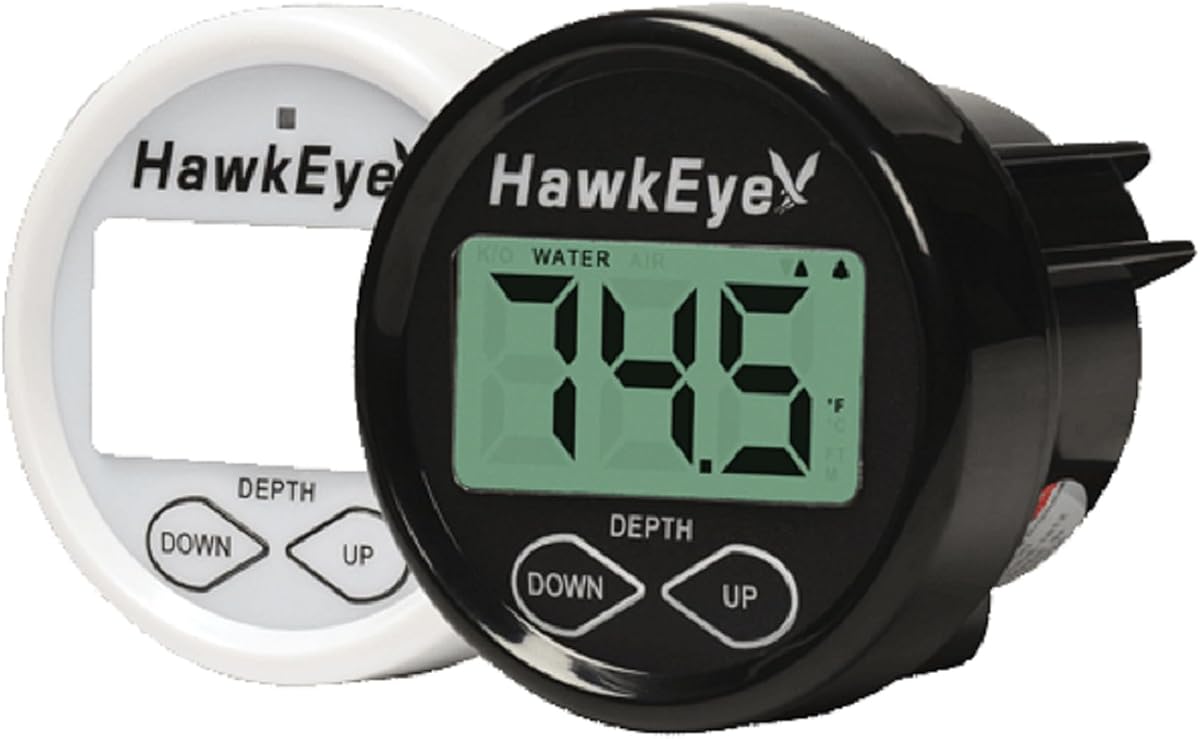
The HawkEye DT2BX-TM combines depth and temperature in a single in-dash display. It shows air and water temperature in Fahrenheit or Celsius alongside uninterrupted depth readings. This dual function helps you monitor environmental conditions without extra tools, making it useful for tracking fish activity patterns across seasons.
We may earn a commission when you buy through this link, at no additional cost to you.
Its display uses a soft glow backlit LCD that remains clear even without sunglasses, thanks to polarized technology. The 30-foot cable for the transom-mount transducer ensures flexibility in placement. The alarm muting feature allows one-touch silencing of audible warnings, reducing distractions when needed.
Installation requires a flush mount hole in the dashboard, which may be tricky for some vessels. However, once installed, the device delivers reliable data up to 600 feet. While it lacks advanced sonar features, its focus on temperature and depth provides valuable context for planning fishing trips.
This unit suits boat owners needing temperature insights alongside depth data. It integrates well into existing dashboards. If you want a straightforward device to track both water and air temperature with depth accuracy, the HawkEye DT2BX-TM delivers solid utility.
Display air and water temps together to monitor environmental shifts affecting fish behavior.
Soft glow backlight ensures easy reading in low light or glare conditions.
We may earn a commission when you buy through this link, at no additional cost to you.
Selecting the right cheap depth finder requires evaluating key factors that match your fishing habits and budget. This guide breaks down what to look for.
Ensure the device covers the depth of your typical fishing spots. Most affordable models offer up to 300 feet, which suits shallow to medium waters. Check the specs to confirm freshwater vs saltwater limits.
Match the range to your local conditions.
Look for screens with backlight and glare reduction. IPS or polarized displays help in bright sunlight. Clear text and icons reduce eye strain during long sessions.
Prioritize visibility over size if budget is tight.
Decide between handheld, transom, or in-dash options. Handhelds are portable, while fixed mounts offer stability. Consider your boat or vessel type before choosing.
Choose a mount that fits your vessel.
Basic sonar works for most, but Chirp or Dual Beam adds detail. Higher frequencies show better resolution but may penetrate less. Balance tech with your need for detail.
Opt for standard sonar for basic use.
Check if it uses batteries or rechargeable packs. AAA batteries are easy to replace, but rechargeable systems reduce waste. Consider battery life for your trip length.
Select power that suits your trip.
Water resistance is crucial for marine electronics. Look for IPX7 ratings to withstand splashes. Rugged builds survive drops and harsh weather.
Ensure water resistance for reliability.
Temperature readings and alarms add value. Some units show fish size or bottom contours. Decide which extras help you catch more fish.
Focus on features that aid your strategy.
A one or two-year warranty protects your investment. Good brand support helps resolve issues quickly. Check user reviews for reliability.
Verify warranty terms before buying.
Start by calibrating your device in the water according to instructions. Ensure the transducer is submerged properly for accurate readings. This step eliminates initial errors in depth data.
Keep the transducer free of algae and debris. Rinse it with fresh water after each use in saltwater to prevent corrosion. A clean sensor ensures consistent performance.
Store the unit in a dry place when not in use. Avoid exposing it to extreme heat or cold to prolong battery life. Proper care extends the device's lifespan.
Yes, many affordable models are designed for saltwater use. Check the product specs for saltwater depth limits. Most handle both fresh and salt environments well.
Transom mounts attach to the back of the boat using provided hardware. In-dash units require drilling a hole in the dashboard. Follow the manual for secure installation.
Wireless models provide reliable data for recreational fishing. They may have slightly less range than wired ones. For most anglers, accuracy is sufficient.
Most handhelds use standard AAA batteries for convenience. Some rechargeable units use built-in packs. Check the manual for specific battery requirements.
Yes, many models maintain accuracy at low to moderate speeds. Ensure the transducer is stable to avoid erratic readings. Some in-dash units handle higher speeds better.
Cable lengths vary, typically around 10 to 30 feet. Ensure it reaches from your mounting point to the display. Longer cables add flexibility for larger boats.
They provide approximate size based on sonar returns. Actual size depends on the fish and water conditions. It is a helpful estimate for planning catches.
Most reputable brands offer one to two-year warranties. Review the product page for warranty details. Keeping receipts ensures you can claim support if needed.
We reviewed ten models ranging from basic handhelds to advanced wireless units. The Garmin Striker 4 and LUCKY MT-202 stand out for performance and value. Each option serves different needs based on your fishing style.
Prioritize depth range and display clarity for consistent results. If you value portability, handhelds are ideal. For boat owners, fixed mounts offer stability and integration with your vessel.
Prices fluctuate, so verify current deals before purchasing. Investing in a reliable device improves your fishing experience significantly. Select the model that fits your budget and requirements for best results.