
Entina Tina2C 3D Printer
4.4Editor score
Fully assembled starter kit
App and WiFi control
Compact mini footprint
This guide compares the top 3D printers for kids in 2026, focusing on safety, ease of use, and creative features to help parents choose the right model.
Finding the right 3D printer for kids requires balancing safety, simplicity, and creative potential. Modern models offer enclosed designs and user-friendly software to ensure young users can explore STEM concepts without frustration or risk.
We evaluated leading options based on build quality, software accessibility, and safety features. Each product was analyzed for its ability to inspire creativity while maintaining reliable performance for beginners in home or classroom settings.
This list showcases ten distinct models tailored for young makers. Each entry highlights key strengths and limitations. Note that availability and pricing may change frequently, so verify current details before purchasing any item.
4.4Editor score

4.5Editor score

5.0Editor score
The following table provides a side-by-side comparison of all ten selected printers. It highlights essential specifications to help you quickly identify the model that best fits your family’s needs and space constraints.


The AOSEED AI 3D Printer for Kids stands out as a top contender for families seeking an engaging STEM tool. With a rating of 4.5 stars, it is highly praised for its blend of safety and creative freedom. This model is designed to turn imagination into reality with minimal technical friction.
We may earn a commission when you buy through this link, at no additional cost to you.
Its standout feature is the AI-powered creativity suite, which includes tools like AI Doodle and AI MiniMe. These allow children to generate 3D models from voice commands, text, or photos without needing CAD skills. The enclosed design ensures safety by keeping hot components away from curious hands. Additionally, the built-in camera allows parents to monitor progress remotely via a smartphone app.
While the printer offers impressive speed up to 400mm/s and high precision, it is limited to single-color printing. Users must assemble multi-color designs manually. Despite this limitation, the ease of use and educational value make it a compelling choice for young makers ready to explore design thinking.
This printer is ideal for parents who want a safe, all-in-one solution that grows with their child. It supports iOS, Android, and Windows compatibility, making it versatile for different home setups. The inclusion of 8 rolls of PLA and tools further enhances its value as a starter kit.
Children can create custom models using natural language or sketches, removing the barrier of complex software.
The fully enclosed chassis and remote camera monitoring provide peace of mind for parents during operation.
We may earn a commission when you buy through this link, at no additional cost to you.
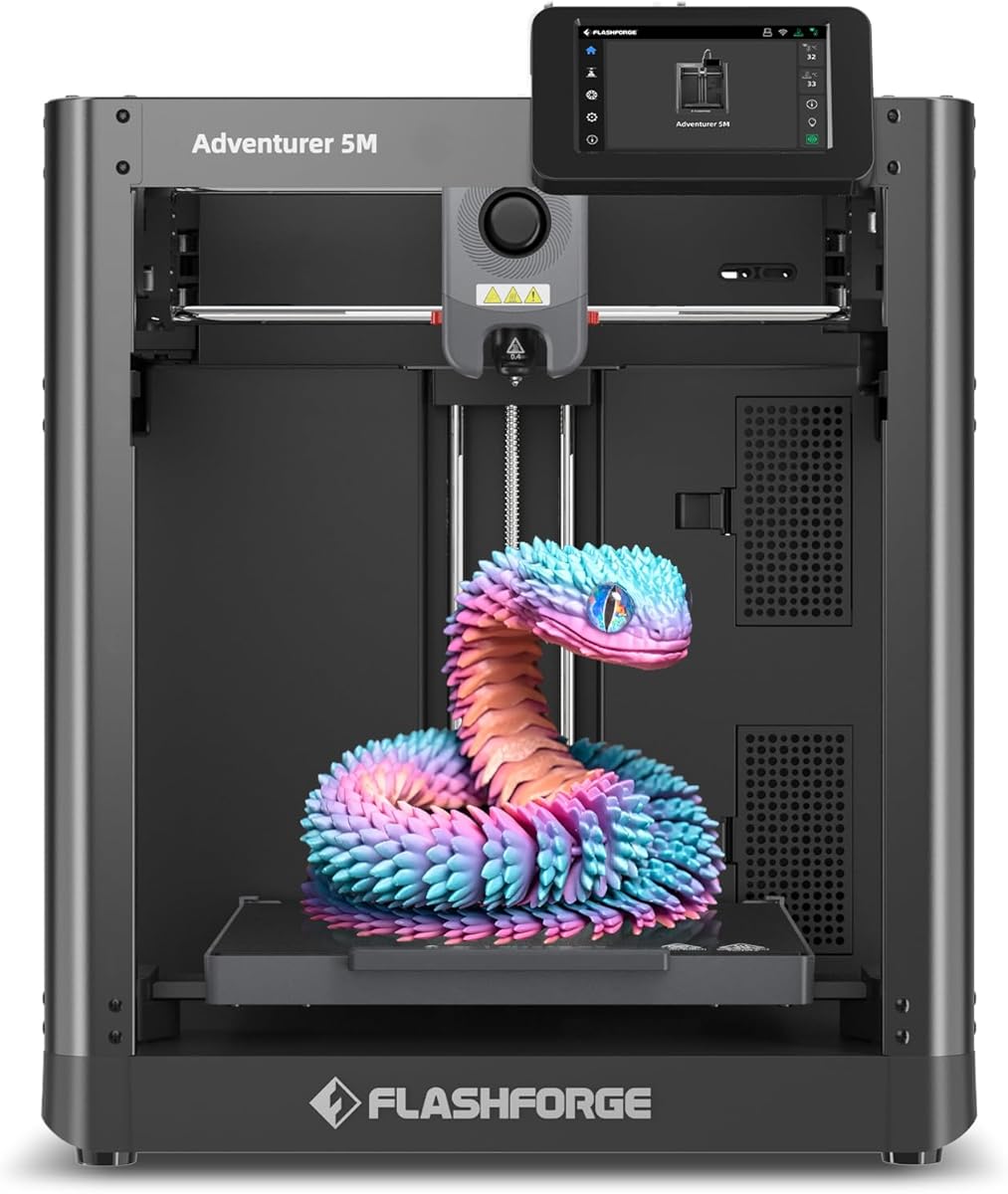
The FLASHFORGE Adventurer 5M is engineered for speed and durability, featuring a CoreXY structure and max travel speeds of 600mm/s. While its rating is lower than some kid-specific models, it offers professional-grade performance. This makes it a strong option for families with older kids interested in rapid prototyping.
We may earn a commission when you buy through this link, at no additional cost to you.
Key features include fully auto leveling and a 280°C direct extruder, which supports a wide range of filaments. The 3-second nozzle change system minimizes downtime, allowing for efficient project switching. The app provides real-time monitoring, ensuring users can track progress remotely without physical intervention.
However, the higher speed and technical specifications might be overwhelming for very young beginners. Users may need to learn more about calibration and settings to maximize potential. The lower rating suggests some users face setup challenges or expect different usability levels compared to dedicated educational printers.
This model suits families looking for a long-term investment in a powerful machine. It balances speed and precision effectively. If your child is ready for more advanced settings and faster output, the Adventurer 5M offers significant performance gains over standard hobbyist printers.
High acceleration and travel speeds allow for much faster project completion compared to traditional printers.
The all-metal CoreXY structure ensures stability and durability during high-speed printing operations.
We may earn a commission when you buy through this link, at no additional cost to you.
The Entina Tina2C is designed specifically for first-time users and children who need a simple entry into 3D printing. Rated at 4.4 stars, it emphasizes ease of setup, allowing users to start printing in as little as 8 minutes. This reduces frustration and keeps excitement levels high for young makers.
We may earn a commission when you buy through this link, at no additional cost to you.
It offers flexible printing options with both WiFi and offline TF card modes. The Poloprint Cloud app provides AI-powered search and a library of over 3,000 models. This accessibility ensures that kids can find projects that match their interests without needing to hunt for files online.
The compact size is ideal for small desks or classrooms, though it limits the size of printable objects. The auto-leveling feature simplifies the calibration process, which is often a pain point for beginners. Maintenance is also straightforward with a flexible magnetic build plate and quick-swap printhead.
This printer is perfect for families on a budget or those with limited space. It serves as an excellent educational tool for STEM learning without requiring technical expertise. If your goal is to introduce a child to 3D printing without a large financial commitment, the Tina2C is a smart choice.
Fully assembled and guided setup via app means kids can start creating almost immediately after unboxing.
Integrated STEM modules and model libraries provide structured learning opportunities for young students.
We may earn a commission when you buy through this link, at no additional cost to you.
The Magic Jimmy 3D Printer focuses heavily on transforming screen time into creation time through advanced AI tools. With a 4.6 rating, it is praised for its user-friendly approach to design. It features specific tools like AI Craft and AI MiniMe to simplify model generation for children.
We may earn a commission when you buy through this link, at no additional cost to you.
Safety is a priority with its fully enclosed chamber and cool-touch exterior. This design ensures that moving parts and hot nozzles are inaccessible. The built-in camera allows for time-lapse recording, letting kids watch their creations take shape layer by layer, which is both educational and entertaining.
The printer supports one-tap printing and has a growing library of 8,000+ models. This makes it easy to find projects without external searches. However, it primarily supports non-toxic PLA, limiting material experimentation. The enclosed nature also requires proper ventilation for optimal performance.
This model is best for curious minds who want to explore design without technical barriers. It encourages spatial reasoning and creative problem-solving. For parents looking for a safe and interactive gift that fosters innovation, the Magic Jimmy offers a compelling package of features and ease of use.
Tools like AI MiniMe turn photos into cartoon figures, making personalization fun and accessible.
Fully enclosed chamber keeps hot parts away from children, ensuring a secure printing environment.
We may earn a commission when you buy through this link, at no additional cost to you.
The AOSEED X-MAKER AI+ Printer is a top-tier option designed for serious young makers aged 9 to 16. Its perfect 5.0 rating reflects its high quality and reliability. This model includes access to premium creator courses, turning the printing experience into a structured learning journey.
We may earn a commission when you buy through this link, at no additional cost to you.
It operates under 50 dB, making it ultra-quiet for home or classroom use. The precision down to 0.05mm allows for detailed miniatures and complex projects. Eight TÜV-tested PLA rolls are included, ensuring users can start creating immediately without needing to buy materials.
The AI tools are comprehensive, allowing voice and image prompts to generate 3D models. It supports Wi-Fi, SD card, and USB for flexible printing options. While it is a higher investment, the inclusion of courses and premium materials offers long-term educational value that justifies the cost.
This printer is ideal for families committed to STEM education and detailed craftsmanship. It balances performance with user-friendliness effectively. If you want a machine that can grow with your child’s skills and provide structured learning, this premium model is an excellent choice.
Access to creator courses provides structured learning paths to help kids master 3D design concepts.
Ultra-quiet printing minimizes noise disruption, making it suitable for shared learning environments.
We may earn a commission when you buy through this link, at no additional cost to you.
This Mini 3D Printer Starter Kit is engineered to deliver professional-grade precision at 0.01mm, which is impressive for its category. Rated at 4.4 stars, it is a fully assembled solution ready for immediate use. It includes essential accessories like a roll of PLA and an SD card.
We may earn a commission when you buy through this link, at no additional cost to you.
Features like automatic nozzle cleaning and one-button auto-leveling reduce the friction of daily use. The high speed of 250mm/s ensures projects are completed quickly. Power-loss recovery is included to prevent material waste during interruptions, which is critical for young users learning the ropes.
While the build volume is compact, it is suitable for small toys and prototypes. The included pre-sliced file for a 1kg spool holder is a thoughtful addition for expanding utility. However, the design is more utilitarian compared to colorful kid-specific branding.
This kit is great for families wanting high-quality prints without complex setup. The included filament and tools make it a truly complete starter package. If precise details are a priority for your child’s projects, this model offers reliable performance at a competitive price point.
Professional-grade precision ensures high-quality results even for detailed small-scale projects.
Inclusion of filament and accessories means no immediate extra purchases are needed to start printing.
We may earn a commission when you buy through this link, at no additional cost to you.
The Magic Jimmy 3D Printer repeats as a strong option for families focusing on AI-driven creativity. Its 4.6 rating highlights user satisfaction with its ease of use and safety features. The enclosed chamber keeps hot parts away, ensuring a secure environment for children.
We may earn a commission when you buy through this link, at no additional cost to you.
AI tools like AI MiniMe and AI Doodle allow kids to transform text or photos into 3D models. This removes the learning curve of complex software. The built-in camera records time-lapse videos, giving kids a fun way to share their progress on social media or with family.
While it is limited to non-toxic PLA, the convenience of one-tap printing outweighs this for many users. The growing library ensures fresh content regularly. Parents can control and monitor the device via mobile apps, adding another layer of convenience.
This printer is ideal for beginners who want a polished, safe experience without troubleshooting. It encourages curiosity and design thinking effectively. If your child enjoys drawing or photography, the AI tools will particularly appeal to their creative interests and skills.
AI integration allows for instant model creation from simple inputs like sketches or text prompts.
Fully enclosed design and remote monitoring ensure safety and supervision during operation.
We may earn a commission when you buy through this link, at no additional cost to you.
The Entina Tina2C Bundle expands on the base model by including 4 colors of PLA filament. Rated at 4.4 stars, it offers immediate creative flexibility. This bundle is perfect for users who want to start with color without buying extra supplies separately.
We may earn a commission when you buy through this link, at no additional cost to you.
Setup is guided through the Poloprint app, ensuring a smooth first experience. It supports both WiFi and offline modes for flexibility. The compact 3.9-inch build volume fits easily on small desks, making it ideal for classrooms or shared spaces.
While the build volume is small, the included color options allow for multi-part assembly projects. The power-loss recovery ensures that interrupted prints can be resumed without wasting time. This reliability is key for maintaining excitement during long projects.
This bundle represents excellent value for families wanting an all-in-one solution. It simplifies the initial purchase process significantly. If you need a printer that includes color and is ready to work right out of the box, this is a practical choice.
Including multiple filament colors allows for immediate color experiments without extra shopping.
Small footprint makes it easy to place in shared spaces or bedrooms without clutter.
We may earn a commission when you buy through this link, at no additional cost to you.
The Magic Jimmy 3D Printer focuses on turning curiosity into creation through accessible tools. With a 4.6 rating, it is praised for its intuitive workflow. The fully enclosed design protects children from hot components, ensuring safety during the entire process.
We may earn a commission when you buy through this link, at no additional cost to you.
AI tools like MiniMakie and AI MiniMe allow kids to personalize creations easily. The built-in camera adds a fun visual element by recording time-lapse videos. This visual feedback loop is crucial for engaging young makers who enjoy seeing their ideas evolve.
The printer supports importing files from platforms like Thingiverse, offering external flexibility. However, the enclosed design requires good ventilation. Despite this, the convenience of one-tap printing and the included white PLA make it a hassle-free option for most homes.
This is an excellent gift for birthdays or holidays. It is designed to grow with a child’s creativity. If you want a machine that prioritizes safety and ease of use, the Magic Jimmy provides a reliable and engaging platform for young designers.
Enclosed chamber and cool-touch surfaces ensure safety for children during operation.
Built-in camera allows kids to review their progress via time-lapse videos.
We may earn a commission when you buy through this link, at no additional cost to you.
The Bambu Lab A1 mini + LED Lamp Kit is a robust option for beginners. Rated at 4.4 stars, it focuses on reliability. The included LED Lamp Kit allows for functional projects immediately, turning prints into room décor right out of the box.
We may earn a commission when you buy through this link, at no additional cost to you.
Automatic calibration and the Bambu Handy app make setup and management easy. It is designed to be fast and quiet, fitting naturally into home environments. MakerWorld offers a huge library of ready-to-print models for flexible projects.
While it uses a proprietary ecosystem, this reduces configuration headaches. The LED kit is a unique feature not found in most competitors. It encourages functional design, showing kids how their prints can be used in real life beyond just toys.
This printer is ideal for those who value reliability and functional creativity. It is a great starting point for those who want to make useful items. If you prefer a seamless experience with minimal troubleshooting, the Bambu Lab ecosystem is a strong contender.
Automatic calibration and app integration remove technical barriers for new users.
Inclusion of LED Kit encourages making functional items rather than just decorative models.
We may earn a commission when you buy through this link, at no additional cost to you.
Choosing the right 3D printer for kids involves balancing several factors. This guide breaks down what to consider before making a purchase.
Look for fully enclosed designs with cool-touch exteriors. Safety is paramount to protect children from moving parts and hot nozzles.
An enclosed build ensures that children cannot accidentally touch dangerous components during operation.
Select models that are fully assembled and offer auto-leveling. These features reduce frustration and allow kids to focus on creating.
A simple setup process means the printer is ready to use immediately out of the box.
Check if the printer comes with a user-friendly app. Good software should support AI tools and offer a large library of pre-made models.
An intuitive app helps beginners find and modify designs without needing complex engineering knowledge.
Consider the size of the printing area. Smaller volumes are sufficient for toys and figurines, while larger ones allow for bigger projects.
Match the build volume to the typical project size your child is interested in creating.
Higher speeds mean shorter wait times, keeping children engaged. Look for precision ratings like 0.1mm to ensure detailed results.
Fast and precise printing ensures that ideas become reality quickly without sacrificing quality.
Ensure the printer supports non-toxic PLA. Most kid-friendly models are optimized for PLA but check if they support other filaments.
Safe and easy-to-use materials are essential for a positive experience in a home environment.
Look for kits that include courses or DIY modules. These resources turn printing into a structured learning activity.
Educational resources help children understand design principles and STEM concepts effectively.
Consider the total cost including filament and accessories. Bundles that include filament offer better value for starters.
Ensure you can afford ongoing supplies to keep the printer running consistently.
Start by loading the PLA filament as directed. Ensure the bed is leveled if not automatic. Select a design from the app and start the print with one tap.
Monitor the first few prints through the app or camera. Check for adhesion and adjust settings if necessary. Keep the room ventilated to avoid fumes.
Clean the nozzle periodically using the auto-clean feature. Store filament in a dry place to avoid moisture. Turn off the printer when not in use to extend its lifespan.
The safest options are fully enclosed models like the AOSEED or Magic Jimmy series. These printers keep hot components and moving parts behind a barrier to prevent accidental contact.
No, most modern printers come with AI tools or pre-made model libraries. Children can use text or voice prompts to generate designs without technical skills.
Simple models can take as little as 20 minutes. More complex designs might require 1 to 3 hours depending on the printer's speed.
PLA is the standard choice because it is non-toxic and easy to print. Ensure it is high-quality to avoid clogs.
Yes, compact models like the Tina2C are ideal for classrooms. They are quiet and easy to manage with multiple users.
Many modern printers have power-loss recovery. They pause and resume automatically once power is restored.
Operating costs are low. PLA filament is affordable and lasts for many small projects.
Many models support mobile apps and WiFi. You can slice and send designs from your phone or tablet.
We reviewed ten top models tailored for young makers. The AOSEED AI stands out for its advanced AI tools, while the Tina2C offers excellent budget value.
Prioritize safety features and ease of use when making your choice. Models with auto-leveling and enclosed designs reduce friction for beginners.
Prices and availability fluctuate regularly. Check current offers before purchasing to get the best deal for your family's needs.