
SSL BiG SiX Console
5.0Editor score
SuperAnalogue mic pres
USB audio interface
Master bus compressor
This guide compares the top analog summing mixers for studio and live use, evaluating channel count, sound quality, features, and build to help you find the
Analog summing mixers are essential tools for audio engineers seeking warmth and depth in their mixes. They combine multiple digital or analog signals into a cohesive output, adding harmonic richness that digital plugins often struggle to replicate. Choosing the right unit depends on your specific workflow needs and budget constraints.
We compared ten top-rated analog summing mixers available today, focusing on channel capacity, build quality, and sonic character. Our analysis includes professional studio units and compact options for smaller setups. Each product was evaluated based on technical specifications, user feedback, and overall performance capabilities.
Each pick in this list highlights unique strengths and potential trade-offs for different user scenarios. Whether you need a full rack unit or a portable solution, there is an option here. Keep in mind that prices fluctuate frequently, so always check current listings before making your final purchase decision.
5.0Editor score
4.5Editor score

4.8Editor score
The following table provides a side-by-side comparison of all ten selected analog summing mixers. It highlights key specifications, ratings, and unique features to help you quickly identify the best fit for your audio production environment.




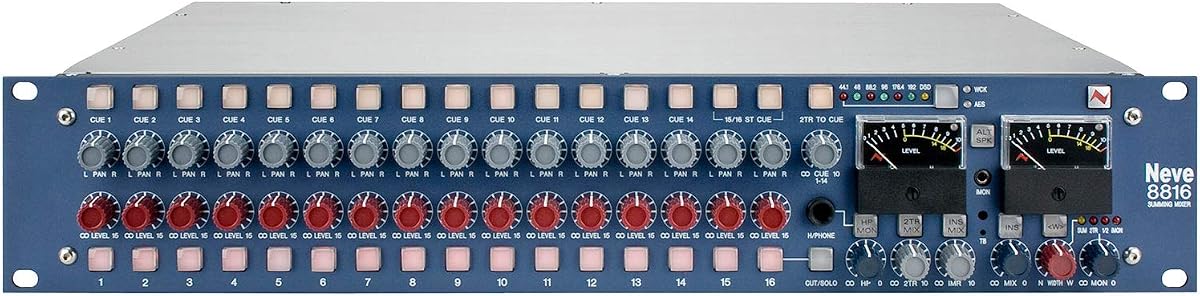
The Neve 8816 stands as a benchmark for analog summing in professional studios. It offers a 16-channel system that combines signals with a rich harmonic character. Users report a distinct warmth that enhances digital recordings significantly. Its high rating reflects consistent performance across various production environments.
We may earn a commission when you buy through this link, at no additional cost to you.
Key strengths include its transformer-balanced design which ensures signal integrity. The monitoring section provides extensive control over speaker outputs and headphones. This level of control allows engineers to hear mixes accurately. The dual headphone outputs facilitate collaboration during critical listening sessions effectively.
Trade-offs involve the high cost and physical space requirements. This unit is not suitable for home studios with limited budgets or space. However, for professional setups, the sonic benefits justify the investment. It remains a top choice for those prioritizing audio fidelity above all else.
Buyers seeking a top-tier studio solution should consider this unit. It delivers the classic sound associated with Neve consoles. While expensive, its performance ensures your mixes stand out. It is the definitive choice for serious audio professionals needing reliable summing.
The transformer-balanced circuitry adds the warmth and depth expected from Neve gear.
Comprehensive monitoring sections allow precise control over main and alternate speaker outputs.
We may earn a commission when you buy through this link, at no additional cost to you.
The Radial Mix 2:1 offers a straightforward passive mixing solution for basic needs. It combines two inputs into one mono output without requiring external power. Its high rating indicates reliability and ease of use. This unit is ideal for simple signal routing tasks in studios or live setups.
We may earn a commission when you buy through this link, at no additional cost to you.
Strengths lie in its simplicity and cost-effectiveness. Engineers can quickly merge signals without worrying about power connections or complex controls. The compact size fits easily into any equipment rack or bag. It serves well for merging synthesizers or returning effects processing chains.
Limitations include the strict two-channel limit and mono output. It cannot handle complex multi-track summing needs. For users needing stereo or more inputs, other options are better. However, for specific mono summing tasks, it performs flawlessly and efficiently.
This mixer is perfect for those needing a simple merge tool. It avoids unnecessary features while delivering solid performance. Users looking for an inexpensive passive solution will find great value here. It is a reliable workhorse for basic audio routing requirements.
Without active components, this unit offers maximum reliability and minimal signal noise.
Its small footprint makes it easy to integrate into any existing signal chain setup.
We may earn a commission when you buy through this link, at no additional cost to you.
The Rupert Neve Designs 5059 delivers the acclaimed Shelford sound in a satellite mixer. It features 16 channels with additional 2+2 submix capabilities for flexible routing. Users appreciate the rich tonal character it imparts to digital sessions. Its premium build reflects the high standards of the brand.
We may earn a commission when you buy through this link, at no additional cost to you.
Strengths include the specific Shelford EQ and harmonic saturation. The 2+2 output allows for stereo bussing options not found in standard units. This versatility supports complex mixing scenarios effectively. It brings console-grade summing to a smaller desktop form factor.
Trade-offs involve the significant cost and potential scarcity. It is not a budget option for home users. However, the sonic quality justifies the expense for serious producers. It is designed for those who demand the best sound possible in their workflow.
Buyers wanting top-tier sonic fidelity should choose this unit. It offers a unique character that enhances tracks significantly. While expensive, it serves as a centerpiece for high-end mixing setups. It is an investment in sound quality that pays off in final mixes.
This unit brings the legendary Shelford console sound into a dedicated summing box.
The 2+2 output configuration allows for versatile routing and stereo bus management.
We may earn a commission when you buy through this link, at no additional cost to you.
The Headliner R4 is designed for DJs needing precise analog control. It offers four stereo channels with dedicated filter controls for shaping sound. The inclusion of genuine ALPS potentiometers ensures smooth operation and durability. Users praise its robust build and classic look.
We may earn a commission when you buy through this link, at no additional cost to you.
Strengths include high-quality isolation and volume knobs. The built-in filter with resonance controls offers creative mixing possibilities. Balanced XLR outputs ensure connectivity to professional sound systems. The booth output provides flexibility for monitor setups.
Trade-offs are its focus on DJ applications over studio mixing. It lacks advanced routing features found in studio units. However, for DJs, the control set is comprehensive. It delivers reliable performance for live performance needs effectively.
This unit is perfect for DJs valuing tactile control. It offers a premium feel with wooden panels and quality knobs. Users looking for a reliable mixer for live sets will appreciate it. It stands out for build quality and sound shaping capabilities.
Dedicated high and low pass filters with resonance offer deep sound sculpting options.
Stained wood panels and ALPS pots provide a classic look and smooth tactile experience.
We may earn a commission when you buy through this link, at no additional cost to you.
The Mackie Onyx Series offers a robust 16-channel analog solution. It features high-resolution multi-track recording via USB for DAW integration. Users benefit from legendary Onyx preamps and Perkins style EQ. It bridges the gap between analog warmth and digital recording easily.
We may earn a commission when you buy through this link, at no additional cost to you.
Strengths include the versatile USB interface and effects engine. The 96kHz recording capability ensures professional audio quality. Bluetooth streaming adds convenience for playback and monitoring tasks. The EQ sweep allows precise tone shaping for each channel.
Trade-offs involve complexity compared to simpler analog mixers. Users may need time to master all features. Driver support is crucial for stable digital recording. However, the feature set offers immense value for home and project studios.
Buyers needing analog warmth with digital recording should choose this. It provides a comprehensive tool for recording and mixing. The Onyx preamps are a highlight for vocal recording. It is a strong choice for those wanting an all-in-one analog solution.
Award-winning Onyx preamps provide 60dB gain with low noise performance.
Direct USB multi-track recording allows simultaneous capture of all channels.
We may earn a commission when you buy through this link, at no additional cost to you.
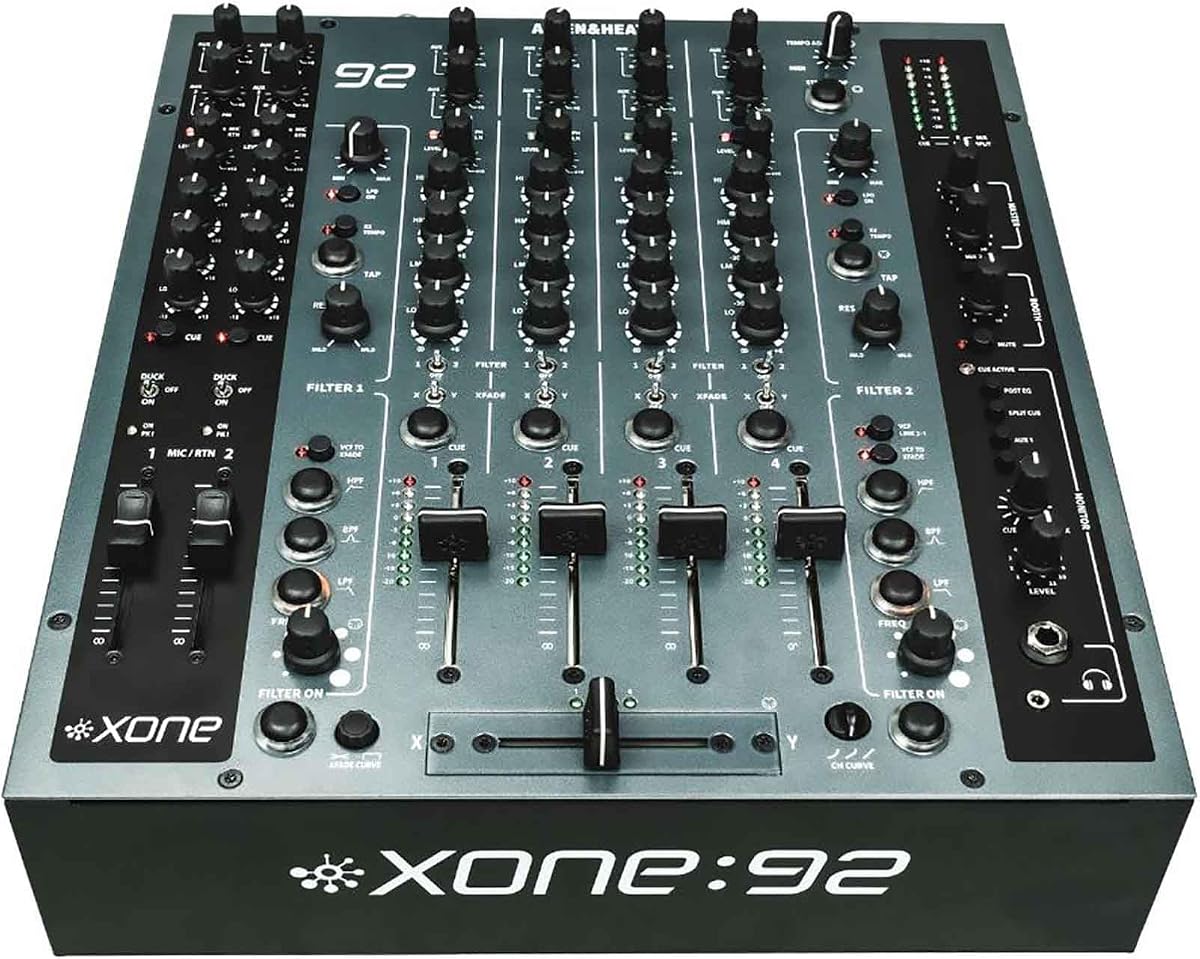
The Allen & Heath Xone:92 Mk2 is a powerful 4-channel analog DJ mixer. It features the legendary XONE VCF system for dynamic filtering. Users love the deep sound shaping capabilities of the multimode filters. The analog signal path ensures a clean, warm output.
We may earn a commission when you buy through this link, at no additional cost to you.
Strengths include the flexible send/return setup for external FX. The 1/4 inch aux inputs allow for additional sources. It provides a classic DJ workflow with modern refinements. The build quality supports heavy usage in club environments.
Trade-offs involve the cost compared to entry-level mixers. It lacks built-in digital effects which some users prefer. However, for purists valuing the filter system, it is unbeatable. It serves professional DJs needing precise control.
This mixer is ideal for DJs prioritizing filter manipulation. The VCF system offers unique sound sculpting options. Users seeking an analog workflow will find it rewarding. It is a professional tool designed for serious club performance.
The Voltage Controlled Filter system offers deep, resonant filtering capabilities.
Send and return connections allow seamless integration of external effects units.
We may earn a commission when you buy through this link, at no additional cost to you.
The Allen & Heath Xone:43 is a high-performance 4+1 channel DJ mixer. It includes the renowned VCF system with resonance and frequency controls. Users appreciate the Innofader compatibility for scratching and precise cueing. It delivers a pure analog sound path effectively.
We may earn a commission when you buy through this link, at no additional cost to you.
Strengths include the dedicated booth and record outputs. The 4+1 layout supports versatile setups with a dedicated channel. The filter system allows dynamic mixing during performances. It is built to withstand rigorous touring requirements.
Trade-offs involve the limited channel count for complex mixes. It lacks digital connectivity options for modern controllers. However, for traditional analog DJs, it is ideal. It offers a solid, reliable core for any DJ booth.
This mixer suits DJs needing robust analog control in a compact form. It is ready for professional touring. The Innofader compatibility is a major plus. It is a top choice for those valuing pure analog sound.
High-pass and low-pass filters with resonance provide deep sound control.
Compatible with Innofader crossfaders for enhanced scratching performance.
We may earn a commission when you buy through this link, at no additional cost to you.
The Mackie 1202VLZ4 delivers exceptional sound in a compact 12-channel design. It features Onyx mic preamps known for low noise and wide gain. Users praise its ultra-low distortion and extended frequency response. It is perfect for live sound and broadcast applications.
We may earn a commission when you buy through this link, at no additional cost to you.
Strengths include the three-band EQ and low-cut filters on each channel. This provides precise control over tone and unwanted noise. The robust chassis ensures durability on the road. It offers complete routing options for live setups.
Trade-offs are the lack of USB digital recording features. It is strictly an analog mixer for signal processing. However, its sonic quality and reliability make it a staple. It serves small venues and bands well.
Buyers needing a reliable analog mixer for live use should pick this. It offers great value for its performance. The Onyx preamps are a highlight. It is a trusted tool for live sound engineers worldwide.
Distortion is below 0.0007%, ensuring crystal clear signal transmission.
Built to withstand road abuse while maintaining high audio quality.
We may earn a commission when you buy through this link, at no additional cost to you.
The SSL BiG SiX offers SuperAnalogue mixing with a 16-channel USB interface. It allows 18-input summing for hybrid production workflows. Users love the SSL sound character and dynamics processing. It combines the console experience with digital convenience.
We may earn a commission when you buy through this link, at no additional cost to you.
Strengths include the master bus compressor and dynamics per channel. The mic preamps are renowned for clarity and punch. It supports comprehensive monitoring and talkback features. This is a true studio centerpiece.
Trade-offs involve the high cost and physical space needs. It is not a budget choice. However, for professionals seeking console features, it is unmatched. It brings SSL quality to a desktop form.
Buyers seeking a premium studio center should consider this unit. It delivers the sound of a large SSL console. While expensive, it justifies the cost with sonic performance. It is the top choice for professional mixing.
4-console-grade SuperAnalogue mic pres deliver pristine sound quality.
Integrated master bus compressor and dynamics shape the final output.
We may earn a commission when you buy through this link, at no additional cost to you.
The Yamaha MG10 provides a clean, simple 10-input mixing solution. It features studio-grade D-PRE preamps for natural sound. Users appreciate the 1-Knob compressor for easy level control. The metal chassis ensures durability for daily use.
We may earn a commission when you buy through this link, at no additional cost to you.
Strengths include the clean, noise-free operation. The D-PRE amps deliver smooth highs and tight bass. It includes high-pass filters for noise elimination. It is a straightforward tool for small venues.
Trade-offs involve the lack of USB recording options. It is purely analog for signal routing. However, its reliability and value make it a favorite. It serves well as a basic mixing console.
This mixer is ideal for beginners and small bands. It delivers professional sound at an affordable price. Users needing a reliable standalone mixer will find it perfect. It is a trusted standard for entry-level mixing.
Studio-grade D-PRE preamps provide a smooth, natural sound.
Single knob control simplifies compression for vocals and guitars.
We may earn a commission when you buy through this link, at no additional cost to you.
Choosing the right analog summing mixer requires understanding your specific audio production needs. Key factors include channel count, sound quality, and connectivity options.
The number of inputs you need depends on your DAW routing strategy. Professional studios often require 8 to 16 channels to sum multiple stems simultaneously. Smaller setups might only need 4 channels for main outputs. Consider your future expansion needs when selecting a unit.
Always choose a mixer that supports your current session size and leaves room for growth.
Transformers play a huge role in adding warmth and saturation to the signal. Units with high-quality transformers like Neve or SSL models offer richer harmonic content. Passive mixers avoid this feature but remain simple. Evaluate whether the transformer sound is essential for your mix.
Look for units specifying transformer-balanced inputs for superior signal integrity and warmth.
Analog mixers undergo frequent handling during sessions. Robust chassis construction ensures longevity and stability during intense use. Metal frames and high-quality knobs prevent wear over time. Budget models might use lighter materials but still perform well.
Invest in a unit with a sturdy chassis to withstand daily professional use.
Ensure the inputs match your signal sources. XLR and TRS connectors are standard for balanced signals. Some units offer unbalanced RCA which might limit usage in professional studios. Check output types to match your monitoring system requirements.
Verify that your chosen mixer supports both balanced XLR and TRS connections.
A good mixing setup requires robust monitoring control. Look for dedicated headphone outputs and speaker switches. Some units include talkback features for communication with talent. These features streamline your workflow during long sessions.
Prioritize models with comprehensive monitoring sections for efficient workflow.
Analog summing mixers range from affordable budget options to high-end consoles. Determine your budget early to narrow down choices. Higher cost often correlates with better components and sound quality. Balance financial constraints with sonic requirements carefully.
Set a realistic budget and compare features to find the best value option.
Passive mixers offer simplicity and reliability but lack active circuitry. Active mixers provide gain and tone shaping features like EQ. Decide if you need additional tone shaping or just signal combination. Active units offer more control but add complexity.
Choose active units if you need gain and EQ, otherwise passive may suffice.
Start by connecting your DAW outputs to the line inputs on the mixer. Use balanced TRS or XLR cables to maintain signal integrity. Ensure gain levels are set properly to avoid clipping the master output. Check your monitoring speakers for proper polarity and phase alignment.
When using external processors, route them through the insert points if available. This allows you to shape the sound before summing. Use the master output to record the summed audio back into your DAW. Monitor the signal levels to maintain headroom.
To maintain your unit, keep it in a climate-controlled environment. Avoid exposing the mixer to dust or excessive humidity. Use covers when not in use to protect faders and knobs. Check connections periodically to prevent loose cables from affecting sound.
Analog summing mixers combine digital stems to add harmonic saturation and depth. They create a more cohesive sound than digital summing alone. This process often results in a wider stereo image and punchier transients. It bridges the gap between digital precision and analog warmth effectively.
No, these mixers work with any DAW that can output multiple audio channels. You need to route your stems to the mixer inputs. Ensure your audio interface supports the required output count. Most mixers use standard RCA or TRS connections for this purpose.
Passive inputs usually come from unbalanced sources which may introduce noise. It is best to use active line outputs from your audio interface. If using passive gear, consider using a DI box to boost the signal. This maintains clarity and reduces hum in the mix.
Multiple outputs allow engineers and artists to listen independently. This is crucial during critical listening and mix approval sessions. It ensures everyone hears the same balance without compromising the main mix. Collaboration becomes easier with dedicated headphone feeds.
Summing combines multiple signals into one without EQ or level control. Mixing involves shaping sound with EQ, dynamics, and routing. Summing units focus on adding warmth and cohesion. Mixing consoles offer comprehensive control over each channel.
Ensure your DAW outputs are set to a safe level like -6dB. Leave headroom before the signal reaches the analog summing circuit. Monitor the master output on the mixer to check for distortion. Proper gain staging prevents unwanted clipping and distortion.
This guide presented ten top options ranging from budget-friendly units to high-end consoles. Each unit offers unique strengths for different studio environments and workflows. Whether you need simple routing or complex features, there is a match.
Prioritize sound quality and build durability when making your decision. Features like transformer design and monitoring sections impact your experience. Align these factors with your specific production needs to find the ideal unit.
Prices for analog gear fluctuate frequently so check current listings. Ensure you verify warranty details before finalizing your purchase. This investment will serve your production for years if chosen correctly.