
ALFA AOA-2458-59-TF
4.2Editor score
9 dBi dual band gain
Lightweight fiberglass construction
Integrated N-Female connector
This guide compares ten top-rated marine WiFi antennas for boats, focusing on dual-band support, weather resistance, and signal gain for reliable offshore
Staying connected on the water requires reliable hardware designed for harsh environments. A quality marine WiFi antenna extends your range significantly, allowing you to access shore-based networks from farther away than standard routers permit on their own.
We evaluated ten real products based on gain, durability, and frequency compatibility. Our analysis considers factors like salt resistance, mounting options, and band support to help you find the right model for your specific vessel and connectivity needs.
Each pick below highlights key strengths and trade-offs to simplify your decision. Note that product availability and pricing fluctuate frequently, so verify current stock and costs directly with the retailer before finalizing your purchase for your boat setup.
4.2Editor score

5.0Editor score
4.8Editor score
This table provides a side-by-side view of the top ten marine WiFi antennas. Compare key specifications like frequency bands, gain ratings, and connector types to quickly identify which model matches your boat's needs.


The Poynting Omni-496 stands out as a top choice for marine users needing reliable dual-band performance. With a perfect rating and robust construction, it handles salt spray and UV exposure better than most competitors on the market today.
We may earn a commission when you buy through this link, at no additional cost to you.
Its support for frequencies up to 7.2 GHz ensures compatibility with future Wi-Fi standards while maintaining strong signal strength. The N-Type connector and included marine adapter simplify installation on various boat rigging setups without extra modifications.
While the cost is higher than budget options, the longevity and signal quality justify the investment for serious boaters. Some users may find the mounting bracket slightly bulky for smaller vessels, but it remains a minor trade-off for durability.
This antenna is ideal for anyone prioritizing connection stability in harsh coastal environments. It delivers consistent performance where standard routers fail, making it a trusted tool for offshore communication and entertainment needs.
Supports Wi-Fi 7 and extended frequency bands, ensuring your setup remains compatible with evolving router technologies over the years.
IP68 rating and saltwater-resistant materials protect internal components from corrosion and water ingress in even the roughest weather.
We may earn a commission when you buy through this link, at no additional cost to you.
Designed for extreme environments, the Pro-Gain antenna delivers enterprise-grade performance for marine and rural setups. Its MIMO technology and high gain ensure stable connections even when signals are weak or obstructed by dense foliage or terrain.
We may earn a commission when you buy through this link, at no additional cost to you.
The all-weather fiberglass construction resists degradation from salt spray and extreme temperatures, ensuring long-term reliability. It supports multiple devices simultaneously, making it perfect for shared internet access among crew members or guests on board.
To get the best results, you should use high-quality low-loss cables, which are sold separately but recommended for long runs. The initial investment is significant, but the signal stability and speed make it worth it for critical applications.
Choose this model if you need consistent connectivity in challenging conditions. It is particularly effective for remote boating or RV use where standard antennas struggle to maintain a steady link to distant networks.
MIMO technology optimizes signal quality and reduces interference, allowing for smoother video calls and data transfers in noisy environments.
Built to withstand industrial conditions, this antenna maintains performance where cheaper plastic units would fail due to heat or corrosion.
We may earn a commission when you buy through this link, at no additional cost to you.
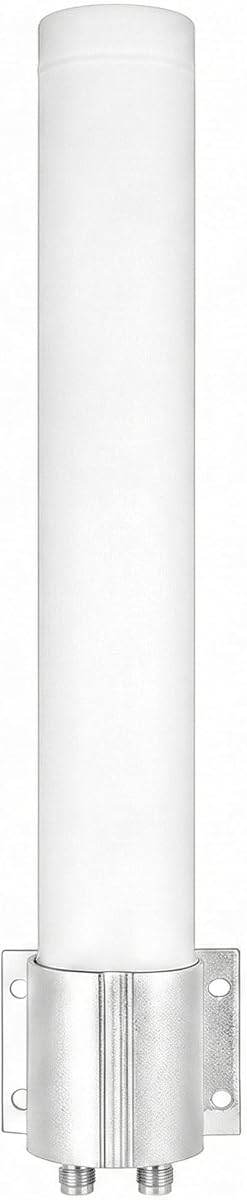
The ALFA AOA-2458-59-TF offers impressive performance for its price point. With 9 dBi gain and a sturdy fiberglass body, it provides a reliable upgrade for small boats or casual users who need extended range without breaking the bank.
We may earn a commission when you buy through this link, at no additional cost to you.
Its lightweight design simplifies mounting on rails or masts without adding unnecessary weight. The integrated N-Female connector allows quick cable attachment, making setup straightforward for those with basic DIY skills and tools.
While it lacks the advanced weatherproofing of higher-end models, it still holds up well in typical coastal conditions. Some users may need to purchase separate mounting brackets or cables depending on their specific router setup requirements.
This is a great entry-level option for improving wireless reach on the water. It balances cost and functionality well, making it suitable for budget-conscious boaters who still want better signal strength than stock routers offer.
Delivers high gain and dual-band support at a fraction of the price of specialized marine-grade alternatives, keeping costs low.
The fiberglass construction ensures the unit is light enough for easy installation on various surfaces without heavy hardware.
We may earn a commission when you buy through this link, at no additional cost to you.
The Poynting OMNI-496 Coastal is engineered for harsh marine conditions with full weatherproofing and salt protection. It offers solid dual-band performance suitable for general connectivity needs on boats or coastal installations where reliability is paramount.
We may earn a commission when you buy through this link, at no additional cost to you.
Its 7.5 dBi gain provides a good balance between range and signal stability for most recreational uses. The N-Type connector fits standard marine equipment, allowing integration with existing gear without requiring complex adapters or modifications.
One limitation is the lack of included cabling, which means you must source compatible low-loss cables separately for optimal performance. This adds to the overall cost but allows flexibility in choosing cable lengths that suit your vessel layout.
Consider this model if you want a proven marine antenna that withstands the elements. It is a strong choice for users who already have cabling or need a dedicated antenna for specific Wi-Fi devices in a saltwater environment.
IP68 rating ensures the internal electronics remain safe from water ingress, even during heavy rain or ocean spray exposure.
Uses common connectors and mounting options, making it easy to integrate with standard marine electronics and router systems.
We may earn a commission when you buy through this link, at no additional cost to you.
This combination antenna saves space by integrating 4G, WiFi, and GPS functionality into one compact unit. It is particularly useful for boats with limited mounting areas or where cable clutter needs to be minimized for a cleaner look.
We may earn a commission when you buy through this link, at no additional cost to you.
The puck style mounts through a hole in the deck, keeping it flush with the surface to reduce wind resistance. Included 24-inch leads connect to your router or modem, simplifying the installation process significantly.
While it provides basic connectivity, the gain is lower than external omni antennas, which may limit range in very remote locations. This makes it better suited for coastal cruising where signal sources are already relatively close to shore.
Pick this if you need a simple, integrated solution for essential navigation and internet. It is a practical choice for smaller boats or those looking to reduce external hardware while maintaining essential connectivity options.
By combining multiple antennas into one puck, you reduce clutter and mounting points, keeping your deck cleaner and more streamlined.
Includes GPS support alongside WiFi, helping with navigation apps and tracking systems on the same hardware platform.
We may earn a commission when you buy through this link, at no additional cost to you.
The M19B is designed primarily for cellular connectivity, making it ideal for boats relying on 4G LTE or 5G networks for internet access. It offers robust MIMO performance to maximize data speeds and reliability in areas with strong cellular coverage.
We may earn a commission when you buy through this link, at no additional cost to you.
Constructed from heavy-duty ABS, it is built to withstand harsh industrial or marine environments without degrading. The L-bracket mount ensures a secure installation on flat surfaces, providing stability even during high winds or rough waters.
Its focus on cellular bands means it is less optimized for direct router WiFi signals compared to dedicated omni antennas. This makes it a specific choice for boosting modem signals rather than general WiFi access point range expansion.
Use this if your boat relies heavily on cellular data for primary internet. It ensures reliable transmission for critical data and voice communications where standard cellular antennas might struggle to maintain a steady link.
Supports NR and LTE bands, ensuring compatibility with evolving cellular standards for faster download speeds on the water.
ABS housing resists impact and weather better than plastic, extending the lifespan of the antenna in harsh conditions.
We may earn a commission when you buy through this link, at no additional cost to you.
The Bingfu bundle offers two compact antennas for a low price, making it accessible for small setups. They provide basic dual-band support with RP-SMA connectors, which work well with many standard consumer routers and adapters found on board.
We may earn a commission when you buy through this link, at no additional cost to you.
With 3dBi gain, they offer a slight improvement over stock antennas but are not designed for long-range marine use. Their small size allows them to be mounted discreetly on a console or cabinet without protruding into open deck space.
These are best suited for indoor WiFi extension rather than outdoor signal boosting. The cables are short, which limits placement options if you need to route the antenna to a mast or high point on the boat.
Choose this set if you need an inexpensive upgrade for indoor connectivity or short-range outdoor use. It is a cost-effective way to get dual-band capability without investing in specialized marine hardware.
Buying a 2-pack reduces the cost per unit, offering value for users needing multiple antennas for different devices.
The small form factor allows placement in tight spaces where larger antennas would not fit or cause obstruction.
We may earn a commission when you buy through this link, at no additional cost to you.
This LINOVISION antenna merges cellular and WiFi capabilities into one roof-mounted unit. It is designed for setups that need both internet and cellular signals without running multiple cables or installing separate hardware on your vessel.
We may earn a commission when you buy through this link, at no additional cost to you.
The IP67 waterproof rating ensures reliability in outdoor conditions, while the included cables simplify initial connections. The design is optimized for low-profile mounting, which helps reduce drag on boats traveling at speed.
However, the short 40cm cables may require extensions for certain setups, adding to installation complexity. The gain is moderate, making it better for closer signal sources rather than extreme range needs on open water.
Use this for compact setups requiring both cellular and WiFi on a single point. It is a clean solution for RVs and smaller boats that need to consolidate connectivity options without cluttering the deck.
One antenna handles multiple signal types, reducing the number of cables and connectors needed in your communication system.
The low-profile roof style minimizes wind resistance, which is beneficial for boats moving at higher speeds or in rough weather.
We may earn a commission when you buy through this link, at no additional cost to you.
The Eifagur antenna delivers 9dBi gain at a budget-friendly price point. It supports dual-band frequencies and is built to handle outdoor conditions, making it a versatile option for extending wireless range without high expense.
We may earn a commission when you buy through this link, at no additional cost to you.
Its high gain helps reach distant networks, which is useful when anchored near shore or in marina areas. The lightweight build allows easy mounting with standard screws, simplifying setup for most DIY users.
While it is marketed as outdoor-ready, it lacks specialized marine coatings found in premium options. For casual or temporary use, this is acceptable, but frequent exposure to salt spray might shorten its lifespan compared to purpose-built units.
Select this if you want maximum range for minimal cost. It is a practical choice for budget-conscious boaters who prioritize distance over long-term durability in corrosive environments.
The 9dBi gain significantly boosts signal strength, helping you connect to networks that are otherwise out of reach.
Priced well below marine-specific models, it offers a great entry point for users testing the waters with external antennas.
We may earn a commission when you buy through this link, at no additional cost to you.
This HYS antenna focuses specifically on VHF communication and weather alerts, covering marine channels and NOAA frequencies. It provides a reliable connection for safety and coordination rather than internet data, fitting into existing marine radio systems easily.
We may earn a commission when you buy through this link, at no additional cost to you.
The PL-259 connector matches standard marine radios, and the included cable ensures compatibility with most receivers. The ratchet mount allows quick folding for low clearance or storage, which is essential for docking or passing under bridges.
Note that this antenna is not intended for WiFi or internet connectivity, only voice and weather data. If your goal is internet access, this will not serve that purpose; it is purely for maritime safety and communication.
Choose this model for essential ship-to-shore and weather communication. It is a safety-critical addition to any vessel, ensuring clear signal reception for emergency channels and real-time weather updates while on the water.
Covers emergency channels and weather alerts, providing reliable communication for distress calls and real-time forecasts.
The ratchet mount allows the antenna to fold down for storage or low bridges, protecting it from damage and saving space.
We may earn a commission when you buy through this link, at no additional cost to you.
Selecting the right marine WiFi antenna requires understanding your boat's layout, signal needs, and environmental factors. Below are key elements to consider before purchasing a model for your vessel.
Ensure the antenna supports the bands your router uses. Most modern networks operate on 2.4GHz or 5GHz, but some newer systems use 6GHz or higher. Check your router's specs before buying to avoid mismatches.
Always match the antenna bands to your router to ensure maximum signal efficiency and avoid connectivity issues.
Marine environments expose hardware to salt, sun, and moisture. Look for an IP67 or IP68 rating and materials like fiberglass or UV-resistant coatings. These features prevent corrosion and extend the antenna's life.
Prioritize waterproof ratings to avoid costly replacements caused by salt spray damage or UV degradation.
Gain determines how far the signal reaches. Higher numbers like 8dBi or 9dBi provide longer range but might be directional. Choose based on your need for distance versus coverage area around the boat.
Higher gain is better for distant signals but requires proper mounting for optimal performance.
Consider where you plan to install the antenna. Some use standard marine pole adapters while others require deck holes or magnetic bases. Ensure the mount fits your rigging and allows for clear line of sight.
Check mounting hardware compatibility before purchase to simplify installation on your specific vessel.
Common connectors include N-Type, RP-SMA, and PL-259. Your router or modem must have a matching port or adapter. Using mismatched connectors can result in poor signal or the need for extra cables.
Verify connector types on both ends to ensure a direct and secure connection.
The distance from the antenna to the router affects signal quality. Longer cables cause loss unless they are high-quality and low-loss. Measure the needed length before buying to avoid extra extensions.
Use quality low-loss cables to maintain signal strength over longer distances.
Costs vary from budget options under fifty dollars to premium models over two hundred. Determine how much you can spend and what features you truly need versus what is just nice to have.
Balance cost with durability requirements based on how often you boat and where.
Start by mounting the antenna high on your vessel to maximize line of sight. Use the included brackets to secure it firmly so it can withstand wind without wobbling.
Run coaxial cables carefully to avoid sharp bends or kinks that can degrade signal. Secure cables with clips or ties to prevent chafing against railings or metal parts.
Clean the antenna with fresh water regularly to remove salt deposits. Inspect connectors for corrosion every few months and apply silicone grease if needed to maintain water resistance.
It works if the router has external antenna ports matching the connector type. Many consumer routers have internal antennas so check your model before buying an external antenna.
Range depends on gain, location, and signal strength. With high gain and good placement you might reach several miles under ideal conditions near shorelines with strong towers.
Use low-loss coaxial cables designed for your specific frequency. Standard cables may lose signal over long distances reducing the benefits of the high gain antenna.
Some setups allow MIMO configurations if your router supports it. This improves speed but requires compatible hardware and careful configuration to avoid interference.
Choose antennas with marine-rated coatings and clean them regularly. Applying corrosion protection to metal connectors also helps extend the lifespan of the unit.
A properly rated IP68 antenna can handle submersion but water at connectors should be sealed. Check the rating to ensure it meets your specific marine exposure needs.
It is recommended for boats in storm-prone areas. Install surge arrestors to protect electronics and the antenna from voltage spikes caused by lightning strikes.
Some models support cellular bands including 5G but verify the specs. Dedicated cellular antennas offer better 5G performance than standard WiFi designs.
Our top picks cover a wide range of needs from budget options to premium models. The Poynting Omni-496 and Pro-Gain MIMO offer superior durability for serious boaters.
When choosing consider the trade-off between price and weather resistance. For long-term use in harsh conditions investing in a marine-rated antenna saves money over time.
Always check current availability and pricing before buying as these numbers change frequently. Verify your router compatibility to ensure a smooth setup and reliable connectivity on your next trip.