
Dorhea 7 Pack 3.3V DC-DC Buck Converter 3 Pins AMS1117-3.3V DC 4.75V-12V to 3.3V Voltage Regulator Step Down Power Supply 800mA Buck Module
4.2Editor score
Affordable seven pack
Simple three pin layout
Built-in protection
This guide compares the top 5V to 3V voltage regulator options for electronics projects, covering efficiency, current output, and package deals.
Choosing the right voltage regulator is essential for powering sensitive electronics like microcontrollers and sensors safely. A stable supply ensures reliable performance and prevents damage from fluctuations in your power source.
We compared ten highly rated products based on input range, current capacity, size, and user feedback. Each selection offers a unique balance of efficiency, cost, and ease of integration for DIY and professional builds.
Every pick highlights key specs and real-world use cases to help you decide quickly. Prices and availability change frequently, so verify the latest details before purchasing to secure the best deal available.
4.2Editor score

4.6Editor score
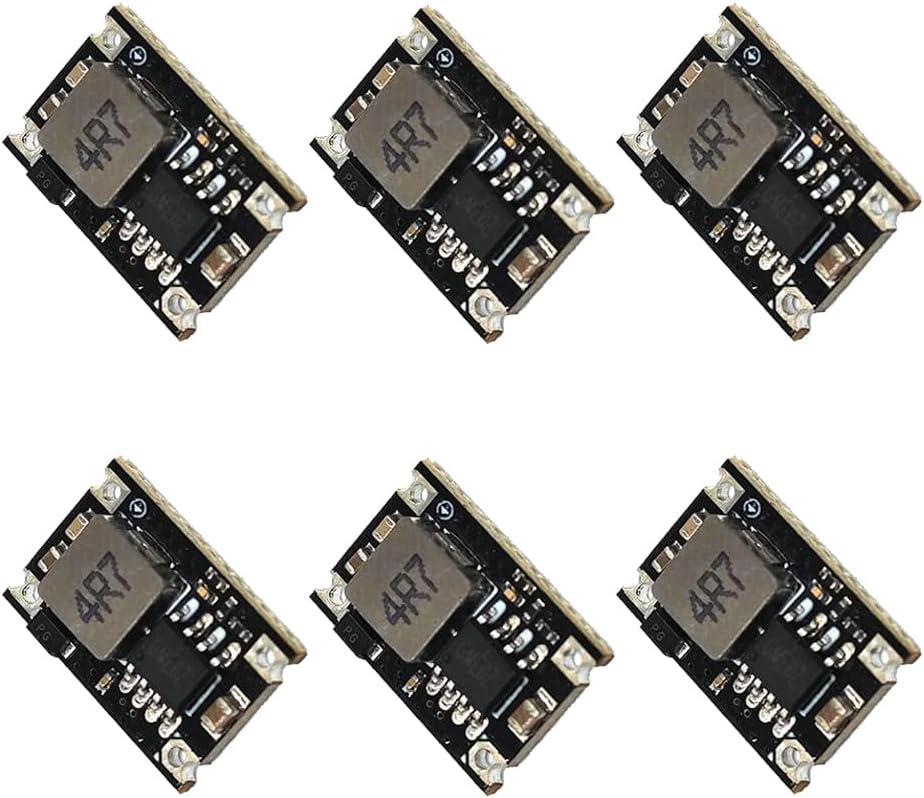
4.9Editor score
The following table provides a side-by-side look at all ten products. It highlights key specifications like input voltage, output current, and package quantity to help you compare quickly.


This module stands out for its wide input range and stable output. With a 1.8A capacity and low ripple, it handles most small electronics well. Users report consistent performance across varied power sources.
We may earn a commission when you buy through this link, at no additional cost to you.
The switching frequency ensures clean power for sensitive microcontrollers. Its small footprint makes it ideal for tight PCB layouts. The five-pack offers great value for projects needing multiple regulators.
While it lacks manual adjustment, the fixed 3.3V suits most modern logic. Adding protection for inductive loads is necessary but standard practice. These trade-offs are minimal for the price and performance.
Ideal for hobbyists building drones or IoT devices. It balances cost and capability better than most rivals. Check current pricing before buying to ensure the best deal.
The switching design minimizes heat compared to linear options. This allows for longer runtimes in battery scenarios.
Works with batteries or wall adapters from 4.5V to 24V. Flexibility simplifies prototyping across different systems.
We may earn a commission when you buy through this link, at no additional cost to you.
This AMS1117 module is a classic choice for linear regulation. It offers quiet power perfect for analog circuits. The 10-pack ensures you have spares for testing or repairs.
We may earn a commission when you buy through this link, at no additional cost to you.
Its simplicity makes wiring straightforward. The pins align easily with common headers. Overheat protection adds a layer of safety during unexpected conditions.
Linear tech generates heat at high current. Ensure ventilation if pushing the 0.8A limit. This is acceptable for low power sensor projects.
Great for beginners learning power supply basics. The pack size supports bulk builds or classrooms. Verify input voltage stays within limits for best results.
Linear regulators produce less electromagnetic interference. This protects sensitive audio or sensor signals from noise.
Ten units mean less worry about running out. Ideal for teaching labs or multiple unit production.
We may earn a commission when you buy through this link, at no additional cost to you.
This converter handles inputs lower than the target output. It boosts 1.8V up to 3.3V reliably. This is essential for single cell battery applications.
We may earn a commission when you buy through this link, at no additional cost to you.
With a 100mA limit, it suits low power sensors. The small size fits tiny wearable projects. Users praise its reliability at low currents.
High current loads will fail here. Stick to microcontrollers without heavy peripherals. The limit is clear but restrictive for robotics.
Best for simple battery powered devices. Check your load current before purchasing. It fills a niche that others do not.
Designed to work with single cell batteries. Ensures consistent voltage even as battery drains.
Efficiency is high at low power draw. Reduces waste in long term deployments.
We may earn a commission when you buy through this link, at no additional cost to you.
The Mini360 platform delivers top efficiency in a tiny space. Users report 1.5A without major voltage drop. It is a robust choice for demanding tasks.
We may earn a commission when you buy through this link, at no additional cost to you.
Its small size saves valuable PCB area. The fixed output simplifies circuit design. Many users prefer it for its reliability.
Protection for motors should still be added externally. Heat dissipation is needed at full load. These are minor issues for the performance.
Ideal for portable devices needing power. The pack provides good value for bulk builds. Compare input limits against your power source.
Mini360 packages are standard for compact projects. Allows room for other components on tight boards.
Handles 1.5A consistently. Suitable for motors and high draw modules.
We may earn a commission when you buy through this link, at no additional cost to you.
This option offers a low cost entry to power regulation. The 7 pack covers multiple needs without overspending. Users find it reliable for light tasks.
We may earn a commission when you buy through this link, at no additional cost to you.
Simple 3 pin design aids quick connection. Overheat protection prevents catastrophic failures. It is a practical choice for hobbyists.
Heat builds at high current. It is best used for low draw sensors. This limitation is acceptable for the budget.
Best for students and low budget projects. The quantity ensures you do not run out. Check load requirements carefully before buying.
One of the lowest cost options per unit. Great for testing and prototyping phases.
Built-in thermal shutdown avoids damage. Increases lifespan in harsh conditions.
We may earn a commission when you buy through this link, at no additional cost to you.
This set provides the most units for your budget. Fifteen regulators ensure enough supply for large batches. It is ideal for manufacturing or class use.
We may earn a commission when you buy through this link, at no additional cost to you.
Fixed voltage ensures consistency across units. Standard pinout makes soldering easy. Quality is consistent across the pack.
Current limits apply. Ensure your load stays within 0.8A. Heat management remains important for linear types.
Best for bulk needs or inventory. The price per unit is hard to beat. Verify power supply limits before setup.
Large quantities avoid frequent reordering. Keeps projects moving without delays.
Lowest price per unit among similar products. Maximizes savings for large projects.
We may earn a commission when you buy through this link, at no additional cost to you.
This module handles high input voltages up to 30V. It offers strong 1.8A current for demanding loads. The black PCB fits professional aesthetics well.
We may earn a commission when you buy through this link, at no additional cost to you.
Small size aids tight builds. Low ripple ensures clean power. It is versatile for varied power sources.
User ratings show some inconsistency. Check reviews before bulk purchase. Quality control may vary between batches.
Ideal when high input is a must. Ensure proper protection for sensitive parts. Good for industrial settings.
Handles inputs up to 30V reliably. Useful for automotive or solar power.
Black PCB adds a polished look. Preferred for client visible projects.
We may earn a commission when you buy through this link, at no additional cost to you.
This regulator supports a wide 4.5V to 30V input. The 1.5MHz switch keeps size small. It delivers 1.8A effectively for most tasks.
We may earn a commission when you buy through this link, at no additional cost to you.
Users highlight its reliability in varied power settings. The size helps in wearable designs. It is a robust choice for field devices.
Fast switching may introduce EMI. Use grounding planes to reduce noise. This is a standard trade-off.
Best for projects needing voltage flexibility. The high input tolerance adds safety. Ensure your layout supports high speed switching.
Delivers high current in tiny size. Ideal for portable devices needing power.
Works from 4.5V to 30V. Adapts to many battery and mains types.
We may earn a commission when you buy through this link, at no additional cost to you.
This module is tuned for 5V USB sources. It delivers 3.3V reliably from standard supplies. The 10 pack provides ample units.
We may earn a commission when you buy through this link, at no additional cost to you.
Users praise its consistency. It handles 0.8A well for low load. Ideal for Arduino and similar boards.
Input range is limited. Do not exceed 7V. It is not suitable for wide inputs.
Best for USB powered projects. The price is low for the quantity. Check input voltage carefully.
Designed for standard 5V USB. Simplifies power for small microcontrollers.
Ten units ensure enough spares. Useful for large scale prototypes.
We may earn a commission when you buy through this link, at no additional cost to you.
This premium set uses high quality MP1584EN chips. It earns 4.9 stars for stability. Users love its build and performance.
We may earn a commission when you buy through this link, at no additional cost to you.
The 1.8A output handles demanding loads. Size is minimal for most PCBs. It is a trusted choice for professional work.
Cost is higher than basic sets. Protection remains necessary for motors. These trade-offs are worth the reliability.
Best for critical projects needing reliability. The quality justifies the price. Ensure heat dissipation is considered.
MP1584EN ensures consistent output. Reduces failure risk in harsh conditions.
Build quality exceeds standard modules. Suitable for long-term deployments.
We may earn a commission when you buy through this link, at no additional cost to you.
Selecting the right regulator requires balancing input range, current, and efficiency. This section outlines the main factors to consider for your specific use case.
Ensure the regulator accepts your power source. Some models support 4.5V to 24V, others only 5V to 7V. Mismatched inputs cause failure.
Always verify input limits against your battery or adapter before buying to prevent damage.
Check the maximum current. Most handle 0.8A to 1.8A. High draw devices like motors need 1.8A. Lower draw sensors work with 0.8A.
Pick a regulator that exceeds your maximum load current to ensure reliability.
Switching regulators are more efficient than linear ones. Linear ones generate heat at high current. Efficiency affects battery life and heat management.
Choose switching types for high current to avoid excessive heat.
Small modules like Mini360 save space. Others are slightly larger. Consider your PCB layout or enclosure size when choosing.
Smaller is better for portable projects but check for adequate heat dissipation.
Packs range from 5 to 15 units. More units mean less worry for bulk projects. Fewer units may suffice for single builds.
Consider future needs when deciding on pack quantity to avoid reordering.
Built-in overheat protection prevents failures. External protection for motors is often required. Safety features extend component life.
Look for overheat shutdown to ensure long-term reliability.
Budget options exist but may sacrifice performance. Premium units offer better stability. Balance price against your project requirements.
Evaluate cost per unit for large builds to find the best value.
Hobby projects need flexibility. Industrial uses demand stability. Match the regulator to your specific environment and load type.
Define your use case clearly before selecting a model.
Solder input and output wires securely to the pins. Ensure VIN connects to your power source and OUT to your device. Ground must be common.
Add a capacitor near the output if noise is observed. This smooths fluctuations and protects sensitive components. A standard 10uF cap works for most cases.
Avoid short circuits during testing. Use a multimeter to verify output before connecting loads. If heat builds, add ventilation or reduce current.
Many modern microcontrollers run on 3.3V. Connecting them directly to 5V can damage them. A regulator steps down voltage safely.
Buck regulators use switching to save energy. Linear ones drop voltage as heat. Buck is more efficient for higher loads.
Yes. Check the input range. Some support battery voltage ranges like 3.7V to 12V. Ensure the regulator accepts your battery voltage.
Most include necessary capacitors on board. Adding extra ones near input and output can improve stability for sensitive electronics.
Output may drop or heat increases. Built-in protection may shut it down. It is best to stay below max current limits.
Yes. Most are designed for MCUs like Arduino. Ensure input matches your board's power supply for safe operation.
Solder wires to pads. Use double-sided tape or screws for mounting. Avoid direct contact with metal if heat is an issue.
Premium units use better chips and offer higher current. They may include extra features. Cost reflects performance and reliability levels.
This guide highlighted top options for efficiency, budget, and bulk. Each pick suits different needs from small hobby builds to larger projects.
Prioritize current needs and input voltage. If you need space, choose Mini360. For low noise, linear options work well.
Verify current availability and prices before buying. Market changes happen quickly, so check latest details to secure the best option.