
PRV AUDIO DSP 2.4X
4.7Editor score
LCD display interface
15 band graphic equalizer
Remote relay sequencer
This guide compares the top 10 digital signal processor DSP units for car audio to help you choose the best system for your vehicle.
Upgrading your car audio system often requires more than just new speakers. A digital signal processor allows you to shape sound precisely. It corrects factory limitations. It brings out the best in every component.
We analyzed ten top rated models based on features. We looked at channel counts and equalization options. We considered connectivity and ease of use. Our goal is to find the right fit for your needs.
Each pick shows what makes a unit stand out. We highlight key specs and ideal use cases. Prices and availability change frequently. Always check the latest details before you buy today.
4.7Editor score
4.6Editor score

4.6Editor score
This side-by-side comparison highlights the key differences between each model. You can see channel counts, equalizer bands, and unique features at a glance.





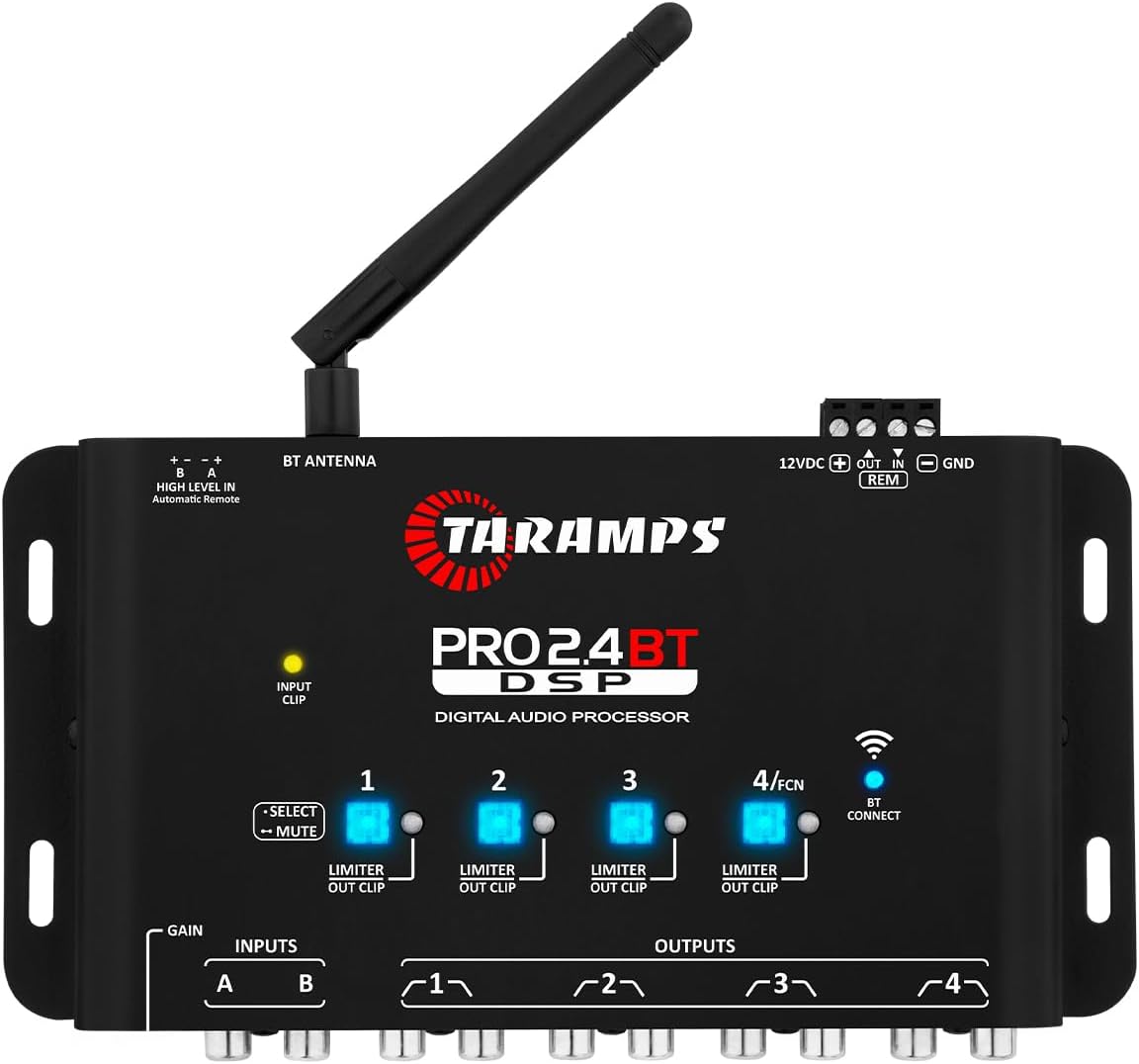
The Taramps Pro 2.4 BT is a standout processor in this guide. It holds a solid rating from users who value control. This unit offers complete command over your audio system parameters.
We may earn a commission when you buy through this link, at no additional cost to you.
Its Bluetooth connectivity allows you to tweak settings wirelessly. You can use your smartphone to adjust EQ and crossovers easily. The high level input simplifies installation in factory cars.
The app interface is powerful but takes time to learn. You may need to watch tutorials to get the most out of it. This effort is worth it for the precision you gain.
This processor is ideal for DIY enthusiasts who want flexibility. It fits well in daily drivers and show cars alike. If you want professional tuning without a pro, choose this.
Connect via Bluetooth to adjust settings without cables. This makes fine-tuning in your car much more convenient.
High level inputs let you tap into speaker wires. You can upgrade sound without replacing the factory head unit.
We may earn a commission when you buy through this link, at no additional cost to you.
This model is excellent for those on a tight budget. It delivers core DSP functions without a high price tag. Users praise its reliability and straightforward interface for tuning.
We may earn a commission when you buy through this link, at no additional cost to you.
The LCD display lets you see changes as you make them. You have access to both graphic and parametric EQ tools. The sequencer feature helps automate your system startup sequence.
Lack of wireless control is the main trade-off here. You must use the physical knobs on the unit for adjustments. This is acceptable for simple installations without complex routing.
Choose this if you want a reliable processor for basic setups. It works well for 4 channel systems with simple needs. It is a great way to enter the DSP world.
The LCD screen shows adjustments instantly. You do not need to rely on guesswork for tuning.
Trigger remote relays for other components. This helps manage power and signal flow in your car.
We may earn a commission when you buy through this link, at no additional cost to you.
The 2.8X model expands capacity for more complex systems. It supports up to eight independent output channels. This makes it suitable for full active speaker configurations.
We may earn a commission when you buy through this link, at no additional cost to you.
You can route audio sources flexibly across inputs and outputs. The parametric EQ provides precise control over specific frequencies. It is perfect for detailed soundstage adjustments.
Physical interface limitations exist similar to the 2.4X model. You must adjust settings manually via the LCD display. There is no smartphone app to simplify the process.
Ideal for larger builds needing more channel routing. Use it with multiple amplifiers and speaker types. It handles complex audio paths with professional features.
Handles complex multi component systems easily. Ideal for active setups with separate amps.
Choose audio sources per output channel. This gives you creative freedom in signal path.
We may earn a commission when you buy through this link, at no additional cost to you.
This unit shines for vehicles with factory radios. It includes a speaker converter to work with high level inputs. It simplifies OEM upgrades significantly for enthusiasts.
We may earn a commission when you buy through this link, at no additional cost to you.
PRV has included crossover presets for their speakers. This saves time when setting up new components. The app control adds a layer of modern convenience.
User feedback suggests a steeper setup learning curve. Some users find the app or interface less intuitive. It requires patience to get the sound right.
Best for OEM infotainment upgrades without replacement. If you need factory integration with modern sound, look here. The preset support makes component setup easier.
Directly connects to factory speaker wires. No external wiring harness needed for many cars.
Optimized filters for specific speaker types. This reduces guesswork during initial configuration.
We may earn a commission when you buy through this link, at no additional cost to you.
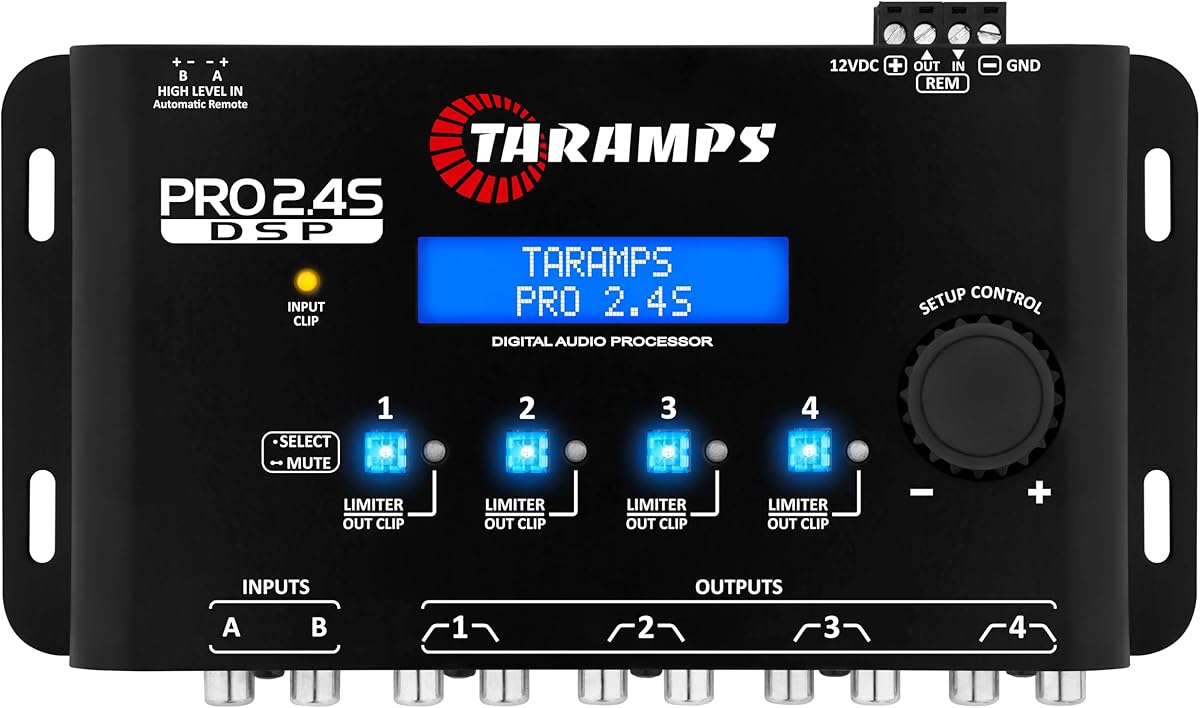
The 2.4S offers solid features in a small package. It is designed to fit into tight spaces. It maintains high audio quality for 4 channel outputs.
We may earn a commission when you buy through this link, at no additional cost to you.
Protection features like the Anti-Pop system are useful. It prevents annoying turn-on clicks. Clip indicators help you set gain levels safely.
It lacks the wireless options of the BT model. This keeps costs lower but requires manual tuning. It is better for static setups in the trunk.
Great for compact car audio builds. If space is tight but you need DSP power, this fits. It balances performance and physical size well.
Fits easily in tight spots. Ideal for cars with limited trunk space.
Clip indicators prevent speaker damage. Helps users avoid setting gain too high.
We may earn a commission when you buy through this link, at no additional cost to you.
This model is built for audiophiles seeking maximum fidelity. It uses high bit rate processing for clear sound. Users appreciate the extensive control over audio parameters.
We may earn a commission when you buy through this link, at no additional cost to you.
The 79-band equalizer allows for detailed correction. You can shape frequency response very precisely. Bluetooth app control simplifies the tuning experience.
The price is higher than budget options. It is justified by the advanced features and resolution. Consider it if quality is your top priority.
Best for demanding sound systems. If you want the best sound quality possible, this delivers. It excels in high-end custom installs.
32-bit 96kHz processing reduces noise. Ensures clean signal path through the system.
79 bands give fine control. Perfect for detailed room or vehicle correction.
We may earn a commission when you buy through this link, at no additional cost to you.
The 2.8S focuses on dynamic performance and limits. It is suitable for systems needing advanced power management. Users find the control over signal flow useful.
We may earn a commission when you buy through this link, at no additional cost to you.
RMS and Peak limiters help protect components. They ensure consistent sound levels. This is vital for high output setups.
It lacks modern app connectivity. Manual tuning is the only option here. This fits users who prefer physical adjustments.
Good for high output builds needing protection. If you run high wattage, the limiters help. It is a strong workhorse for performance audio.
Protects speakers with signal limits. Prevents damage during high volume play.
Simplifies OEM integration. Easy to add to factory systems.
We may earn a commission when you buy through this link, at no additional cost to you.
This unit adds useful tools like a voltmeter. It is great for monitoring system voltage. App control makes tuning accessible on smartphones.
We may earn a commission when you buy through this link, at no additional cost to you.
The sequencer allows for advanced trigger setups. You can manage power sequencing effectively. Frequency tools help with testing sound accurately.
Volts meter is integrated but may be basic. It serves as a handy diagnostic aid. Relay wiring is separate and requires care.
Good for builders needing system diagnostics. The included tools save money on separate meters. It offers strong value for active builders.
Built-in voltmeter checks power supply. Helps avoid voltage drop issues.
Pink noise generator aids setup. Makes speaker calibration and testing easier.
We may earn a commission when you buy through this link, at no additional cost to you.
This unit is known for flexible signal routing. It supports mixing inputs easily. It is suitable for complex home or car setups.
We may earn a commission when you buy through this link, at no additional cost to you.
Parametric EQ provides professional grade tuning. Each channel gets full control. Build quality is solid and reliable.
Bluetooth connectivity is an add-on. This may be inconvenient for some users. It is better suited for stationary or fixed setups.
Ideal for custom audio projects. If you need mixing and routing, this works well. It is versatile for both home and car.
Mix multiple audio sources. Useful for multi-zone or custom routing.
Adjustable filter points. Better than graphic EQ for precision.
We may earn a commission when you buy through this link, at no additional cost to you.
This processor introduces unique floating DSP features. It offers different audio streams per system. It is designed for advanced customization.
We may earn a commission when you buy through this link, at no additional cost to you.
Encoder buttons provide quick navigation. It allows precise menu control. Subharmonic bass adds low end to weak signals.
The interface may take time to learn. It is different from standard apps. You need to read instructions carefully.
Best for advanced system customization. If you want unique control options, this stands out. It is powerful for dedicated users.
Allows flexible audio streams. Great for complex system configurations.
Physical control for settings. Reduces reliance on screens or apps.
We may earn a commission when you buy through this link, at no additional cost to you.
Choosing the right DSP requires considering your system needs and installation options. This guide helps you understand the factors that matter most.
The number of outputs determines how many speakers you can control. For a basic front stage, 4 channels might suffice. Complex active systems require 8 or more.
Match the channel count to your amplifier setup. Avoid buying more than you need but plan for future upgrades.
High level inputs allow direct connection to factory wiring. This simplifies installation without replacing the head unit. RCA inputs are standard for aftermarket gear.
Check if your head unit supports your chosen inputs. Flexibility here saves installation time and effort.
Look for a mix of graphic and parametric EQ. Graphic is easy for broad adjustments. Parametric allows precise frequency control.
More bands generally offer better control. Ensure you can adjust bandwidth and gain for each band.
Bluetooth control adds convenience for tuning. It allows you to adjust settings from your phone. Wired units are often cheaper and simpler.
If you value ease of use, prioritize Bluetooth. For static systems, wired control works fine.
Higher bit depth and sample rates improve sound clarity. 24-bit 48kHz is common. Premium units offer 32-bit 96kHz.
For most listeners, standard resolution is sufficient. High resolution matters for critical listening.
Crossover filters divide frequencies between speakers. Look for high pass and low pass options. Slope settings affect how signals blend.
More filter options give you better speaker protection. Ensure they cover the frequencies you need.
Auto turn-on functions reduce wiring complexity. Voltmeters and sequencers are useful extras. Physical size affects where you can mount it.
Check for features that match your installation style. This ensures a clean and tidy setup.
Prices vary widely. Budget units offer basic functions. Premium ones provide advanced features. Warranty ensures long term support.
Balance your needs against what you can afford. Warranty coverage is crucial for electronics in cars.
Install the DSP in a dry place. Avoid direct sunlight. Ensure it has airflow to prevent overheating. Connect power and ground wires properly.
Start with flat settings and tune gradually. Use pink noise or music to calibrate. Save presets once you are satisfied. Label connections clearly.
Keep connections tight to avoid noise. Check for corrosion or loose wires. Avoid touching internal parts. Update firmware if applicable for best performance.
No, you do not always need a new unit. DSPs with high level inputs work with factory radios. This lets you keep the original system.
It is not strictly necessary. Units with physical interfaces work fine. However, Bluetooth simplifies the process. It allows remote adjustments from a phone.
Depends on your speaker count. A 4 channel unit works for most setups. Use 8 channels for active systems with separate amps. Plan for any future needs.
Yes, it can correct limitations. It allows time alignment and equalization. Many users see clear improvements. It brings factory speakers closer to high quality.
It allows precise frequency control. Unlike graphic, you pick specific bands. You can adjust gain and bandwidth. It offers deeper customization options.
Yes, it requires a power source. It usually needs a 12V connection. Connect to an accessory wire for auto start. Ground properly to avoid noise.
This guide highlights ten diverse DSP options. Each model serves different needs and budgets. The Taramps Pro leads in overall value.
Prioritize features that match your installation. If you need OEM upgrades, consider high level inputs. For advanced sound, look at resolution and EQ bands.
Always check current availability before buying. Prices fluctuate regularly. Choose a unit that grows with your system.