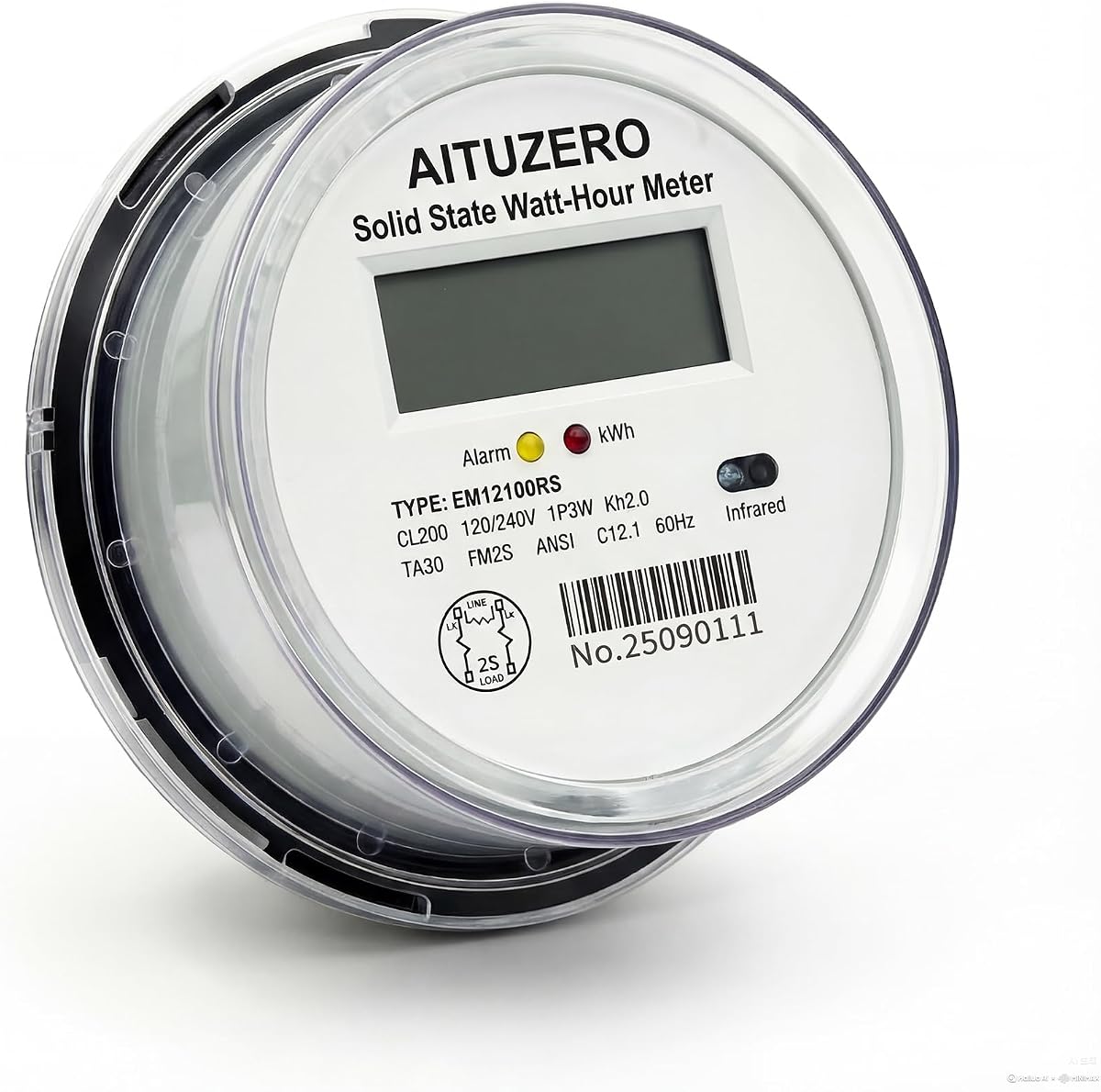
Digital Electric Sub Meters for Landlords
4.5Editor score
ANSI Form 2S Socket Fit
Bright LCD Display
Pulse Output Option
Discover the top electric sub meters for landlords and solar users. We compare accuracy, features, and reliability to help you choose the best sub meter for
Electric sub meters help property owners and solar enthusiasts track energy usage accurately. These devices provide detailed consumption data for billing or system optimization. Choosing the right model depends on voltage, communication options, and installation requirements.
We evaluated ten leading electric sub meters based on reliability, accuracy, and feature sets. Our comparison covers single-phase and three-phase options suitable for residential and light industrial use. Each product offers distinct advantages for landlords, RV owners, and energy managers.
This guide highlights key specifications and real-world applications for every pick. You will find detailed reviews explaining pros, cons, and ideal use cases. Please note that product prices and availability can change over time.
4.5Editor score

5.0Editor score
4.5Editor score
This side-by-side comparison highlights key specifications for all ten electric sub meters. Review voltage ratings, communication protocols, and physical designs to find the perfect fit for your electrical system.


This digital energy meter ranks first for its balance of affordability and reliability. It fits standard ANSI Form 2S socket bases, simplifying installation for RV and rental units. The bright LCD display ensures easy viewing of energy usage data even in dim light.
We may earn a commission when you buy through this link, at no additional cost to you.
Its single-phase 120/240V design allows fast wiring into breaker panels without special tools. The labeled terminals help connect line, load, and neutral quickly. Solid-state electronics deliver long-term stability, tolerating electrical fluctuations from motors and HVAC units without losing accuracy.
While it lacks wireless connectivity, it supports pulse and Modbus communication for system integration. The sealed housing protects circuitry when used in a proper box, ensuring consistent performance across temperatures. This makes it a robust choice for garage and workshop electrical upgrades.
Landlords and DIY users will appreciate its fair cost allocation capabilities through accurate kWh tracking. It is ideal for separating energy usage across tenants or individual circuits. Its reliability and clear data make it a top recommendation for budget-conscious buyers.
This meter enables fair billing by accurately tracking individual tenant consumption, reducing disputes in rental properties.
The reverse-flow LED detects solar backfeed, helping users verify inverter behavior and system safety quickly.
We may earn a commission when you buy through this link, at no additional cost to you.
This digital electric sub meter stands out with its RS485 Modbus communication interface. It connects multiple meters to a centralized monitoring system. The import/export energy measurement makes it perfect for solar applications, tracking power flow between the grid and your system accurately.
We may earn a commission when you buy through this link, at no additional cost to you.
It provides detailed multi-parameter data including voltage, current, power factor, and frequency. The automatic display cycle lets users review all system info quickly. Non-volatile EEPROM memory ensures critical energy records are saved even when power is interrupted.
Front infrared optical access allows authorized configuration using compatible tools without opening the panel. The reverse current LED gives instant feedback on power direction. Professional installation may be needed for RS485 wiring, but the data depth justifies the effort.
Ideal for property managers needing real-time electricity data access. It supports centralized data collection and advanced energy management. This model is a premium choice for technical users requiring flexible integration options.
Users get detailed insights on reactive power and power factor, useful for optimizing electrical efficiency.
The IR optical interface and RS485 support allow flexible setup for advanced energy management applications.
We may earn a commission when you buy through this link, at no additional cost to you.
The Series 2000 offers robust construction for outdoor installations. It handles up to 200 Amps and supports 120V/208V/240V supplies. This flexibility allows it to suit various electrical systems in commercial or heavy-duty residential settings. The durable enclosure ensures longevity against weather conditions.
We may earn a commission when you buy through this link, at no additional cost to you.
It supports 1PH, 2W, or 3W configurations for versatile setup. The space-saving form factor with clear labeling makes installation straightforward. Users can rely on its broad voltage compatibility for different power supplies. This model is straightforward and functional.
However, its lower rating compared to competitors might limit its appeal for data-driven users. It lacks advanced communication features like Modbus or cloud integration. If your priority is simple, durable power measurement in tough environments, this is a viable choice.
This meter is best for users needing basic measurement without complex reporting. Its durability and high capacity make it useful for industrial or heavy-duty areas. Choose it for physical robustness over advanced digital features.
The enclosure is designed to withstand outdoor conditions, protecting the internal electronics from weather.
Supporting 1PH, 2W, or 3W setups makes it adaptable to different single-phase electrical requirements.
We may earn a commission when you buy through this link, at no additional cost to you.
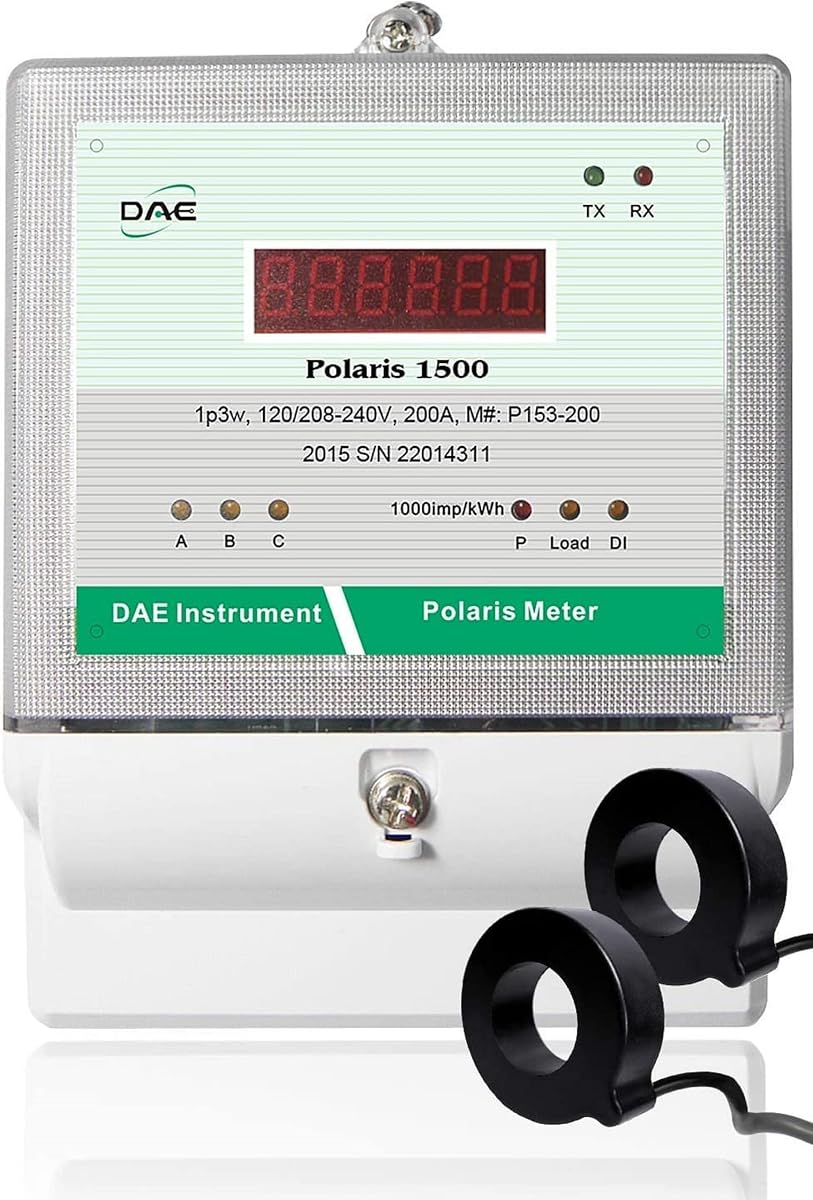
This smart submeter kit offers revenue-grade 0.5% accuracy and compliance with ANSI C12 standards. It is UL/cUL listed and California CTEP approved, making it suitable for billing. The RS485 communication supports the CC2030 Gateway for cloud-based monitoring and reporting to tenants.
We may earn a commission when you buy through this link, at no additional cost to you.
It comes with necessary 2 CTs and factory calibration certificates. DAE Cloud Metering allows landlords to access real time data and monthly kWh reports via phone or tablet. For existing buildings, wireless converters enable easy connection to routers without running new cables.
The unit is indoor use only unless paired with the watertight enclosure. Its accuracy and professional certifications ensure reliable data for billing purposes. While more expensive, it provides the trust and precision needed for commercial property management.
Choose this kit if you need certified billing accuracy and remote data access. It simplifies IT tasks with ready-to-go setup. It is an ideal solution for landlords seeking professional-grade monitoring without complex infrastructure.
Certified 0.5% accuracy ensures fair billing and trust between property owners and tenants.
Integration with the CC2030 Gateway enables automated billing reports and real-time energy data access.
We may earn a commission when you buy through this link, at no additional cost to you.
This submeter focuses on simplified cloud integration via RS485 and the CC2030 Gateway. It features an internal CT, reducing external wiring complexity. The design supports 1P3W connections and is ready for time-of-use billing reports through DAE's system.
We may earn a commission when you buy through this link, at no additional cost to you.
Users can monitor up to 8 panels remotely using the CC2030 KIT. For hard-to-run cable situations, wireless converters facilitate the connection to routers. It conforms to IEC standards, though for high-end approval, users should refer to the Polaris 1500 series.
While it lacks the 200A capacity of larger kits, its simplicity is a plus for smaller loads. It is indoor use only, but a watertight enclosure option exists. The meter is cost-effective for basic remote monitoring needs.
It is recommended for landlords needing straightforward billing without heavy IT requirements. The internal CT and ready-to-go setup save installation time. Pick this for simple, effective cloud-based energy tracking.
Internal current transformers eliminate the need for external CT wiring, simplifying installation.
Optional RF converters allow remote data transmission without drilling walls or running new cables.
We may earn a commission when you buy through this link, at no additional cost to you.
This kit is designed for three-phase systems with 200A capacity and a wide voltage range of 120-480V. It meets revenue-grade accuracy standards and includes three CTs. Like other DAE models, it supports the CC2030 Gateway for cloud-based billing and data collection.
We may earn a commission when you buy through this link, at no additional cost to you.
It supports both 3-phase 4-wire and 3-phase 3-wire configurations. The unit is UL/cUL listed and California CTEP approved for professional use. Factory calibration certificates are provided, ensuring reliability. It allows remote monitoring of multiple panels using wireless converters.
The indoor-only constraint requires an enclosure for outdoor use. Its higher price reflects its three-phase capability and professional-grade specs. For commercial settings requiring robust monitoring, it is a strong candidate. The wireless options simplify installation in retrofits.
This meter is ideal for industrial or commercial applications needing three-phase data. It delivers reliable billing and energy insights. Choose it when standard single-phase meters cannot meet your voltage or phase requirements.
Supports 3-phase configurations, ideal for commercial buildings with higher power demands.
Revenue-grade accuracy ensures precise billing compliance with national standards.
We may earn a commission when you buy through this link, at no additional cost to you.
This meter offers a straightforward pass-through design with up to 100A capacity. It works with 2 or 3-wire configurations and 120V up to 120/240V systems. Users can read data locally on the LCD or remotely via pulse output for basic tracking.
We may earn a commission when you buy through this link, at no additional cost to you.
Its simple interface means no complex setup is required. It fits 13.5mm wire diameter, making it compatible with standard cabling. The design focuses on direct measurement without needing external CTs for lower amp circuits. It is practical for standalone monitoring.
While it lacks advanced cloud integration, the pulse output allows integration with basic counters. Its simplicity is its greatest strength for users needing direct measurement. It does not support smart features like Modbus or wireless communication.
Ideal for simple setups where advanced reporting is not needed. Its 100A capacity handles moderate loads well. Choose this meter for cost-effective, direct energy measurement in standard residential circuits.
The pass-through design measures current directly, reducing the need for external components.
Users can view data on the LCD or export via pulse for basic remote counting.
We may earn a commission when you buy through this link, at no additional cost to you.
This DAE meter earns a perfect score for its balance of features and reliability. It features an internal CT for 1P3W pass-through monitoring of the whole electrical panel. The Din Rail mount makes installation neat. It is cloud-ready with the CC2030 Gateway for remote tenant billing.
We may earn a commission when you buy through this link, at no additional cost to you.
Wireless converters enable connection to routers even if running cables is difficult. It conforms to IEC standards for quality. For higher approvals, users should check the Polaris 1500 series, but this model is excellent for standard needs. It handles both 120V and 240V circuits.
Indoor use is standard, but the B1725 enclosure solves this. Its perfect rating indicates strong performance and low failure rates. Users can monitor dual-pole breakers and 240V circuits effectively. This is a reliable, feature-rich choice for property managers.
It combines ease of use with modern cloud capabilities. For landlords wanting a perfect score solution, this is the top pick. Its internal design saves space while delivering comprehensive monitoring capabilities.
A 5.0 rating highlights exceptional user satisfaction and reliability in real-world use.
It can monitor the entire electrical panel including both 120V and 240V circuits easily.
We may earn a commission when you buy through this link, at no additional cost to you.
This meter is a universal option for 2 or 3-wire systems up to 100A. It supports 120V to 120/240V. The design is similar to the Pass-Through model, offering local LCD readings and pulse output for basic tracking without complex setup.
We may earn a commission when you buy through this link, at no additional cost to you.
It is ideal for users needing a simple utility replacement. Its compatibility with various wire types makes it flexible for standard residential circuits. The lack of smart features keeps it straightforward and easy to install. It is a reliable tool for basic consumption data.
While it lacks network connectivity, the pulse output allows integration with external counters. It is practical for garages or small offices where smart reporting is not required. Its simplicity ensures fewer points of failure.
Best for simple applications requiring only kWh tracking. Its universal compatibility makes it easy to fit into existing panels. Choose this for cost-effective, direct measurement without needing advanced data integration.
This model adapts to both 2-wire and 3-wire setups, offering broad compatibility.
Users can read usage directly on the display, avoiding complex network configurations.
We may earn a commission when you buy through this link, at no additional cost to you.
The E-Mon D-Mon offers a Class 1000 rating, indicating robust industrial design. It supports 1 or 2 Phase configurations with a 100A capacity. This meter is built for reliability in commercial or industrial settings where standard residential meters may not suffice.
We may earn a commission when you buy through this link, at no additional cost to you.
Its voltage range covers 120/208-240V, making it versatile for different power setups. While specific cloud features are not detailed in the brief, E-Mon is known for reliability. It is a solid choice for users needing a strong, standard kWh submeter for tough environments.
The focus here is on durability and capacity rather than smart features. It is suited for applications where long-term reliability is key. Users can trust the brand for stable performance in demanding electrical conditions.
Recommended for commercial or industrial installations needing a solid standard meter. It prioritizes robust build over digital connectivity. Choose this when reliability and industrial standards are your primary concerns.
Designed for tough conditions, this meter ensures stable performance where others might fail.
Its voltage range covers common commercial setups, ensuring it fits most standard panels.
We may earn a commission when you buy through this link, at no additional cost to you.
Selecting the right electric sub meter involves matching technical specs to your system. This guide breaks down key factors to ensure accurate measurement and ease of use.
First, verify that the meter matches your electrical system's voltage and phase. Most residential units use 120/240V single phase, while commercial buildings may need 3-phase support. Choosing a mismatched model can lead to installation errors or inaccurate readings.
Ensure the meter supports the exact voltage range of your breaker panel to avoid compatibility issues.
Advanced models offer RS485, Modbus, or cloud integration for remote monitoring. If you need real-time data or tenant billing, these features are essential. Basic units may only support local LCD readings or pulse outputs for simple tracking.
Look for communication options like RS485 if you need to connect multiple meters to a central system.
Some meters plug into standard ANSI sockets, while others require DIN rail mounting or pass-through wiring. Consider the space available in your panel and your technical comfort level. DIY-friendly models often have labeled terminals and clear instructions.
Pick a plug-in or DIN rail model to simplify the installation process for your specific setup.
Check the amperage rating to ensure it can handle your total load. Revenue-grade meters offer high accuracy for billing, while standard ones work for general tracking. A mismatch here could lead to disputes or inaccurate data.
Ensure the meter's capacity meets your system's requirements for accurate, reliable data.
Many meters are rated for indoor use only and require a separate enclosure for outdoor deployment. If you plan to mount the device in a weather-exposed location, check for IP ratings or watertight enclosure options.
Select a model with an outdoor enclosure rating if it will be installed outside.
Some units draw power from the circuit being measured, while others need a dedicated supply. Verify the power requirements before installation to avoid unexpected wiring complexity.
Confirm the power supply needs match your existing electrical infrastructure.
For billing purposes, look for UL, CTEP, or revenue-grade certifications. These ensure the meter meets industry standards for accuracy and safety. Non-certified units may not be accepted by utility companies.
Prioritize certified models to ensure accuracy and compliance for billing.
Check if current transformers (CTs) or gateways are included in the kit. Some models require buying these separately, adding to the cost. A complete kit saves time and money.
Choose a full kit that includes all necessary components for immediate installation.
Always turn off power at the main breaker before beginning any installation. Verify your wires match the labeled terminals on the meter to prevent short circuits. Ensure all connections are tight and the panel door closes properly without pinching wires.
Once installed, check the LCD display to confirm voltage and current readings match expectations. If using communication features, test the connection with your monitoring software. Regular checks ensure the meter continues to track data accurately over time.
Keep the area around the meter clean and free of dust to prevent overheating. If used outdoors, ensure the enclosure is sealed against rain and humidity. Periodically inspect the unit for signs of damage or unusual heating to maintain safety.
An electric sub meter tracks energy consumption for specific circuits or tenants within a main electrical system. It helps landlords allocate utility costs fairly or allows users to monitor solar production. This device provides granular data that the main utility meter does not show.
While some DIY-friendly models are available, electrical work involving main breakers or high voltage can be dangerous. It is recommended to hire a licensed electrician if you are unsure about wiring or local codes. Professional installation ensures safety and compliance.
Yes, many modern digital sub meters support import and export measurement. This feature tracks energy sent to the grid and energy drawn from it. Look for models with reverse current indicators if monitoring a solar system.
Revenue-grade meters meet strict accuracy standards for billing purposes, typically within 0.5% accuracy. Standard meters are less precise and better for general tracking. If you plan to charge tenants based on usage, a revenue-grade certified unit is necessary.
Yes, models with RS485 Modbus support allow multiple meters to connect to a central gateway. This setup is common for large buildings with many rental units. A single network collects data from all connected meters efficiently.
Most standard meters are indoor-only unless specifically rated for outdoor use. For outdoor installation, you must use a watertight enclosure. Check the product specs for IP ratings or purchase an accessory enclosure for protection against weather.
It depends on the model; some come with internal CTs or include them in the kit. High-amp setups often require external CTs. Verify the included components to ensure you have everything needed before starting installation.
Advanced models with memory or cloud integration retain historical usage data. You can view this via an LCD display or through a monitoring dashboard. Ensure you have the necessary gateway or software to retrieve detailed reports.
Our top picks include the Digital Electric Sub Meters for Landlords as the best budget option and the DAE DDM730 KIT as the best overall. These models balance affordability with essential features like clear displays and reliable accuracy.
When choosing, prioritize voltage compatibility and communication needs. If you need cloud reporting for tenants, select a model with RS485 or gateway support. For simple tracking, a standard pass-through meter may suffice.
Remember that prices and stock vary over time, so verify current details before purchasing. Check the latest reviews and specs to ensure the model fits your specific setup. Proper selection leads to long-term satisfaction and accurate energy tracking.