
FLASHFORGE AD5X
4.4Editor score
300 degree Celsius nozzle
600mm/s printing speed
Large build volume
Discover the top 3D printer for high temperature filaments in this detailed guide comparing speed, chamber heat, and reliability for ABS, PC, and Nylon.
Finding a reliable 3D printer for high temperature filaments is essential for engineering projects requiring durable materials. These machines must maintain consistent heat to prevent warping while ensuring precise layer adhesion for strong, functional parts.
We evaluated the leading models based on chamber temperature, nozzle capability, and build volume to help you choose the right tool. Each product offers unique features like multi-color printing or enclosed designs to handle advanced polymers effectively.
Each pick highlights specific strengths for different user needs from hobbyists to professionals. Please note that prices and availability may change over time so verify current details before making your final purchase decision.
4.4Editor score
4.7Editor score

4.4Editor score
This side-by-side comparison highlights key specifications for each model to help you evaluate performance capabilities and features quickly across the market.


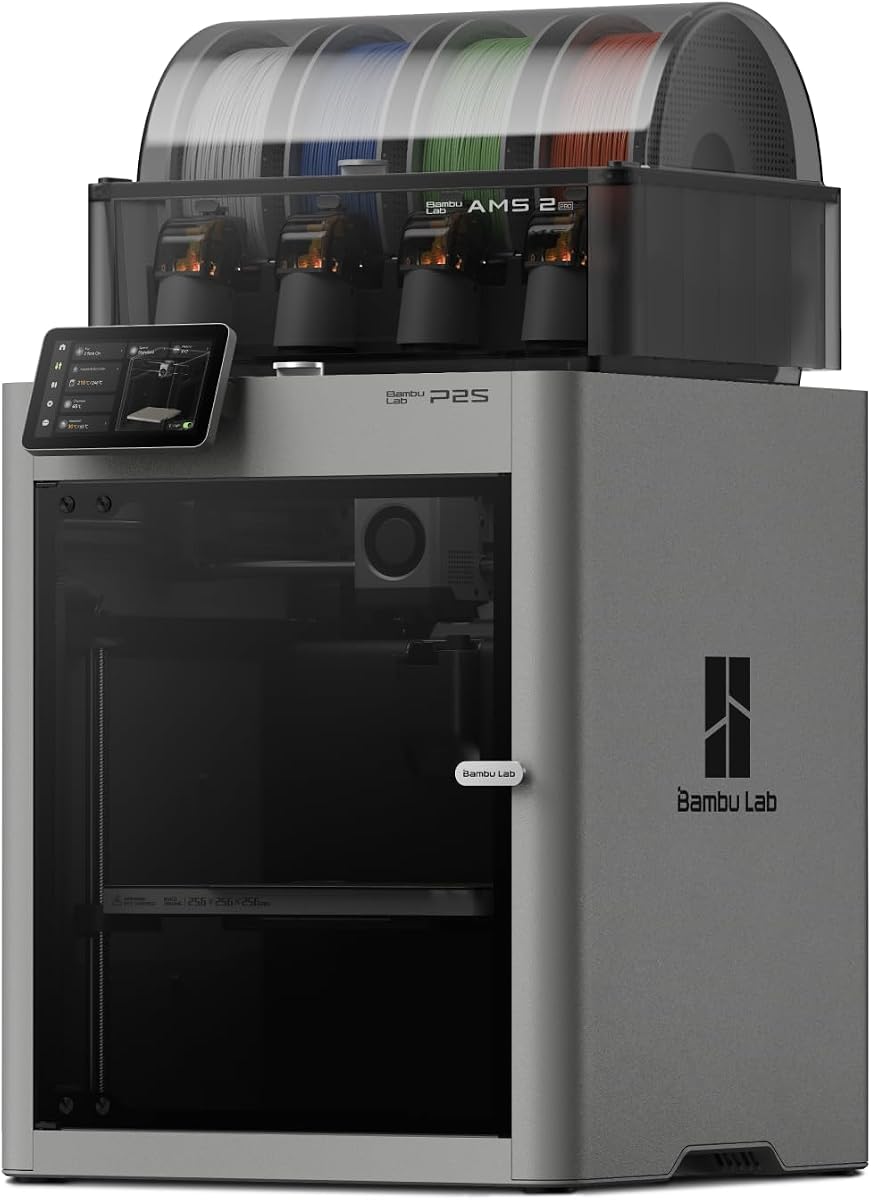
The Bambu Lab P2S Combo stands out as a top contender for those needing a 3D printer for high temperature filaments. With an exceptional rating of 4.7 stars, users praise its precision and ease of use. The printer delivers professional-grade results quickly while minimizing setup time.
We may earn a commission when you buy through this link, at no additional cost to you.
Its Adaptive Airflow System ensures stable temperatures which is crucial for materials like ABS or ASA. The PMSM Servo Extruder maintains accuracy even at high speeds up to 600 mm/s. This reduces warping and ensures consistent layer adhesion for functional parts.
While the cost is higher than budget options, the reliability and speed justify the investment for serious makers. The AMS 2 Pro adds multi-color capability without extra purging waste. However, if you only print single color, the combo might feel excessive.
Experts recommend this for professionals who value efficiency and print quality above all. It simplifies workflows with automatic calibration and failure detection. If you need a robust machine for engineering-grade materials, this is a top choice.
The built-in heating maintains 50 degrees Celsius allowing advanced materials to cool slowly without cracking. This is vital for high temperature filaments that warp easily in uncontrolled environments.
Filament gets dried directly in the AMS 2 Pro at up to 65 degrees Celsius. This ensures moisture-free printing which improves surface finish and structural integrity for sensitive polymers.
We may earn a commission when you buy through this link, at no additional cost to you.
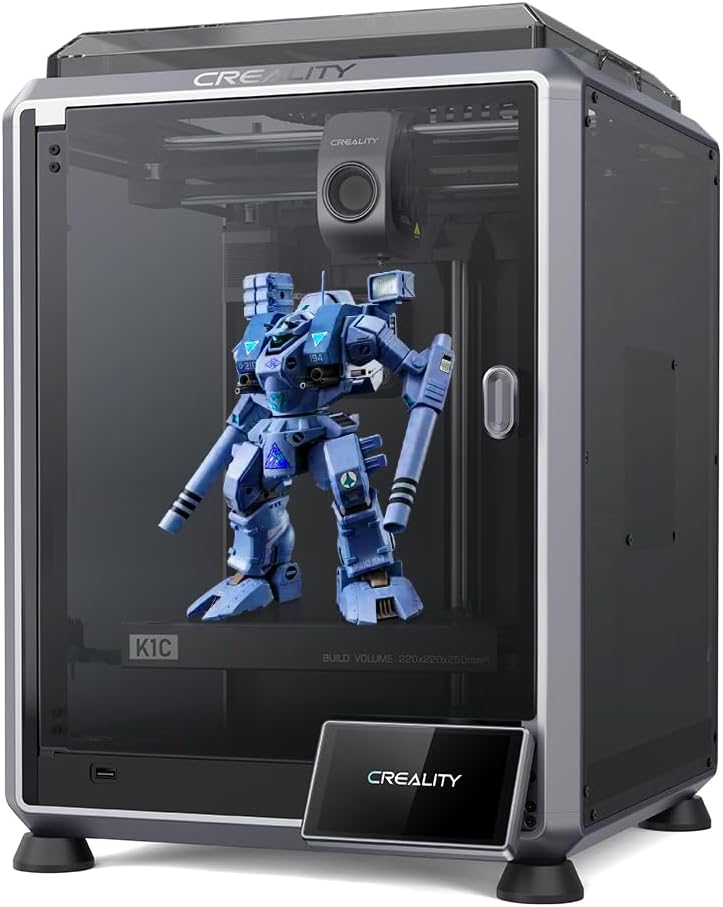
The Creality K1C is designed specifically to handle tough materials including carbon fiber reinforced polymers. Rated 4.3 stars, it is favored by users who need to print engineering parts without clogging issues. Its direct extruder ensures consistent flow even with abrasive filaments.
We may earn a commission when you buy through this link, at no additional cost to you.
A steel-stipped copper nozzle and titanium heatbreak prevent wear and heat creep. This design allows safe printing up to 300 degrees Celsius which covers most high temperature needs. The AI camera tracks prints for issues like spaghetti failures in real time.
Despite its speed and durability, the open frame may struggle with highly sensitive materials without an enclosure. The smaller build volume limits large projects. However, for hobbyists needing reliability and speed on small parts it excels.
We recommend this for users who frequently print carbon fiber or glass-filled plastics. It offers value by reducing maintenance downtime. If you prioritize robust hardware over large size this printer is a strong candidate.
The hardened nozzle resists wear from carbon fiber and glass filaments. This extends component life and ensures consistent quality over many prints without frequent replacements.
With 20000 mm/s2 acceleration this printer moves swiftly without losing accuracy. It reduces print times significantly compared to standard machines while maintaining sharp corners and details.
We may earn a commission when you buy through this link, at no additional cost to you.
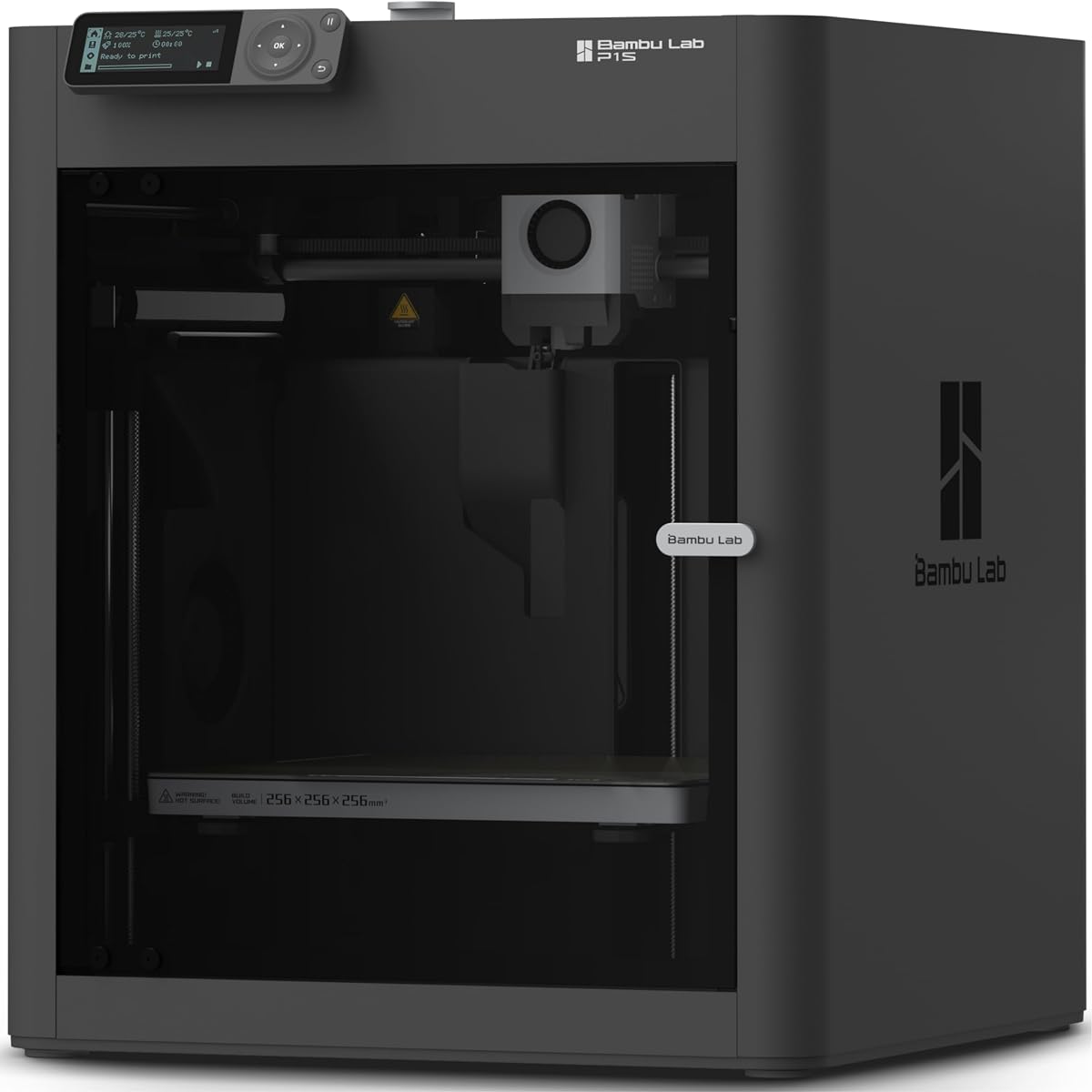
The Bambu Lab P1S offers a fully enclosed design ideal for high temperature filaments. It holds heat effectively to prevent warping on parts printed with ABS or ASA. With a 4.5 rating users find it reliable and easy to use for various projects.
We may earn a commission when you buy through this link, at no additional cost to you.
Its CoreXY motion system ensures precision even at high speeds up to 500 mm/s. Auto leveling and calibration make it user-friendly for beginners. The enclosure also protects against drafts which can ruin complex prints.
While it is not designed for carbon fiber without nozzle changes it handles most standard engineering plastics well. It lacks a heated chamber heater but the insulation helps. For general engineering use it is a solid choice.
This printer suits those needing a balance of speed and stability. It reduces setup time and delivers consistent results. If you work with standard high temperature filaments this model offers great reliability.
The fully enclosed body maintains consistent internal temperature reducing warping risks. This is essential for materials like ABS that cool unevenly in open environments.
Adding an AMS allows up to 16 colors for vibrant multi-material prints. This flexibility helps create functional prototypes with distinct functional zones without extra assembly.
We may earn a commission when you buy through this link, at no additional cost to you.
The Bambu Lab A1 brings high speed and smart features to beginners at an accessible price. With a 4.7 rating it is praised for its quiet operation and ease of setup. It is perfect for learning while delivering impressive precision.
We may earn a commission when you buy through this link, at no additional cost to you.
Its acceleration reaches 10000 mm/s2 enabling fast prints without sacrificing detail. The active flow rate compensation ensures smooth extrusion. Calibration is fully automatic removing common setup barriers for new users.
However, it lacks an enclosure making high temperature printing challenging without upgrades. It is best suited for PLA and PETG. For advanced materials you may need external solutions. Still, it is an excellent starting point.
We recommend this for families and hobbyists starting out. Its speed and ease of use make it fun. If you plan to upgrade later this provides a solid foundation for learning.
Full-auto calibration handles Z-offset and leveling seamlessly. This removes the need for manual adjustments ensuring every print starts with a perfect first layer.
Active motor noise canceling keeps the environment calm. You can work nearby without distraction as the printer runs efficiently without loud noise.
We may earn a commission when you buy through this link, at no additional cost to you.
The FLASHFORGE AD5X offers a 300 degree Celsius nozzle for handling high temperature filaments at a budget-friendly price. Rated 4.4 stars, it balances features like auto leveling and large build volume well. It is ideal for hobbyists upgrading from entry-level models.
We may earn a commission when you buy through this link, at no additional cost to you.
Its IFS technology allows up to four colors in one print without manual swaps. The 600mm/s speed keeps projects moving quickly. The 220mm build size accommodates functional prototypes comfortably. This versatility makes it stand out in its price range.
While it lacks an active chamber heater, the open frame design allows airflow that benefits cooling sensitive parts. However, printing high-temp materials may require external enclosures. If you can add insulation this becomes a capable workhorse.
Experts suggest this for users wanting speed and multi-color without spending heavily. It covers most engineering plastics with the right setup. For cost-conscious makers it provides excellent performance and flexibility.
The IFS system enables distinct color printing without purging. This reduces waste and simplifies complex designs requiring multiple hues in a single print.
A 220x220x220mm volume allows larger parts in one print. This reduces the need for assembly and helps produce bigger functional prototypes efficiently.
We may earn a commission when you buy through this link, at no additional cost to you.
The FLASHFORGE Creator 5 Pro delivers industrial performance with a 65 degree Celsius heated chamber. It supports PC, Nylon, and ABS with minimal warping. Rated 4.4 stars, it is built for professional environments needing safe, reliable output.
We may earn a commission when you buy through this link, at no additional cost to you.
Four independent extruders allow true multi-material printing without cross-contamination. The HEPA13 filtration keeps air clean from fumes. This ensures a safer workspace for offices or labs. Its rigid frame maintains precision at high speeds.
While the price is steep, the efficiency gains for engineering teams are significant. Tool changes happen quickly without purging. However, the learning curve is steeper for casual users. It is best for dedicated production needs.
We recommend this for companies requiring robust, consistent results. The active heating and filtration make it superior for high temp needs. If you need professional-grade reliability this is a top investment.
The active chamber heating reaches 65 degrees Celsius ensuring consistent results in any season. This prevents warping and improves interlayer adhesion for tough engineering materials.
Each extruder works independently allowing simultaneous multi-color prints without purging. This saves material and speeds up production while maintaining color integrity.
We may earn a commission when you buy through this link, at no additional cost to you.
The Anycubic Kobra S1 Max offers a massive 350mm build volume with a heated chamber up to 65 degrees Celsius. It supports high temperature filaments like PC and Carbon Fiber. With a 4.5 rating, it is praised for stability and speed.
We may earn a commission when you buy through this link, at no additional cost to you.
Its CoreXY system ensures smooth movement even at 600mm/s. The AI camera monitors prints to catch errors early. This is ideal for large projects requiring long print times. The enclosure helps maintain thermal consistency.
The size makes it less portable and requires a dedicated space. The price reflects its industrial capabilities. However, for large functional prototypes it is hard to beat. It balances size and performance well.
We recommend this for professionals needing large print areas. The heated chamber handles advanced materials effectively. If size is your priority this model delivers professional results with minimal issues.
With a 350mm build size you can print full helmets or large parts. This reduces the need for assembly and allows for larger functional prototypes in one go.
The built-in camera detects spaghetti failures and debris. This saves material by pausing prints early when issues are detected automatically.
We may earn a commission when you buy through this link, at no additional cost to you.
The Flashforge AD5X Multicolor brings 600mm/s speed and 300 degree hotend capabilities to the market. Rated 4.2 stars, it supports direct multi-color printing via IFS. It is great for hobbyists needing speed and flexibility.
We may earn a commission when you buy through this link, at no additional cost to you.
Its magnetic PEI plate ensures easy part removal. Auto leveling simplifies setup for new users. However, the open frame means high temp filaments need extra enclosure. Despite this it performs well with ABS and Nylon.
Connectivity via dual-band Wi-Fi allows remote monitoring. This adds convenience for home or office use. If you add an enclosure this printer becomes more robust. It is a strong contender for general use.
We recommend this for users prioritizing speed and color. Its IFS system makes multi-color printing accessible. For standard materials it is efficient. Add external heat to unlock full potential.
Vibration compensation allows high speed without quality loss. This reduces project time significantly while maintaining sharp details and layer adhesion.
Dual-band Wi-Fi lets you monitor prints from anywhere. The app provides real-time updates and allows you to stop or pause remotely if needed.
We may earn a commission when you buy through this link, at no additional cost to you.
The Snapmaker U1 uses four independent toolheads for true multi-material printing without purging. Rated 4.5 stars, it swaps tools in seconds. This is unique for users needing varied materials like rigid and flexible in one job.
We may earn a commission when you buy through this link, at no additional cost to you.
Its CoreXY system maintains stability up to 500 mm/s. Auto calibration ensures precision every time. While it supports high temp materials it lacks active chamber heating. External enclosures may be needed for best results.
Despite the cost, it reduces waste significantly during multi-color prints. The tool-change speed improves productivity. It is ideal for prototypes needing different properties in one part. For mixed-material needs it excels.
We recommend this for specialized applications needing multiple materials. Its design simplifies complex workflows. If you need to print soft and hard parts together this is a leading choice.
The SnapSwap system changes toolheads in just 5 seconds. This eliminates downtime and purging waste making multi-material prints highly efficient.
Four toolheads handle PLA, ABS, TPU, and more. This enables mixing rigid and flexible parts in one print without manual intervention.
We may earn a commission when you buy through this link, at no additional cost to you.
The FLASHFORGE Creator 5 Pro near-zero waste system eliminates purging waste. It offers 65 degree heating and 4 toolheads for industrial needs. Rated 4.0 stars, it is efficient for multi-color printing. This is perfect for professional workshops.
We may earn a commission when you buy through this link, at no additional cost to you.
CoreXY ensures speed up to 600mm/s with precision. The dual HEPA and carbon filters make it safe. While the cost is high it saves money on material. This is a strong investment for production environments.
The complex interface may need time to master. But once set up it delivers consistent high-speed results. If waste reduction is critical this is the best choice. It balances speed and sustainability well.
We recommend this for businesses needing efficiency. The waste system cuts costs significantly. If you print daily it pays for itself. It is a top choice for industrial high temp use.
Near-zero waste system switches toolheads without flushing. This saves material and time while ensuring clean color transitions without mixing.
Dual HEPA13 and carbon filters capture fumes effectively. This keeps the workspace clean and safe for sensitive environments like offices.
We may earn a commission when you buy through this link, at no additional cost to you.
Selecting the right machine requires understanding temperature limits and chamber stability. Below are key factors to help you choose.
A heated chamber maintains stable internal temperatures to prevent warping. Look for models that actively heat the enclosure up to 65 degrees Celsius or more for advanced materials.
This ensures consistent cooling and reduces print failures.
High temperature filaments need high heat to extrude smoothly. Check if the nozzle reaches 300 degrees Celsius or higher for materials like Polycarbonate.
This capability ensures you can print a wide range of engineering plastics.
Choose a size that fits your project needs. Large builds allow bigger parts without assembly, but require more space and power.
Match the volume to your typical part size for best efficiency.
Some printers use multiple extruders or IFS systems for colors. Independent heads prevent waste while single extruder systems may require purging.
This affects material cost and print speed for multi-color projects.
Advanced materials release fumes during printing. Look for HEPA and carbon filters to ensure safe breathing environments.
This is critical for office or shared workspace safety.
CoreXY systems reduce vibrations during high-speed printing. This ensures precision even at maximum acceleration levels.
Stability is key for functional parts needing tight tolerances.
Auto leveling and flow compensation simplify setup for users. This reduces time spent on manual adjustments and failed prints.
Reliability starts with consistent bed adhesion checks.
Integrated slicing tools allow better control over print parameters. Custom profiles help optimize high temp settings without manual tweaking.
This ensures smooth workflows for different material types.
Ensure your chamber is sealed before printing materials like ABS or Nylon. A stable environment prevents cooling issues that lead to warping.
Use dry filament to prevent moisture bubbles that cause weak prints. Dryers or storage containers keep material ready for use.
Regularly clean nozzles and check for wear after printing abrasive filaments. This maintains consistent extrusion and prolongs hardware life.
ABS prints best in an enclosed chamber heated between 45 and 60 degrees Celsius. This prevents layer cooling too fast and reduces warping or cracking.
Yes, Nylon requires a heated chamber to prevent warping and shrinkage. Without it, layers cool unevenly causing prints to lift or fail.
Polycarbonate needs 280 to 310 degrees Celsius to melt properly. Lower temperatures cause clogs or weak extrusion during printing.
PETG does not require a heated chamber but it benefits from stable ambient temperatures. Warping is rare compared to ABS or Nylon.
Active heating maintains a constant temperature throughout the print. This ensures consistent layer adhesion and reduces environmental changes.
Look for HEPA filtration and carbon filters. These remove fumes and particles released by high temperature plastics during extrusion.
Multi-color systems vary in cost. Independent extruders reduce waste but increase machine price compared to single nozzle models.
Check if the nozzle and bed reach target temps without errors. Run a calibration test to ensure bed adhesion is consistent.
We reviewed the top models offering high temperature capabilities for reliable engineering prints. Each model provides unique features to suit different project needs.
Prioritize chamber stability and nozzle heat when selecting your machine. These factors directly impact the quality of advanced material prints.
Always verify current details and specs before purchasing. Prices and availability vary so stay informed for the best choice.