
Sony STRDH190
4.5Editor score
100 watts per channel
Phono input included
Simple 2-channel setup
This guide compares the top AV receivers for 4 Ohm speakers, evaluating power output, connectivity, and audio fidelity to help you choose the perfect home
Finding an AV receiver for 4 Ohm speakers requires careful attention to impedance matching and power delivery. Lower impedance speakers draw more current, so your amplifier must be stable and robust enough to handle the load without distortion or overheating during extended use.
We evaluated ten top-rated receivers based on channel configuration, connectivity options, and real-world performance metrics. Our analysis focuses on models known for stability with low impedance loads, ensuring you get reliable performance whether you are watching movies or listening to music.
Each pick highlights specific strengths like surround sound formats, streaming capabilities, and build quality. Prices and availability change frequently, so always verify the latest details on the product page before making your final decision to ensure you get the best value today.
4.5Editor score

4.2Editor score

4.5Editor score
This comparison table provides a side-by-side overview of the key specifications for each receiver, helping you quickly identify the model that best fits your specific speaker impedance and channel requirements.




The Denon AVR-S570BT stands out as a top choice for those seeking a balance between modern features and reliability. With a 4.2 rating, it delivers 8K Ultra HD support and a robust 5.2 channel configuration that suits most home theater setups effectively.
We may earn a commission when you buy through this link, at no additional cost to you.
Its standout qualities include support for HDR10+ and Dolby Vision which enhances visual fidelity. The built-in Bluetooth allows for seamless music streaming from various services like Spotify and TIDAL directly to your system.
While it offers impressive connectivity with four HDMI 2.1 inputs, some advanced users might find the lack of detailed room calibration software limiting. However, the intuitive setup assistant helps mitigate this for casual users who want quick installation.
This receiver is ideal for homeowners wanting an upgradeable system that handles next-gen gaming and media. It provides the stability needed for lower impedance speakers without requiring complex adjustments.
VRR and QFT support ensures lag-free visuals for competitive gaming on compatible TVs.
You can control speaker sources and selections using your existing smart TV remote.
We may earn a commission when you buy through this link, at no additional cost to you.
For those focused on high-fidelity stereo music, the Sony STRDH190 is a fantastic entry-level option. It boasts a 4.5 rating and delivers 100 watts per channel which is robust enough to drive 4 Ohm speakers comfortably in standard living spaces.
We may earn a commission when you buy through this link, at no additional cost to you.
Its key strengths lie in its simplicity and dedicated phono input for turntables. The low profile design ensures it fits into most conventional AV cabinets without taking up excessive vertical space.
It lacks the surround processing of multi-channel units which might limit it for movie watchers seeking immersion. However, for music lovers who prioritize pure stereo performance, this trade-off is often acceptable.
This model is perfect for listeners wanting to connect a turntable and two high-quality speakers. It provides clean amplification without unnecessary complexity or excessive cost.
The dedicated phono input allows direct connection of vinyl players without external preamps.
Multiple RCA inputs let you connect various analog devices easily.
We may earn a commission when you buy through this link, at no additional cost to you.
The Denon AVR-X4800H represents the pinnacle of home theater performance in this lineup. Rated 4.5 stars, it offers 125W of power per channel across 9.4 channels ensuring it can handle demanding 4 Ohm speakers with ease even at high volumes.
We may earn a commission when you buy through this link, at no additional cost to you.
It supports advanced 3D audio formats like Dolby Atmos and DTS:X Pro which create immersive overhead sound. The inclusion of 8K pass-through and 10 HDMI ports makes it future-proof for advanced video setups.
The advanced features come with a complex setup process and a significant price tag that may deter casual users. For enthusiasts seeking the best possible audio quality however the investment is fully justified.
This receiver is designed for large spaces and high-end home theater configurations. It delivers unparalleled stability and power for those who want the absolute best audio experience.
Height virtualization creates overhead effects without extra physical speakers.
Built-in HEOS Wi-Fi allows streaming to other rooms seamlessly.
We may earn a commission when you buy through this link, at no additional cost to you.
The Sony STRDH590 offers a solid middle ground for those wanting surround sound without breaking the bank. It supports 4K HDR and brings virtual surround sound via S Force PRO which helps create an immersive environment with fewer speakers.
We may earn a commission when you buy through this link, at no additional cost to you.
Its connectivity includes multiple digital outputs and a convenient headphone jack for private listening. Bluetooth streaming is stable ensuring your music plays smoothly from phones and tablets.
Virtual surround technology is great for casual viewing but may not satisfy audiophiles wanting true multi-channel immersion. Also the power output is lower than premium models which limits dynamic range.
Ideal for smaller home theaters where space is limited but cinematic audio is desired. It balances features and cost effectively for most consumers.
S Force PRO creates a wider soundstage using only front speakers.
The headphone jack allows you to enjoy content without disturbing others.
We may earn a commission when you buy through this link, at no additional cost to you.
The Pyle PDA77BU is a versatile choice for entertainment events and karaoke nights. With 800W peak power and dual mic inputs it provides the flexibility needed for hosting parties and performances.
We may earn a commission when you buy through this link, at no additional cost to you.
Its ability to handle 4 channel setups makes it suitable for larger rooms requiring more speakers. The front panel controls allow easy adjustment of mic volume and effects like echo and reverb.
While powerful it may lack the refined audio fidelity of higher-end receivers. The build quality is functional but not as robust as premium brands making it better for occasional use.
Perfect for hosts needing a dedicated karaoke unit without investing in separate mixers. It offers great value for entertainment-focused applications.
The dedicated mic controls make hosting events effortless.
USB and SD card slots allow playback from various storage devices.
We may earn a commission when you buy through this link, at no additional cost to you.
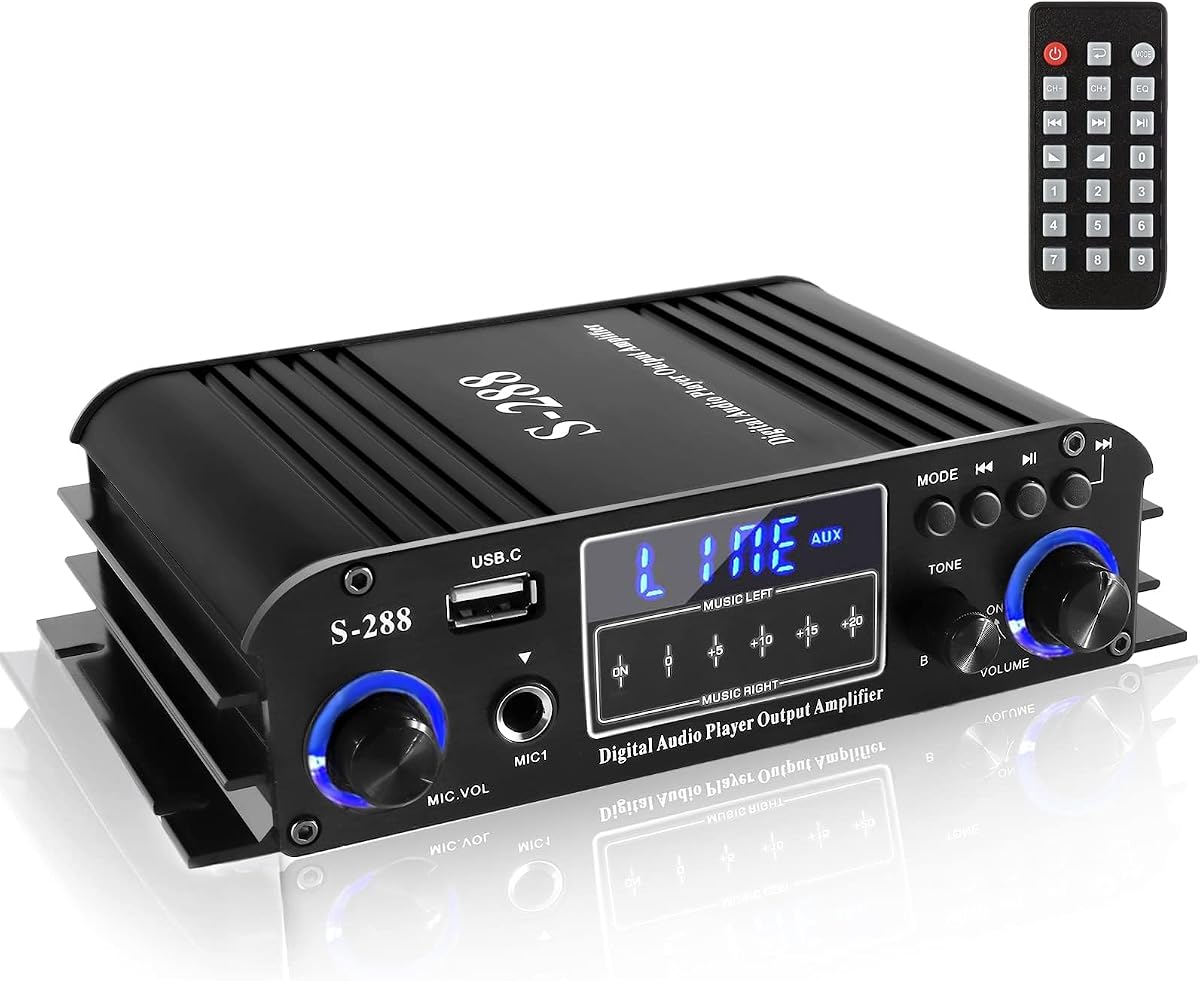
The Romicta 4 Channel amplifier delivers impressive power for its compact footprint. With 50W RMS per channel it is capable of driving 4 Ohm speakers effectively in smaller spaces like bedrooms or home offices.
We may earn a commission when you buy through this link, at no additional cost to you.
Its Class D design ensures low heat generation and high efficiency. The included remote adds convenience allowing you to adjust settings from across the room easily.
It lacks advanced surround processing features but provides clean stereo sound. It is a practical choice for those prioritizing raw power and simplicity over complex features.
Ideal for desktop setups or secondary rooms where space is limited. It offers strong performance without the bulk of larger units.
Class D technology keeps the unit cool during long listening sessions.
Use the remote to control volume and sources easily.
We may earn a commission when you buy through this link, at no additional cost to you.
The Pyle PT796BT.5 offers extensive connectivity and power for large home theater setups. Its 2000W peak power and 7.1 channel support make it capable of filling large rooms with sound.
We may earn a commission when you buy through this link, at no additional cost to you.
DSP technology helps enhance audio clarity and bass management. It supports 4K pass-through ensuring your video signals remain intact when connected to modern TVs.
Some users report lower stability ratings compared to premium brands. However for those seeking maximum channel count at a lower price it offers significant utility.
Best for large spaces where channel count and power are priorities over audio finesse. It is a capable unit for budget-conscious enthusiasts.
The dedicated subwoofer output enhances low-frequency performance.
Support for 4K ensures high resolution video transmission.
We may earn a commission when you buy through this link, at no additional cost to you.
The Pyle 4-Channel Amp with Talk Over is designed for environments requiring voice announcements. This feature allows you to interrupt music playback for important communications instantly.
We may earn a commission when you buy through this link, at no additional cost to you.
It includes dual mic inputs which is rare in consumer receivers and adds versatility for public speaking events. The AM/FM tuner provides additional entertainment options without extra hardware.
Audio fidelity is functional but not suitable for critical listening. It excels in utility and practical features rather than high-end audio quality.
Ideal for commercial settings or home use where announcements are frequent. It provides essential tools for managing audio effectively.
The talk over button mutes music instantly for voice input.
The AM/FM tuner offers access to local radio stations.
We may earn a commission when you buy through this link, at no additional cost to you.
This variant of the Pyle 7.1 receiver offers similar capabilities to its sibling with 2000W power. It is designed to handle complex speaker arrangements and deliver loud sound in large environments.
We may earn a commission when you buy through this link, at no additional cost to you.
The VFD display provides clear visibility of settings which is helpful during setup. It supports 4K HD pass-through ensuring compatibility with modern display technologies.
While feature-rich the reliability ratings suggest careful handling. It serves well for budget-focused builds where maximum power is needed.
A good choice for those needing 7.1 channels without paying premium prices. It balances cost and channel count.
The VFD display makes navigation and status checking easy.
Peak power ensures you have enough volume for any event.
We may earn a commission when you buy through this link, at no additional cost to you.
The Pyle 5.2 Channel receiver delivers solid immersion for home theater setups. Its 1000W maximum power and surround modes help create an engaging audio experience for movies and games.
We may earn a commission when you buy through this link, at no additional cost to you.
Built-in protection features ensure your equipment remains safe from electrical issues. The DAC input allows for better digital signal processing from computers or consoles.
It is a reliable budget option for users who want 5.2 channels without overspending. Performance is good for the price though not comparable to high-end models.
Best for casual users needing a balanced home theater system. It provides good value and essential protection.
Overcurrent and short circuit protection safeguard your speakers.
The DAC interface allows direct connection to digital sources.
We may earn a commission when you buy through this link, at no additional cost to you.
Selecting the right receiver involves understanding impedance matching, power requirements, and feature sets to ensure your system performs reliably.
Speakers with 4 Ohm impedance draw more current than standard 8 Ohm speakers. You must choose an amplifier rated to handle this load to prevent overheating or distortion. Check the manual for explicit support of 4 Ohm stability.
Always verify the impedance rating before connecting low impedance speakers to avoid damaging the receiver.
Ensure the receiver provides enough wattage per channel to drive your speakers effectively. Look for RMS power ratings rather than peak wattage for accurate comparisons. Higher wattage ensures dynamic sound without clipping.
Match the power output to your room size and speaker efficiency for optimal performance.
Determine how many channels you need based on your speaker layout. A 5.1 system is standard for home theaters while 2.1 is sufficient for music. More channels offer better immersion but increase complexity.
Choose a configuration that matches your current speaker count and room dimensions.
Check for modern inputs like HDMI 2.1 and Bluetooth to ensure compatibility with your devices. Streaming capabilities add convenience while digital outputs improve sound quality. Avoid models with outdated ports.
Prioritize HDMI versions and wireless options that fit your current tech ecosystem.
Formats like Dolby Atmos and DTS:X enhance immersion by adding height channels. Ensure your receiver supports the formats you plan to use. This feature is essential for movie enthusiasts.
Select a model that supports the latest audio standards for future-proofing.
A robust power supply and heat dissipation are critical for longevity especially with high power outputs. Check reviews for thermal stability and component quality. Good build quality ensures consistent performance.
Invest in a unit with solid construction to prevent overheating issues.
Advanced receivers include software to adjust sound based on room acoustics. This helps correct for uneven bass or treble. It is a valuable feature for optimizing sound in any room.
Look for automatic calibration tools to get the best sound from your space.
An intuitive menu system makes setup and daily use easier. Apps and remote control options add convenience. Complex interfaces can lead to frustration during initial configuration.
Choose a system with a clear interface that matches your technical comfort level.
Ensure all connections are secure and speakers are matched to the correct terminals. Proper wiring prevents short circuits and ensures clear sound. Double check polarity before powering on the system.
Allow the receiver to cool down between heavy use sessions especially if using high volume. Adequate airflow around the unit prevents overheating. Keep vents free of dust and debris.
Regularly update firmware to access new features and improvements. Use high-quality cables for best signal transfer. Follow the manual for specific maintenance tips and settings.
No you must ensure the receiver is explicitly rated for 4 Ohm loads. Connecting them to an incompatible model can cause overheating and permanent damage. Always check the specifications before making a purchase.
4 Ohm speakers draw more current which can result in higher volume levels and better dynamics. They are often used in home theaters where powerful sound is required. They need robust amplifiers to perform well.
Not necessarily but some receivers have limited power capacity. If your unit struggles to drive 4 Ohm speakers a separate amplifier or pre-amp is recommended. This ensures stable and clean audio output.
Common signs include reduced performance shutdowns or a burning smell. If the receiver gets too hot to touch it is likely struggling with the load. Ensure it is ventilated and not overloaded.
Most users do not need 8K support yet as content is limited. It is a future-proof feature but 4K is currently sufficient for most content. Consider it if you plan to keep your receiver for many years.
Bluetooth and Wi-Fi streaming add convenience for music playback. They are not essential for basic TV audio but enhance the overall experience. Most modern receivers include at least basic Bluetooth connectivity.
RMS power is continuous output which is the true measure of performance. Peak power is a momentary burst which is often exaggerated. Focus on RMS watts for reliable power expectations.
Check for firmware updates every few months to fix bugs and add features. Manufacturers release updates periodically so checking the website or app is wise. Keeping software current ensures stability and security.
Our top picks offer a range of options from budget-friendly models to premium high-fidelity units. The Denon AVR-S570BT and STRDH190 provide excellent entry points for different needs.
Prioritize impedance compatibility and power output to ensure your speakers perform safely and effectively. Matching your receiver to your room and usage patterns is key to satisfaction.
Always check the latest prices and availability on the product pages to ensure you get the best deal. Your audio experience depends on choosing the right power for your specific setup.