
NVIDIA DGX Spark™ 2 Pack with Cable Bundle
5.0Editor score
Up to 1 petaFLOP AI performance
128GB unified memory per unit
Grace Blackwell architecture integration
This guide compares the best CPUs for Machine Learning including NVIDIA and AMD options tailored for local AI model training inference and heavy computational
Choosing the right CPU for machine learning tasks requires balancing core count, cache size, and memory bandwidth to handle complex algorithms efficiently without bottlenecks.
We analyzed ten top processors ranging from consumer grade chips to specialized supercomputer units focusing on performance metrics relevant to AI development and deployment scenarios.
Each pick highlights unique strengths for specific workloads while noting that pricing and availability fluctuate frequently so verify current deals before making your final hardware investment decision.
5.0Editor score

5.0Editor score

4.8Editor score
Below is a detailed side-by-side comparison of all ten selected processors highlighting their core counts, clock speeds, cache sizes, and specific architectural advantages for machine learning tasks.



This powerhouse delivers enterprise scale AI capabilities directly to your desk with a perfect rating from users who demand maximum performance.
We may earn a commission when you buy through this link, at no additional cost to you.
With up to one petaFLOP of AI performance and 128GB of unified memory it handles models up to 200 billion parameters effortlessly.
The Grace Blackwell architecture ensures seamless deployment from local development to production environments reducing your time to solution.
Ideal for organizations needing localized high performance computing without relying on external cloud resources or massive data center setups.
Accelerates rapid testing validation and iteration for custom models within a secure and high performance local setting.
Delivers exceptional return on investment through increased productivity by augmenting existing laptop or data center resources.
We may earn a commission when you buy through this link, at no additional cost to you.
Built on AMD Zen 5 technology this processor offers significant IPC uplift and power efficiency suitable for parallel processing tasks.
We may earn a commission when you buy through this link, at no additional cost to you.
The 96MB L3 cache helps reduce latency for data heavy operations allowing higher clock speeds up to 5.2GHz consistently.
While marketed for gaming its architecture supports multi-threaded workloads well making it versatile for development and inference.
Developers looking for a balanced desktop solution will appreciate the drop in ready Socket AM5 infrastructure without extra costs.
Large L3 cache provides better thermal performance and enables higher clock speeds for faster data access times.
Ensures seamless drop in readiness with proven Socket AM5 infrastructure for future proofing your build.
We may earn a commission when you buy through this link, at no additional cost to you.
Intel Core Ultra desktop processors improve performance and efficiency allowing your PC to run cooler quieter and quicker under load.
We may earn a commission when you buy through this link, at no additional cost to you.
Performance Hybrid Architecture integrates two core microarchitectures prioritizing and distributing workloads to optimize overall system performance.
With up to 5.7 GHz unlocked speeds and 40MB cache it handles heavy computational tasks while saving energy during lighter usage.
This CPU suits users wanting ultra efficient operation combined with robust processing power for multi tasking and local development.
Prioritizes and distributes workloads effectively across P cores and E cores to optimize performance and efficiency.
Offers unlocked speeds up to 5.7 GHz for rapid execution of demanding AI preprocessing tasks.
We may earn a commission when you buy through this link, at no additional cost to you.
This 16 core processor is designed for high end gaming and content creation delivering massive parallel processing capability.
We may earn a commission when you buy through this link, at no additional cost to you.
Boasting a max boost clock up to 5.7 GHz it handles intensive threads with low latency and high throughput rates.
Built on Zen 5 architecture it provides a balance of power and thermal efficiency essential for long training runs.
Users needing raw multi core performance for local dataset preparation will find this unit delivers consistent top tier results.
Delivers fast execution for parallelized tasks through 16 cores optimized for content creation and heavy processing.
Max boost clock up to 5.7 GHz ensures rapid processing speeds for time sensitive computational needs.
We may earn a commission when you buy through this link, at no additional cost to you.
Offering 12 cores and 24 threads this processor delivers ultra fast performance suitable for heavy multitasking and prep tasks.
We may earn a commission when you buy through this link, at no additional cost to you.
With 76 MB cache and support for DDR5 5600 memory it ensures data moves quickly between CPU and storage subsystems.
Unlocked for overclocking on the Socket AM5 platform it allows enthusiasts to squeeze extra performance for tight timelines.
Developers seeking a cost effective way to speed up local preprocessing pipelines will find this unit hard to beat.
Supports DDR5 5600 memory and features 76 MB cache to reduce latency during heavy data processing tasks.
Fully unlocked for overclocking allowing users to push performance limits on the AM5 platform safely.
We may earn a commission when you buy through this link, at no additional cost to you.
This processor provides dependable and fast execution of tasks with maximum efficiency making it suitable for steady workloads.
We may earn a commission when you buy through this link, at no additional cost to you.
Utilizing 5 nm process technology it offers reliable performance with maximum productivity while keeping energy consumption low.
The octa core design allows multitasking with great reliability and fast processing speed for multiple concurrent development environments.
Users needing a stable platform for routine AI tasks might prefer this unit for its efficiency and strong cache hit rates.
Features 96 MB L3 cache memory to provide excellent hit rate in short access time for improved performance.
Built with 5 nm process technology for reliable performance with maximum productivity during extended usage.
We may earn a commission when you buy through this link, at no additional cost to you.
Built for local AI development this unit features 128GB unified memory and support for up to 200B parameter models.
We may earn a commission when you buy through this link, at no additional cost to you.
The AMD Ryzen AI Max+ 395 Processor pairs with an AMD XDNA 2 NPU delivering up to 50 TOPS for inference.
Preloaded tools models and workflows optimize your setup for local AI development without needing complex manual configurations.
Ideal for developers who need a compact connected design with full AMD ROCm software support for intensive workloads.
Features an AMD XDNA 2 NPU with up to 50 TOPS to accelerate AI tasks efficiently without GPU dependency.
Provides 128GB LPDDR5x unified memory to support larger AI models across CPU GPU and NPU seamlessly.
We may earn a commission when you buy through this link, at no additional cost to you.
Play harder and work smarter with Intel Core 14th Gen processors offering a leading max clock speed of up to 6.0 GHz.
We may earn a commission when you buy through this link, at no additional cost to you.
This unit features 24 cores and 32 threads to handle rapid responsiveness and smoother game play or data tasks.
Platform support cuts your load times giving you the space to run the most demanding games or compute jobs locally.
While it has mixed reviews its raw speed makes it an option for single threaded bottlenecks in some workflows.
Delivers a leading max clock speed of up to 6.0 GHz for rapid responsiveness in single threaded tasks.
Supports both DDR4 and DDR5 platforms to cut load times and give space for demanding workloads.
We may earn a commission when you buy through this link, at no additional cost to you.
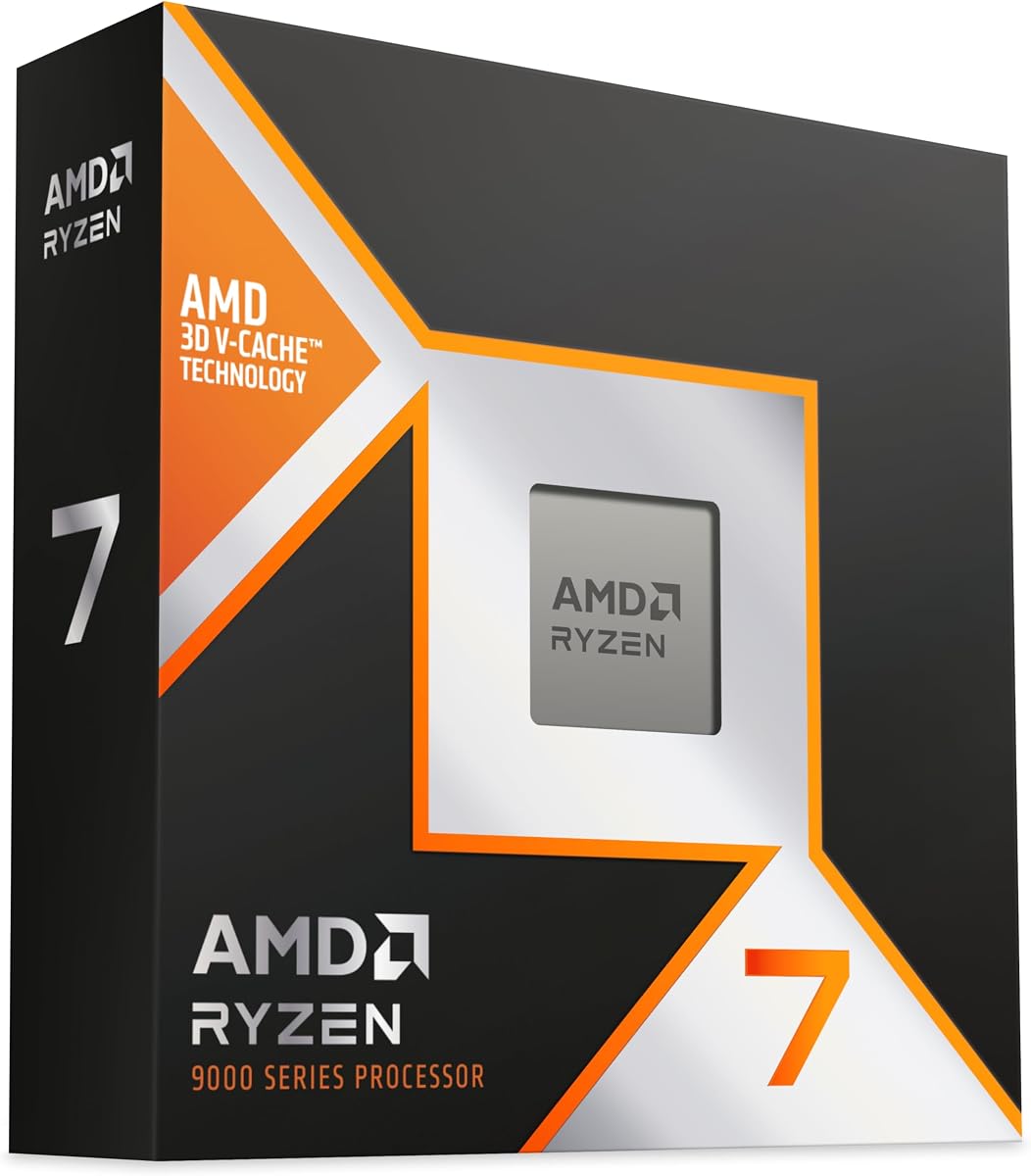
This processor represents the latest entry in AMD's lineup offering high performance capabilities for various desktop tasks.
We may earn a commission when you buy through this link, at no additional cost to you.
Though detailed specs are limited in the data it aligns with high efficiency standards seen in recent Ryzen 7 models.
Users seeking a reliable desktop unit for general development might find its core performance adequate for lighter AI tasks.
Given the strong rating it suggests consistent reliability which is critical for uninterrupted work during model iteration.
Aligns with high efficiency standards seen in recent Ryzen 7 models for reliable desktop processing.
Compatible with AM5 socket type ensuring it fits standard modern motherboard platforms easily.
We may earn a commission when you buy through this link, at no additional cost to you.
NVIDIA DGX Spark brings supercomputer performance directly to your desk in a compact energy efficient design.
We may earn a commission when you buy through this link, at no additional cost to you.
It delivers up to 1 petaFLOP of AI performance for local model fine tuning inference and analytics.
The 128GB unified memory allows experimentation with large models up to 200 billion parameters directly on desktop.
Ideal for those needing to prototype and innovate faster by augmenting existing cloud or data center resources locally.
Enables local model fine tuning inference and analytics accelerating your time to solution significantly.
Designed as an energy efficient solution to enable enterprise scale AI right where you need it.
We may earn a commission when you buy through this link, at no additional cost to you.
Selecting the right CPU involves evaluating core counts, memory bandwidth, cache sizes, and specialized AI accelerators to ensure efficient training and inference.
Higher core counts allow better parallelization of tasks which is crucial for data preprocessing and model inference steps.
Prioritize CPUs with at least 12 to 16 threads for smooth multitasking during development cycles.
Larger L3 cache reduces latency when accessing frequently used data improving overall throughput for compute heavy workloads.
Look for processors with 60MB or more of cache to handle complex datasets efficiently.
Fast memory bandwidth ensures data feeds the CPU quickly preventing bottlenecks during large scale matrix operations.
Opt for DDR5 support and high speed RAM configurations to maximize system throughput.
Some modern processors include NPUs or integrated accelerators that handle specific machine learning tasks without GPU load.
Check for NPU performance metrics like TOPS when evaluating standalone inference capabilities.
Ensure your chosen CPU matches your motherboard socket to avoid compatibility issues and future upgrade limitations.
Verify chipset support for PCIe 5.0 and latest memory standards for future proofing.
Efficient thermal design allows for sustained performance during long training runs without throttling or overheating.
Select models with efficient manufacturing processes such as 5nm or better for stable operations.
Unified memory pools allow seamless data sharing between CPU and integrated GPU reducing transfer bottlenecks.
Prioritize systems with 128GB or more unified memory for larger local AI models.
Verify official support for development frameworks like ROCm or CUDA to ensure seamless integration with your tools.
Choose vendors that offer optimized drivers for your specific operating system and AI libraries.
Install your CPU carefully following the manufacturer guidelines to ensure proper seating and thermal paste application.
Keep your system cool by using adequate cooling solutions and maintaining good airflow in your computer case.
Regularly update drivers and firmware to maintain optimal performance and compatibility with new AI frameworks.
Yes a standard CPU can handle preprocessing inference and lightweight model training although GPUs are generally faster for heavy training. Modern CPUs with high core counts and large caches can manage these tasks efficiently for local development.
Unified memory allows the CPU GPU and NPU to share a single large pool of RAM which reduces data transfer latency. This is critical for running large models locally without needing separate high speed GPU VRAM.
For local development 8 to 12 cores are often sufficient for preprocessing and inference. However complex training tasks benefit significantly from 16 or more cores to parallelize workloads effectively.
Not necessarily but they offer enterprise scale performance in a compact desktop unit. Small teams can often start with high end consumer CPUs and GPUs depending on model size and training frequency.
Yes AMD Ryzen processors support major frameworks through ROCm and optimized libraries. Many developers prefer them for their balance of performance and compatibility with open source tools.
Yes because AI workloads often sustain high utilization over long periods. A dedicated cooling system prevents thermal throttling and ensures consistent performance during extended training or inference sessions.
Our top picks range from the NVIDIA DGX Spark for maximum performance to the AMD Ryzen 9 9900X for budget friendly efficiency.
Prioritize core count and cache size based on whether your workflow leans more towards preprocessing or heavy model fine tuning.
Always check current availability and pricing as hardware costs change rapidly and deals may vary across retailers.