
GLOTRENDS M.2 NVMe to PCIe 4.0 X4 Adapter with Heatsink for NVMe SSD
4.6Editor score
Supports PCIe 4.0 and 3.0
Includes 12cm and 8cm brackets
Cools SSDs by 5 to 20 degrees
This guide compares the top M2 Pcie Adapter options for NVMe SSDs including budget picks and premium cards for desktop storage expansion and boot drive setups.
Finding the right M2 Pcie Adapter can transform your desktop storage capabilities significantly. These cards allow you to install fast NVMe SSDs into standard PCIe slots on your motherboard for improved performance.
We compared ten highly rated adapters based on thermal design, compatibility, and build quality. Our analysis covers single drive options and multi-drive cards suitable for RAID configurations and workstation needs.
Each pick highlights key features and potential limitations to help you decide. Prices fluctuate frequently so verify current deals before purchasing to ensure you get the best value for your budget today.
4.6Editor score
4.6Editor score

4.4Editor score
The following table provides a side-by-side comparison of all ten adapters. Review each specifications to find the right fit for your specific motherboard and storage requirements.




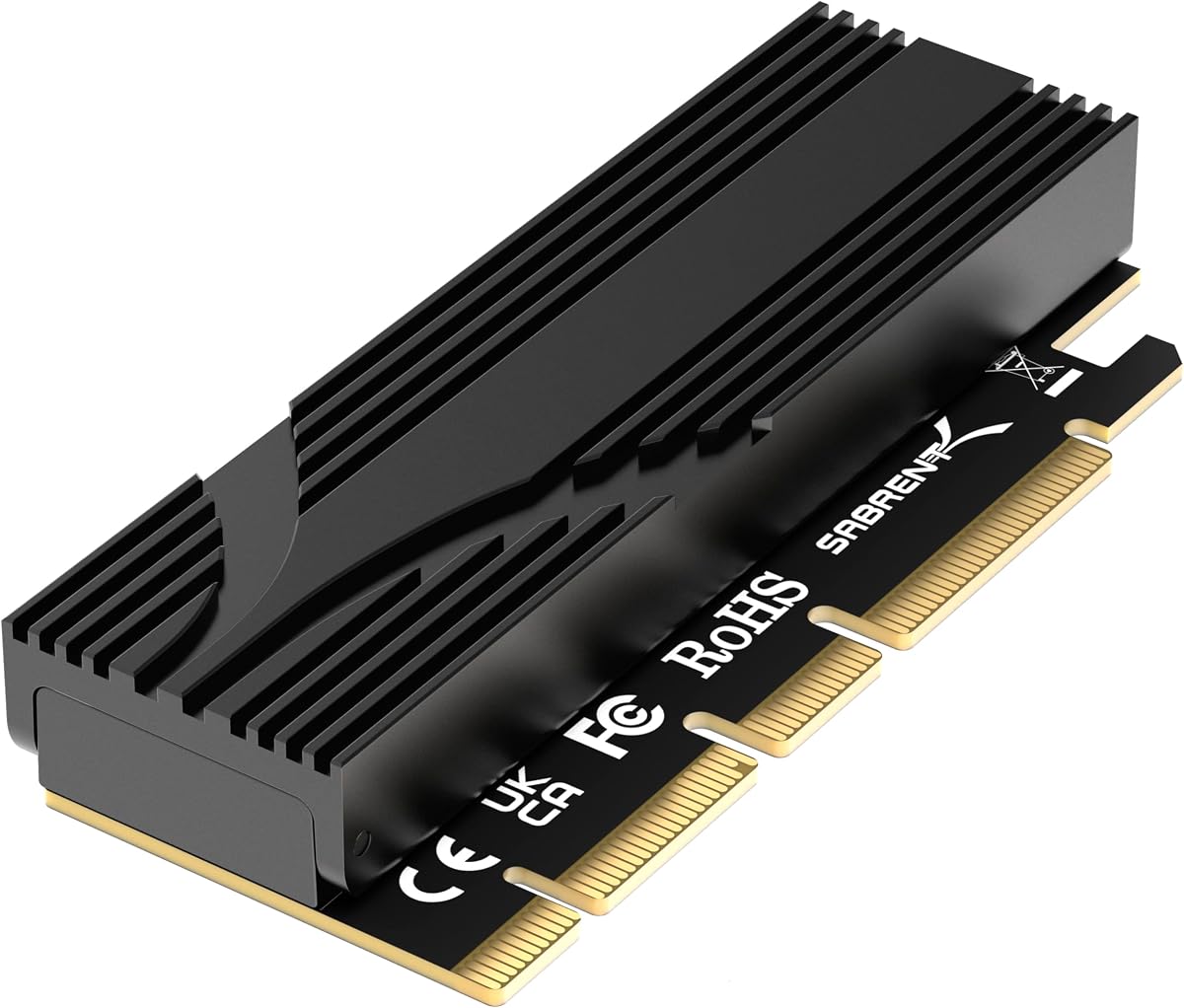
The SABRENT adapter stands out as a top choice for those needing high performance. It holds a strong rating for its ability to handle next generation speeds and ease of installation.
We may earn a commission when you buy through this link, at no additional cost to you.
Its standout feature is the tool-free installation design. This allows users to swap drives quickly without dealing with tiny screws. The physical x16 connector adds stability and avoids motherboard bifurcation issues.
While it supports Gen5 speeds the actual performance depends on your slot generation. You need a Gen5 motherboard to see maximum benefits. Otherwise it runs at the speed of your available slot.
This adapter is ideal for builders wanting fast single drive upgrades. It simplifies installation and provides excellent thermal management. Consider this if you have a compatible slot and need reliability.
Installation becomes much faster without needing screwdrivers for M.2 screws. You can remove the drive quickly for maintenance or transfers to other machines.
Supports up to 16GBps bidirectional on Gen5 slots. This ensures future proofing for the latest SSD technologies available on the market today.
We may earn a commission when you buy through this link, at no additional cost to you.
The GLOTRENDS adapter offers excellent value for budget conscious shoppers. It maintains high ratings by delivering solid performance and essential cooling features for NVMe drives.
We may earn a commission when you buy through this link, at no additional cost to you.
A key strength is its ability to reduce temperatures significantly. The heatsink keeps your SSD cooler under load. It also supports both PCIe 4.0 and 3.0 speeds effectively.
Intel CPU users should note that below 11th generation support is limited for Gen4. This is a motherboard limitation not a fault of the adapter. Check your system specs first.
This pick is perfect for general storage expansion needs. It works well on Linux Mac and Windows. Choose this if you want reliable PCIe 4.0 performance without spending much.
The included heatsink helps maintain performance under sustained loads. It can lower temperatures by up to 20 degrees depending on airflow.
Includes both regular and low profile brackets. This ensures the adapter fits standard and small form factor desktop chassis easily.
We may earn a commission when you buy through this link, at no additional cost to you.
The ASUS Hyper card is a premium option for workstations and enthusiasts. It offers the highest capacity with four drive slots and advanced cooling features for demanding use cases.
We may earn a commission when you buy through this link, at no additional cost to you.
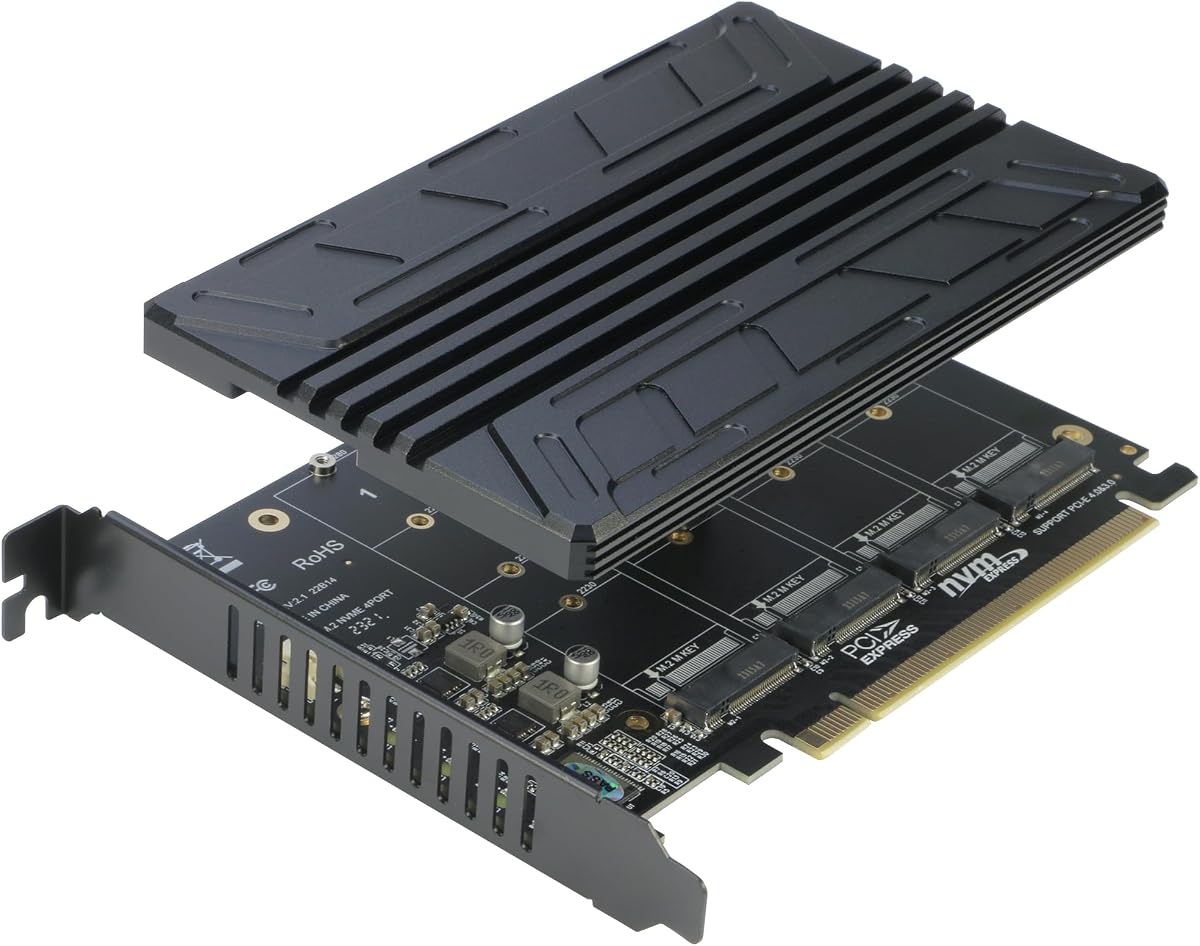
Its standout quality is the four drive support. This allows for massive storage or high performance RAID setups. The integrated blower fan helps prevent throttling during heavy workloads.
You must ensure your motherboard supports bifurcation for full functionality. This is common on server boards but not always on consumer ones. Verify compatibility before purchasing to avoid issues.
Ideal for professional users needing maximum storage speed and capacity. The high price reflects its robust features. Choose this if you need four NVMe drives in one card.
Allows installation of up to four NVMe M.2 drives simultaneously. This is unmatched by standard single drive adapters in this category.
Includes a dedicated blower style fan to manage heat. This ensures drives stay within safe temperatures even during intensive data transfers.
We may earn a commission when you buy through this link, at no additional cost to you.
StarTech is known for reliable IT hardware and this adapter reflects that reputation. It is a solid choice for environments where stability and support matter more than cutting edge speed.
We may earn a commission when you buy through this link, at no additional cost to you.
The main benefit is its broad compatibility and warranty. It works with PCIe 3.0 2.0 and 1.0 boards. The two year support gives extra peace of mind for business users.
It does not offer Gen4 or Gen5 speeds which limits performance. This makes it less ideal for gaming PCs seeking maximum throughput. It serves best as a stable boot drive option.
Consider this if you need guaranteed support and longevity. It fits well in office PCs where reliability is key. Choose it if 3.0 speeds meet your daily needs.
Backed by a two year warranty with 24/5 support. This level of backing is rare for consumer adapters and adds significant value.
Supports M-Key and NGFF drives of various sizes. This flexibility ensures it works with many different SSD models on the market.
We may earn a commission when you buy through this link, at no additional cost to you.
This adapter offers a unique hybrid approach for storage expansion. It allows you to use one NVMe drive and one SATA drive simultaneously in a single PCIe slot.
We may earn a commission when you buy through this link, at no additional cost to you.
The dual drive support is its standout feature. You can upgrade an old SATA drive and add a new NVMe at the same time. This flexibility is useful for mixed drive systems.
Performance is limited by the PCIe 3.0 x4 lane shared between drives. It will not match a single drive adapter speed. Consider this for mixed environments rather than pure speed.
Ideal for users with legacy SATA M.2 drives. It saves a PCIe slot while supporting older drive types. Choose this if you have both NVMe and SATA M.2 drives.
Accommodates both M.2 NVMe and SATA drives. This ensures you do not waste old drives when upgrading to a new system.
LEDs show power and data transfer status. This makes troubleshooting connectivity issues much easier for end users.
We may earn a commission when you buy through this link, at no additional cost to you.
This adapter provides a straightforward solution for NVMe expansion. It focuses on core functionality without extra features. This makes it a reliable choice for general use cases.
We may earn a commission when you buy through this link, at no additional cost to you.
It supports both Gen4 and Gen3 standards effectively. The aluminum heatsink helps manage temperatures passively. It works well across a wide range of drive sizes.
Since it has no active cooling fans noise remains low. This is great for quiet home office environments. Just ensure your case has enough airflow for passive cooling.
Best for users who need simple Gen4 support. It avoids complex setups while delivering solid speed. Choose this if you want a no fuss adapter at a fair price.
Accommodates sizes from 2230 to 2280. This includes common gaming and laptop SSD sizes for versatile compatibility.
Aluminum heatsink design keeps fans out of the loop. This reduces noise levels in your PC case significantly.
We may earn a commission when you buy through this link, at no additional cost to you.
The RIITOP adapter offers four slots for NVMe drives at an accessible price point. It is a strong contender for workstation builds needing multiple drives without complex cabling.
We may earn a commission when you buy through this link, at no additional cost to you.
It stands out for its individual LED indicators. These show the status of each drive independently. This helps quickly identify drive failures in a multi drive array.
You must enable bifurcation in your BIOS for it to work. Most consumer boards do not support this by default. This requirement limits its use to specific advanced hardware.
Good for server or high performance storage builds. It is cheaper than enterprise cards like ASUS. Choose this if your motherboard supports X16 bifurcation.
LEDs for each slot show activity status. This makes maintenance and monitoring much easier than blind setups.
Allows up to four NVMe drives on one card. This maximizes storage density in a single PCIe slot.
We may earn a commission when you buy through this link, at no additional cost to you.
ELUTENG provides a reliable adapter focusing on safety and stability. It includes solid state capacitors for better power regulation which helps protect your drive from spikes.
We may earn a commission when you buy through this link, at no additional cost to you.
The aluminum heatsink keeps drives cool during use. It supports a wide range of operating systems including older ones. The included low profile bracket ensures it fits smaller cases.
Speed is standard for PCIe 4.0 or 3.0 lanes. It does not offer advanced features like RAID support. This keeps the price accessible for most users.
Best for general use needing reliable storage expansion. The power protection is a nice touch for system stability. Choose this if you want a basic adapter with safety features.
Solid state capacitors stabilize voltage. This helps prevent current waves that could damage your SSD components.
Works with Windows and Linux distros out of the box. Most users will not need extra driver installations for basic storage.
We may earn a commission when you buy through this link, at no additional cost to you.
This adapter offers high speeds at a competitive price point. It focuses on delivering Gen4 performance without extra fluff. The cooling solution is adequate for typical use cases.
We may earn a commission when you buy through this link, at no additional cost to you.
It supports all standard M.2 sizes from 2230 to 2280. This ensures compatibility with most modern NVMe SSDs. The heatsink helps maintain performance under load.
It works best with major SSD brands like Samsung. If you need boot support ensure your BIOS allows PCIe boot. This is standard on most modern boards but check just in case.
Ideal for budget gamers needing fast storage. It delivers Gen4 speeds effectively. Choose this if you want full performance without paying premium brand fees.
Accommodates common drive sizes efficiently. This covers the majority of consumer SSDs available on the market.
Aluminum heatsink reduces heat by 5 to 20 degrees. This helps prevent throttling during sustained data transfers.
We may earn a commission when you buy through this link, at no additional cost to you.
This unique adapter turns a PCIe X1 slot into an M.2 slot. It is useful for cases where the GPU needs the X16 slot exclusively. This solves a common space constraint in small builds.
We may earn a commission when you buy through this link, at no additional cost to you.
Its primary benefit is slot conservation. You can add NVMe storage without sacrificing GPU performance. However bandwidth is limited by the X1 lane compared to X4.
It supports large capacity drives up to 4TB. This makes it good for media storage in constrained environments. Just expect slower speeds compared to full X4 adapters.
Best for SFF builds needing extra storage. It keeps your GPU lane free for graphics. Choose this if your system has no other free PCIe slots.
Allows use of free X1 slots. This is essential for systems where X16 slots are occupied by graphics cards.
Supports drives up to 4TB without limit. This ensures it can handle large media libraries or storage needs.
We may earn a commission when you buy through this link, at no additional cost to you.
Choosing the right adapter requires understanding your motherboard and storage needs. Review these factors to ensure compatibility and performance.
The adapter version you choose should match your motherboard slot generation. A Gen5 adapter will run at Gen4 speeds in a Gen4 slot. Check your motherboard manual to confirm slot speed before buying.
Ensure your slot supports the generation you need for target speeds.
Most adapters support NVMe drives but not SATA M.2 drives. Confirm your drive has an M-Key interface. SATA drives will not work in NVMe specific adapters.
Verify drive interface before purchasing to avoid returns.
NVMe drives generate heat under load. Look for adapters with aluminum heatsinks. Active cooling fans may be needed for sustained heavy workloads.
Check for heatsinks to prevent thermal throttling.
Multi-drive adapters require motherboard bifurcation support. Single drive cards do not need this. Check BIOS settings to see if you can split PCIe lanes.
Ensure your BIOS supports lane splitting for multi-drive cards.
Tall CPU coolers or GPUs may block PCIe slots. Measure the space before buying a full length card. Low profile options exist for smaller cases.
Measure case space to ensure the adapter fits.
Some older motherboards do not support booting from NVMe via adapter. Check BIOS settings for PCIe boot options. Windows 7 may need extra drivers.
Confirm boot support if you plan to install the OS on the adapter drive.
Some adapters offer tool-free mounting. Others require screws. Consider how often you plan to swap drives. Tool-free options simplify maintenance.
Look for tool-free mounts if you swap drives often.
Business grade options often offer longer warranties. Check manufacturer support policies. Enterprise brands may provide better long-term reliability.
Consider warranty length for business critical systems.
Install the adapter into a free PCIe slot on your motherboard. Secure it with screws and connect any required power if applicable. Boot your system to ensure the BIOS detects the drive.
Use disk management tools to initialize and format the new drive. You may need to install drivers for older operating systems. Linux and Windows 10 usually detect NVMe automatically.
Keep your PC case clean to maintain airflow over the adapter. Periodically check drive temperatures during use. Ensure the heatsink has no dust buildup for optimal cooling.
Most adapters support NVMe drives only. Check product details for SATA support. Some hybrid models exist but are rare. Verify interface type before buying.
Single drive adapters usually work without changes. Multi-drive cards need bifurcation enabled. Check your motherboard manual for BIOS settings. This is key for using multiple drives.
Yes it will work at reduced speeds. The adapter adapts the slot generation. You get the max speed of the slot not the drive. Ensure you know your slot speed first.
Yes most modern motherboards support booting from NVMe. Some older BIOS versions may not. Check your manual for boot options. Windows 10 and 11 usually support this.
Most Linux distros have native NVMe support. You typically do not need extra drivers. Some older distros may require updates. Check your kernel version for compatibility.
Check your motherboard manual or manufacturer website. High end boards often support it. Many consumer boards do not. Use a single drive adapter if unsure.
We have reviewed ten top M2 Pcie Adapters for various needs. From budget single drive options to premium multi drive cards there is something for every build.
Prioritize compatibility and thermal management when choosing. Ensure your motherboard supports the slot generation and boot options needed for your setup.
Prices change often so check current listings before buying. Verify your system specs against product requirements to ensure a successful upgrade experience today.