
Entina Tina2C
4.4Editor score
Mini footprint saves desk space
WiFi and app control included
STEM modules ready to use
Compare the top 3D printer for educational use options for schools and homes, evaluating safety, ease of use, and STEM learning features.
Choosing the right 3D printer for educational use involves balancing safety, ease of use, and learning potential. Modern machines now feature auto-leveling, enclosed chambers, and app controls that simplify the experience for students and teachers alike.
We compared ten leading models based on setup time, safety certifications, filament compatibility, and software ecosystems. Each product was evaluated for its ability to support STEM curricula while maintaining reliable performance in classroom environments.
Each pick highlights specific strengths like speed, multi-color capabilities, or kid-friendly interfaces. Prices and availability change frequently, so check current listings before purchasing to ensure you get the best value for your educational needs.
4.4Editor score

4.7Editor score

4.6Editor score
This side-by-side comparison highlights key differences across speed, safety, and features to help you select the ideal machine for your classroom or home learning setup.





The Bambu Lab A1 is the premier choice for schools and makers seeking reliability. With a 4.7 rating, it offers full auto-calibration and high-speed precision ideal for classroom demonstrations.
We may earn a commission when you buy through this link, at no additional cost to you.
Its unique acceleration of 10,000 mm/s² enables fast print cycles without sacrificing detail. Active flow compensation ensures smooth layers, while the quiet motor noise canceling keeps environments peaceful during lessons.
Users note the multi-color potential via AMS lite is great for teaching design concepts, though it must be purchased separately. The touchscreen interface is intuitive, minimizing downtime caused by setup confusion.
Buyers looking for high-end performance at mid-range pricing will love the A1. It stands out for reliability and speed, making it the top pick for educational use today.
The A1 handles bed leveling and Z-offsets automatically. This removes calibration variables that typically frustrate beginners, allowing students to focus on creativity rather than tweaking settings.
By adding the AMS lite, educators can teach multi-color design. This capability expands STEM projects, letting students create complex models like color-coded maps or anatomical parts.
We may earn a commission when you buy through this link, at no additional cost to you.
The Entina Tina2C is perfect for younger students or limited classroom spaces. Rated 4.4, this mini printer offers guided setup via an app and includes extensive STEM learning resources.
We may earn a commission when you buy through this link, at no additional cost to you.
It starts printing in just eight minutes. This fast workflow keeps engagement high, while auto-leveling ensures first-layer success. The Poloprint Cloud app connects to 3000+ models for easy project selection.
The compact size is ideal for home use or individual student desks. However, the small build volume means large projects won't fit. The software is robust but requires app installation for full functionality.
Families and teachers needing an affordable, educational-focused machine should choose this. It turns printing into a structured learning experience rather than just a hobby tool.
The Poloprint Cloud app provides over 20 creative modules and updated courses. This transforms the printer into a structured educational tool, guiding students through design principles and logic challenges.
With a 3.9-inch build volume, the Tina2C fits easily on any desk. This makes it scalable for group activities where each student needs their own station without cluttering the space.
We may earn a commission when you buy through this link, at no additional cost to you.
The Ugee Funbox stands out for its safety certifications and AI-driven creativity. Rated 4.6, it offers a fully enclosed, GREENGUARD Gold certified build ideal for unsupervised student use.
We may earn a commission when you buy through this link, at no additional cost to you.
Its AI allows kids to snap a photo or type text to generate printable models instantly. This removes technical barriers, allowing younger children to engage in design thinking without complex CAD software.
The enclosed design and HEPA filtration ensure air quality and physical safety. While it focuses on single-color PLA, the ability to mix assembled parts teaches engineering planning. The extensive library offers endless inspiration.
Educators prioritizing safety and creativity will find the Funbox unmatched. It acts as a complete learning ecosystem rather than just a printer, making it the premium choice for modern classrooms.
The Funbox meets UL GREENGUARD Gold standards for low emissions. This critical feature ensures air quality is maintained during classroom printing, protecting sensitive students from fumes.
Using the UFun App, kids can generate models from text or drawings. This bridges the gap between imagination and physical objects, teaching design concepts through intuitive interfaces.
We may earn a commission when you buy through this link, at no additional cost to you.
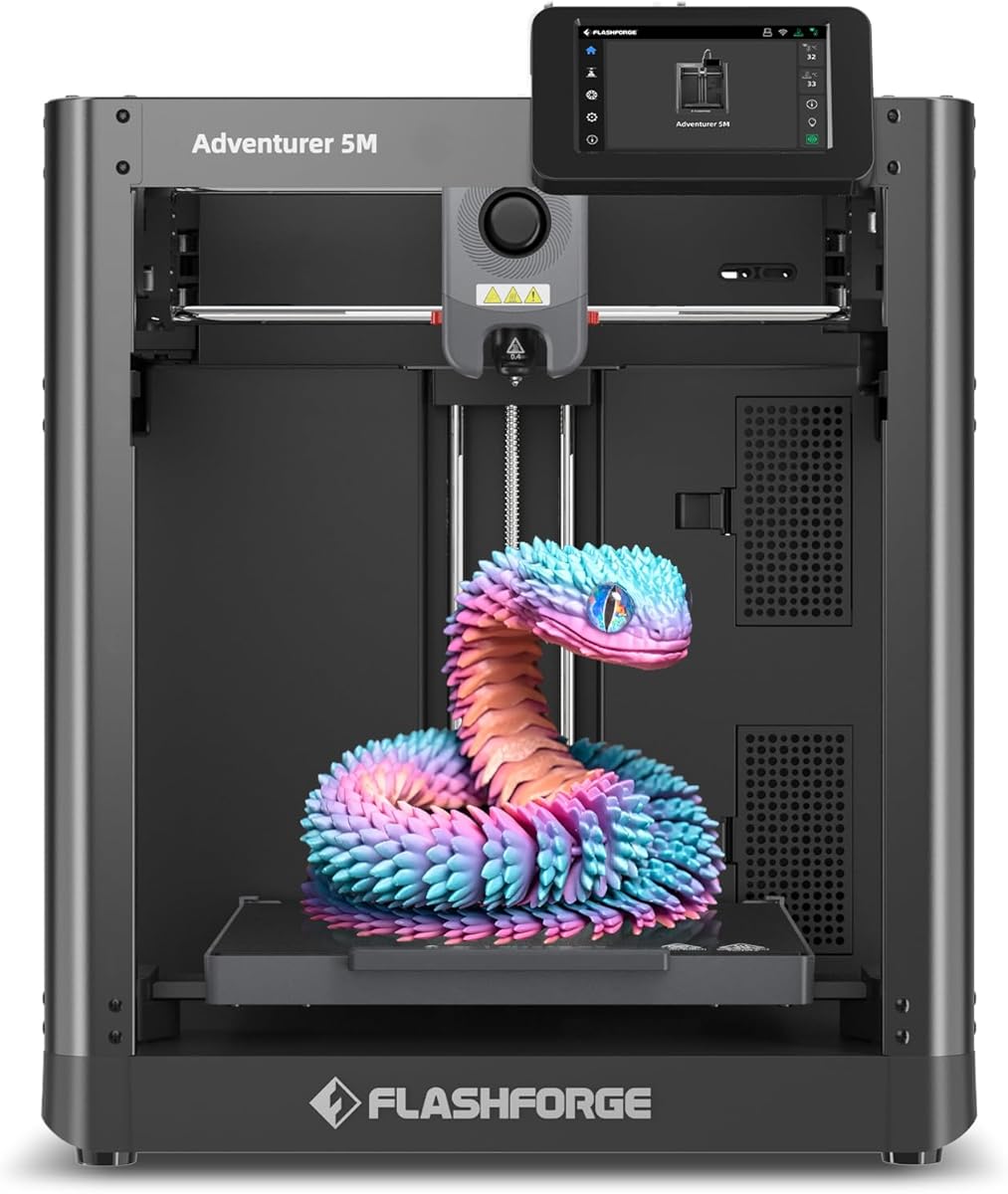
The Adventurer 5M offers impressive speed at 600mm/s, making it efficient for high-volume school projects. Rated 3.9, it features auto-leveling and a robust metal frame for stability.
We may earn a commission when you buy through this link, at no additional cost to you.
Its CoreXY structure ensures precise motion even at high speeds. The direct-drive extruder supports various filaments, and 3-second nozzle swaps simplify maintenance during class time.
While fast and affordable, the open frame exposes hot components. This requires supervision for younger kids. The rating reflects some variability in user experience, but it remains a strong value proposition.
Teachers needing speed and large build volume should consider this model. It balances performance and cost effectively, though supervision is required for safety.
Printing at 600mm/s reduces wait times significantly. This is ideal for science fairs or group assignments where time is limited and multiple parts need rapid fabrication.
The all-metal CoreXY frame ensures longevity. In busy classroom environments where machines are used frequently, a sturdy build reduces mechanical issues over time.
We may earn a commission when you buy through this link, at no additional cost to you.
The AD5M brings reliable automation to classrooms. Rated 4.3, it features one-click leveling and power outage recovery, ensuring classes don't lose progress due to power fluctuations.
We may earn a commission when you buy through this link, at no additional cost to you.
Its CoreXY structure supports smooth high-speed printing. The PEI plate allows easy part removal by bending, while quick-swap nozzles minimize downtime when switching projects.
While it is a strong performer, the open frame requires adult supervision regarding hot surfaces. However, the automation features make it forgiving for students learning to operate 3D printers.
Schools looking for a balance of speed and ease of use will appreciate this model. It provides professional features like power recovery without a prohibitive price tag.
Power loss is common in schools. The AD5M saves print progress and resumes automatically, preventing wasted materials and ensuring project completion even after unexpected outages.
The PEI plate allows parts to be removed easily by bending. This reduces frustration for students stuck removing models, making the workflow smoother and more enjoyable.
We may earn a commission when you buy through this link, at no additional cost to you.
The Bambu Lab P1S is designed for advanced classroom projects. Rated 4.5, it offers an enclosed body that enables safe printing of engineering filaments like ABS and ASA.
We may earn a commission when you buy through this link, at no additional cost to you.
Its speed of 500mm/s ensures rapid prototyping for engineering courses. The automatic leveling and setup in 15 minutes minimize downtime. The enclosure also reduces noise, creating a quieter learning environment.
While costlier than entry options, the P1S supports a wider range of materials. This versatility is essential for high schools or universities teaching industrial design and engineering principles.
For institutions needing durability and material versatility, the P1S is a top-tier choice. It bridges the gap between hobbyist machines and professional equipment.
The enclosure allows safe printing of ABS and ASA. This expands curriculum options, letting students explore stronger, heat-resistant materials beyond basic PLA.
High speeds of 500mm/s enable quick iterations. This is crucial for engineering classes where multiple design iterations must be printed and tested within a semester.
We may earn a commission when you buy through this link, at no additional cost to you.
The P2S Combo brings multi-color capabilities to the classroom. Rated 4.7, it combines a high-speed printer with the AMS 2 Pro for seamless multi-color and multi-material workflows.
We may earn a commission when you buy through this link, at no additional cost to you.
Its adaptive airflow system ensures quality across various filaments. The built-in drying system maintains filament integrity, crucial for consistent educational prints. Setup takes just 15 minutes for quick deployment.
While expensive, the P2S offers professional-grade features. It is ideal for makerspaces needing high output and complex color projects like architectural models or engineering prototypes.
Budget allows, this machine provides unparalleled versatility. It handles complex designs effortlessly, making it a powerful tool for advanced educational programs.
The AMS 2 Pro includes a dryer. This keeps filament dry and ready for printing, reducing failures caused by moisture—a common issue in humid classroom environments.
With multi-color capability, students can print complex parts in one go. This saves hours of assembly and teaches advanced design strategies.
We may earn a commission when you buy through this link, at no additional cost to you.
This variant of the Adventurer 5M emphasizes performance. Rated 4.3, it features a filament run-out sensor to prevent failed prints—a critical safety feature for classrooms.
We may earn a commission when you buy through this link, at no additional cost to you.
Speed remains a highlight at 600mm/s. The auto-leveling ensures consistent first layers, while the dual-sided PEI plate simplifies part removal. These features reduce friction for students.
The open frame design is efficient but requires supervision around hot surfaces. However, the sensor alerts users before runs-out, preventing waste and frustration.
For schools needing fast, reliable printing with safety features, this is a solid choice. It balances automation and speed effectively for daily educational use.
The run-out sensor pauses printing when empty. This prevents failed prints and wasted filament, teaching students about process monitoring and conservation.
The plate offers two surfaces for different adhesion needs. This flexibility supports various materials and simplifies cleanup between projects.
We may earn a commission when you buy through this link, at no additional cost to you.
The Snapmaker U1 is a powerhouse for advanced education. Rated 4.5, it offers four toolheads for true multi-color and multi-material prints in a single job.
We may earn a commission when you buy through this link, at no additional cost to you.
Its tool-changing speed of five seconds minimizes waste and time. With support for flexible and engineering materials, it expands curriculum possibilities. The large build volume accommodates bigger projects.
However, the complexity may require initial teacher training. It is best suited for makerspaces or older students needing advanced features. The price reflects its professional capabilities.
For institutions wanting to teach engineering-level design, the U1 is unmatched. It provides tools similar to industrial machines in a classroom package.
The ability to mix materials allows for functional prototypes. Students can print rigid frames with flexible joints, teaching mechanical engineering principles.
Swapping toolheads in seconds saves time. This efficiency is critical when multiple students are using the machine simultaneously.
We may earn a commission when you buy through this link, at no additional cost to you.
The A1 Mini is a space-efficient choice. Rated 4.2, it shares the A1's high performance but in a smaller chassis. This makes it ideal for tight classroom desks.
We may earn a commission when you buy through this link, at no additional cost to you.
Full-auto calibration and speed ensure quality prints. The combo option includes AMS for multi-color projects. Despite its size, it supports engineering-grade workflows.
The compact size means smaller projects. However, for individual student stations or home labs, it is perfect. The quiet motor ensures it does not disrupt class.
Teachers with limited space should prioritize the A1 Mini. It brings premium features to smaller footprints without sacrificing speed or reliability.
The Mini packs full acceleration and auto-calibration into a small box. This ensures students get premium technology regardless of desk space.
The motor noise canceling keeps environments peaceful. This is essential for maintaining focus during classroom lectures or quiet study sessions.
We may earn a commission when you buy through this link, at no additional cost to you.
Selecting the right machine requires balancing safety, ease of use, and curriculum needs. This guide covers key factors to consider.
Safety is the top priority. Look for enclosed machines like the Ugee Funbox or Bambu Lab P1S to prevent burns. GREENGUARD certification ensures air quality is maintained.
Enclosed units protect students from hot parts and reduce odors. Always choose certified models for unsupervised environments.
Auto-leveling and one-click calibration are essential for classroom use. Machines like the Bambu Lab A1 automate these steps to minimize downtime.
Avoid printers requiring manual bed leveling. Time spent calibrating is time taken away from teaching.
Software should be intuitive. Models like the Entina Tina2C offer guided apps that simplify printing. Avoid complex setups unless teaching advanced CAD.
Look for cloud slicing and easy sharing. This helps students collaborate and teachers track progress remotely.
Ensure the printer supports standard 1.75mm PLA. Advanced models like the P1S support engineering filaments for higher-level courses.
Consider extruder temperature limits. A 280°C nozzle is ideal for diverse materials. Compatibility ensures versatility for different projects.
Match the build volume to your project size. The Tina2C is perfect for small STEM kits, while the Adventurer 5M suits larger prototypes.
Larger volumes offer flexibility but take up more space. Consider how many students will use the machine simultaneously.
Multi-color printers teach advanced design. The Bambu Lab Combo models allow complex multi-color prints without extra work.
Standard printers are cheaper but limit creativity. Decide if teaching color blending is part of your curriculum before adding costs.
Quiet motors prevent classroom disruptions. Models with active noise canceling like the A1 are ideal for sensitive learning spaces.
High-decibel printers can distract students. Prioritize quiet operation to maintain focus.
Prices vary widely. Consider entry-level machines for basics and premium models for advanced engineering. Always check warranty terms.
Support is critical for educators. Choose brands with reliable warranties and active communities for troubleshooting.
First, always read the manual and ensure the printer is on a stable, flat surface. Connect it to a reliable power source to avoid interruptions. For safety, use enclosed models or supervise closely.
Second, load filament carefully and check the auto-leveling status before starting. Use the provided app or slicing software to prepare models. Ensure the temperature settings match the filament type.
Third, maintain the machine by cleaning the build plate regularly and checking for dust. Use the built-in drying features if available. Keep a safe distance from hot components during operation.
Yes, when using certified models like the Ugee Funbox. Look for UL GREENGUARD certification and enclosed bodies to ensure air safety and physical protection.
PLA is the safest and easiest material. It requires low heat and emits no fumes. Avoid ABS unless using an enclosed printer with ventilation.
Most require internet for updates or cloud slicing. However, machines like the Entina Tina2C work offline via SD cards if needed.
With auto-calibration machines, training takes minutes. Focus on basic safety and design software rather than hardware calibration.
A well-maintained printer lasts 5+ years. Use robust models like the Adventurer 5M or P1S for heavy classroom usage.
Machines like the AD5M have power recovery. Always ensure the printer saves progress so resumes can continue safely after restoration.
Yes. Many apps allow simple scripting. Use CAD tools that export to machine code to integrate engineering logic.
For teaching design, yes. The Bambu Combo models offer complex color workflows without expensive manual setups.
Our top picks include the Bambu Lab A1 for reliability, the Entina Tina2C for budget needs, and the Ugee Funbox for safety and AI tools.
Prioritize auto-leveling and enclosed chambers for classroom efficiency. These features reduce downtime and ensure student safety.
Prices and availability change frequently. Check current listings before purchasing to ensure you get the best value for your educational needs.