
Proster LCR Meter
4.5Editor score
Affordable price point for hobbyists
Rotatable LCD for flexible viewing
Complete kit with test leads included
This expert guide compares the top Lcr Meter models for accuracy, features, and value to help electronics professionals and hobbyists choose the right testing
Selecting the right Lcr Meter is essential for anyone working with electronic components, from hobbyists to professional engineers. These devices provide precise measurements of inductance, capacitance, and resistance, ensuring your circuits function as intended without unexpected failures.
We evaluated ten leading models based on their measurement accuracy, frequency range, display quality, and additional features like sorting modes and calibration tools. Our analysis covers handheld units for field work and benchtop instruments for lab environments to suit diverse testing needs.
Each pick below highlights specific strengths and ideal use cases so you can match a device to your workflow. Note that product availability and pricing fluctuate frequently, so verify current details before making your final purchase decision online.
4.5Editor score

4.7Editor score

4.4Editor score
This table provides a side-by-side overview of the top ten Lcr Meter models, highlighting key specifications and capabilities to help you quickly identify the best fit for your specific testing requirements.



The FNIRSI LC1020E stands out as a top contender for serious electronics work due to its impressive measurement capabilities and user-friendly interface. It earns a strong rating from users who value precision and versatility in their testing equipment.
We may earn a commission when you buy through this link, at no additional cost to you.
This device offers dual parameter display allowing you to view primary and secondary metrics simultaneously which speeds up diagnostic workflows significantly. The sorting mode is particularly useful for quality control tasks where you need to screen batches of components quickly.
While the unit is robust and well-built, some users might find the weight a bit high for extended field use compared to lighter handheld options. The menu system also requires a bit of familiarity to navigate efficiently during initial setup.
If you need a reliable all-around Lcr Meter that balances portability with advanced features this model is an excellent choice. It delivers consistent performance across a wide range of components making it suitable for both lab and repair scenarios.
Viewing two parameters at once saves time during complex troubleshooting sessions.
Automated alerts help identify out-of-tolerance parts without manual checking.
We may earn a commission when you buy through this link, at no additional cost to you.
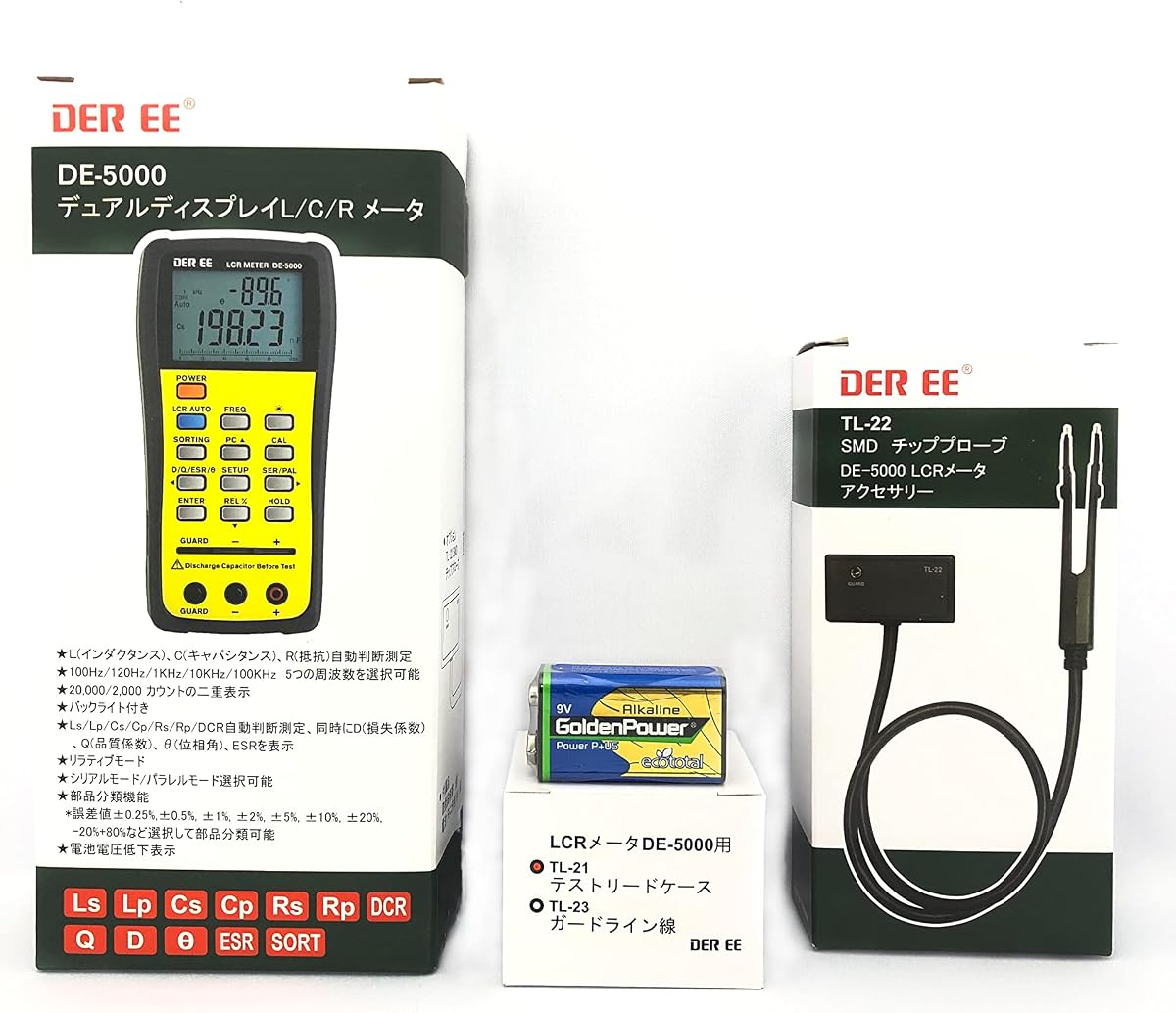
The DE-5000 has been a trusted name in the community for years offering a straightforward approach to component testing. Its dual display design provides clear visibility of both primary and secondary readings without needing to toggle screens.
We may earn a commission when you buy through this link, at no additional cost to you.
Users appreciate the automatic ranging feature which simplifies the measurement process by eliminating the need to manually select ranges for different components. This makes it efficient for quick checks where speed is more important than extreme precision.
Despite its proven track record the physical design feels somewhat dated compared to modern units with more compact form factors. It can also be a bit bulky to carry in a pocket if you move around frequently during work.
For those who prioritize established reliability and clear readouts this handheld meter remains a solid option. It handles most standard testing tasks well and is a dependable tool for general electronics maintenance.
Eliminates manual range selection for faster initial measurements.
Shows main and secondary values simultaneously for better context.
We may earn a commission when you buy through this link, at no additional cost to you.
The MATRIX MCR5200 is designed for environments where precision and stability are paramount. Its benchtop form factor ensures consistent readings even when testing sensitive components that require minimal environmental interference.
We may earn a commission when you buy through this link, at no additional cost to you.
With a basic accuracy of 0.1% this meter provides the level of detail needed for R&D and quality control applications. The included data saving features allow you to store test results directly to a USB stick for later analysis.
The primary drawback is the cost which is significantly higher than handheld alternatives and may be overkill for casual hobbyists. Additionally the unit is not portable so it must remain on a fixed workbench at all times.
Investing in this model makes sense if you require laboratory-grade accuracy and connectivity features. It delivers professional results that can support rigorous testing protocols and detailed documentation requirements.
0.1% accuracy ensures reliable results for sensitive component analysis.
Save test data to USB for easy reporting and record keeping.
We may earn a commission when you buy through this link, at no additional cost to you.
This version of the De-5000 comes with a complete set of test leads and accessories making it ready for various testing scenarios right out of the box. The inclusion of both alligator and SMD leads adds significant versatility for different component types.
We may earn a commission when you buy through this link, at no additional cost to you.
ISO 9001 certification provides confidence in the manufacturing quality and consistency of the device. Users benefit from a high resolution display that remains readable even in less than ideal lighting conditions.
While the included accessories are valuable they add to the overall cost and weight of the package which might be unnecessary for users who already own test leads. The carrying case is also somewhat large compared to simpler models.
If you need a portable solution that comes fully equipped for immediate use this set is highly recommended. It balances the proven reliability of the De-5000 with the convenience of a complete kit.
Includes all necessary leads for immediate testing without extra purchases.
ISO certification ensures consistent manufacturing quality and performance.
We may earn a commission when you buy through this link, at no additional cost to you.
The Proster LCR Meter is an excellent entry point for hobbyists who need basic component testing without breaking the bank. It handles common measurements of inductance capacitance and resistance with sufficient accuracy for most home projects.
We may earn a commission when you buy through this link, at no additional cost to you.
A standout feature is the rotatable LCD screen which allows you to adjust the viewing angle for comfortable reading on a workbench. The data hold function freezes readings so you can record them without looking directly at the screen.
Accuracy and speed are not as high as professional models meaning it may not be suitable for precision engineering tasks. The refresh rate is also slower which can make tracking changing values during live tests more difficult.
For those just starting out or needing a secondary tool for quick checks this meter offers great value. It provides essential functionality in a compact package that is easy to carry and store.
Rotatable LCD adapts to different workbench angles for comfort.
Affordable price makes advanced testing accessible to more users.
We may earn a commission when you buy through this link, at no additional cost to you.
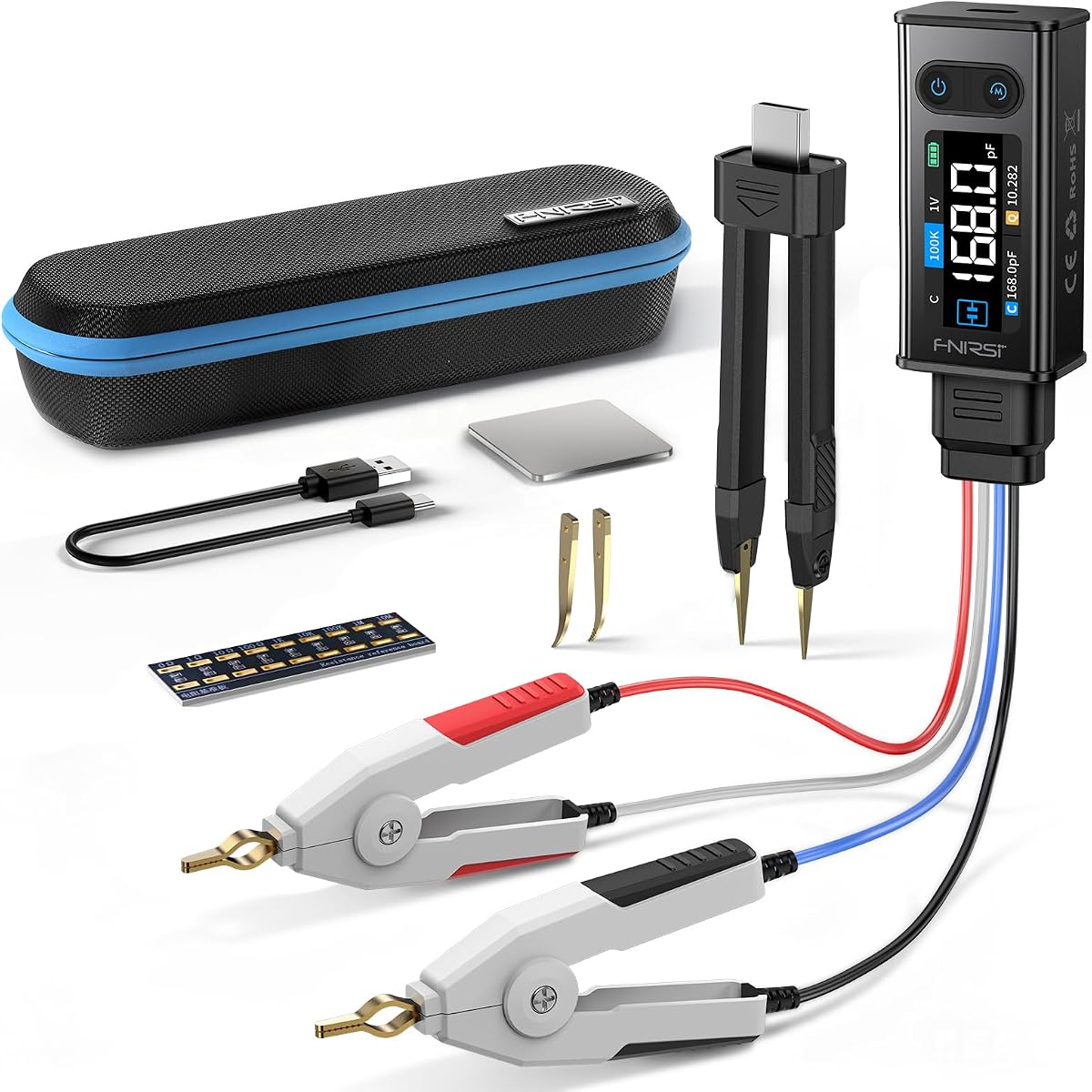
The FNIRSI LCR-ST2 is specifically designed for testing small SMD components which are often difficult to measure with standard clips. Its tweezer design allows for quick and accurate identification of tiny parts on a PCB.
We may earn a commission when you buy through this link, at no additional cost to you.
A built-in magnet keeps the unit securely attached to metal surfaces or test fixtures freeing up your hands during operation. The rechargeable battery with Type-C charging eliminates the need for disposable batteries during extended work sessions.
The display is relatively small which can make reading fine details challenging in some lighting conditions. Accuracy is adequate for general checks but it may not satisfy users needing high precision for critical components.
If you work frequently with surface mount technology this device offers unmatched convenience and portability. It is an ideal companion for electronics repair work where speed and compactness are key priorities.
Tweezer design simplifies testing of tiny surface mount components.
Built-in magnet holds device in place for hands-free operation.
We may earn a commission when you buy through this link, at no additional cost to you.
The Peak Atlas LCR45 appeals to users who prefer a straightforward and reliable device without complex menus. It offers high resolution measurements for inductance capacitance and resistance that are precise enough for most general applications.
We may earn a commission when you buy through this link, at no additional cost to you.
Its simple menu system makes it easy to learn and operate reducing the time spent navigating settings. The device supports both manual and automatic frequency selection giving you control over the testing environment.
Advanced features like data logging or sorting are absent which limits its utility in professional quality control settings. The interface also feels somewhat dated compared to modern color display units available today.
For those who value simplicity and reliability over extra features this meter is a fantastic choice. It delivers consistent results with minimal fuss making it a favorite among experienced hobbyists and technicians.
Simple menu system reduces learning curve for new users.
Enhanced resolution ensures precise readings for small components.
We may earn a commission when you buy through this link, at no additional cost to you.
The B&K Precision 879B is built for users who need a universal tool capable of handling a wide variety of component tests. Its dual display allows you to monitor two values simultaneously which is helpful for complex impedance measurements.
We may earn a commission when you buy through this link, at no additional cost to you.
The backlit display ensures visibility in low-light environments making it suitable for field work or dimly lit workshops. An included AC adapter provides an alternative power source for continuous bench use without draining batteries.
The device is heavier than some competitors which might affect comfort during long periods of handheld use. Additionally the price point positions it as a more premium option compared to basic hobbyist meters.
If you require a robust and versatile instrument for diverse testing scenarios this model is a strong candidate. It offers the reliability expected from B&K Precision with features designed for extended professional use.
Backlit screen ensures clear readings in low light environments.
AC adapter included for extended bench use without battery drain.
We may earn a commission when you buy through this link, at no additional cost to you.
The Extech LCR200 provides a solid foundation for measuring passive components with essential features for accurate testing. The built-in test fixture allows you to quickly verify components without attaching external leads every time.
We may earn a commission when you buy through this link, at no additional cost to you.
Open and short calibration modes help eliminate stray impedance ensuring your readings are as accurate as possible. The dual backlit display makes it easy to view primary and secondary parameters in various lighting conditions.
Compared to newer models it lacks some advanced connectivity options and automated features that streamline modern workflows. It remains a good choice for basic testing but may not satisfy users needing high automation.
For those needing a reliable meter with a built-in fixture this device offers practical value. It is well suited for repair work and general diagnostics where consistent performance is the main priority.
Internal fixture speeds up testing by removing need for leads.
Open and short calibration improves measurement accuracy significantly.
We may earn a commission when you buy through this link, at no additional cost to you.
The Pro1-100KHz offers an impressive combination of accuracy and smart features for those working with delicate electronics. Its smart tweezers system simplifies the measurement process by handling connections automatically with precision.
We may earn a commission when you buy through this link, at no additional cost to you.
With a 0.1% accuracy rating this device provides high fidelity measurements for critical components. It also includes diode testing capabilities which expands its utility beyond simple LCR measurements for comprehensive component checks.
The form factor is specialized meaning it may not replace a full-size handheld meter for all applications. The screen is relatively small which might be difficult for some users to read comfortably without magnification.
If you need high accuracy in a compact smart tweezer format this model delivers excellent results. The lifetime support adds peace of mind for long-term ownership making it a valuable investment for professionals.
Automated connections reduce error and speed up component testing.
0.1% accuracy ensures reliable measurements for critical components.
We may earn a commission when you buy through this link, at no additional cost to you.
Choosing the right Lcr Meter requires evaluating several key factors that align with your specific testing needs and budget constraints. This guide breaks down the essential considerations to help you make an informed decision.
Accuracy refers to how close the measurement is to the actual value of the component. For professional applications such as R&D or quality control you should look for a device with at least 0.1% to 0.2% basic accuracy. Hobbyists may find 0.5% or higher acceptable for general circuit repairs.
Prioritize models with higher accuracy ratings if your work depends on exact component values to ensure system stability and performance.
Different components perform differently at various frequencies so having a wide range of test frequencies is essential. A good Lcr Meter should offer at least 100Hz to 100kHz to cover common use cases from audio to RF applications.
Choose a device with multiple selectable frequencies to match the operating conditions of the components you frequently test.
A clear and readable display is crucial for interpreting complex data without errors. Look for units with dual displays to view primary and secondary parameters simultaneously or backlit screens for low light conditions. The user interface should be intuitive to minimize setup time.
Ensure the screen size and interface design suit your workflow whether you prefer quick handheld checks or detailed bench analysis.
Modern Lcr Meters often include USB or RS232C interfaces to allow data transfer to a computer. This is particularly important if you need to log test results for documentation or automated quality control processes. Some models also support internal storage.
If you need to generate reports or archive test data verify that the unit supports the necessary connectivity protocols before buying.
Decide whether you need a handheld unit for field work or a benchtop model for a stationary lab environment. Handheld meters are lightweight and battery powered but may lack advanced features. Benchtop units offer better stability and higher accuracy but are less mobile.
Select a form factor that matches your primary working environment to ensure convenience and efficiency during daily use.
Beyond basic LCR measurements many devices offer extra features like ESR testing diode checks or sorting modes. Sorting modes can automatically classify components based on tolerance which saves time during production or repair batches. ESR testing is vital for evaluating capacitor health.
Look for these additional capabilities if your projects involve specific component types or require bulk testing efficiency.
Power options vary between standard batteries rechargeable packs or AC adapters. Rechargeable units with Type-C charging are convenient and eco-friendly for regular use. Models with long battery life reduce interruptions during field work.
Ensure the device supports a power source that fits your usage patterns to avoid downtime when testing components.
Lcr Meters range widely in price from affordable hobbyist tools to expensive professional instruments. Determine your budget early and compare features to find the best value. Sometimes a slightly higher price buys significantly better accuracy or durability.
Balance your budget against your required performance level to avoid overspending or compromising on essential features.
Before starting any measurement perform open and short calibration to account for lead resistance and impedance. This step ensures that your readings are accurate by removing stray electrical factors from the test environment.
When testing capacitors always discharge them fully to prevent damage to the meter or yourself. For onboard components make sure the circuit is completely powered off to avoid interference from external voltage sources.
Regularly clean the test probes and screen with a soft dry cloth to maintain performance. Store the device in a protective case when not in use to prevent physical damage and moisture exposure.
An Lcr Meter is used to measure inductance, capacitance, and resistance of electronic components. It helps engineers and technicians verify component values and diagnose faults in circuits. It also measures secondary parameters like quality factor and dissipation factor.
A multimeter measures basic resistance and voltage but lacks the specialized circuits for precise inductance and capacitance. An Lcr Meter uses AC signals at multiple frequencies for accurate results. It is essential for testing components that fail under AC conditions.
While some units support in-circuit testing accuracy is best when the component is isolated. Parallel components can interfere with readings leading to inaccurate results. Always power off the circuit before attempting any in-circuit measurement.
Series mode is ideal for low impedance components while parallel mode suits high impedance parts. Selecting the correct mode ensures the internal circuitry matches the component's physical characteristics. This choice affects the accuracy of the impedance calculation.
Calibration removes errors caused by test leads and internal offsets to ensure precise readings. Most meters require open and short calibration before use for optimal performance. Skipping this step can lead to inconsistent or incorrect component measurements.
Yes many models offer automatic ranging and simple interfaces designed for ease of use. Beginners can benefit from basic handheld units without needing advanced knowledge. These tools make component identification easier for hobbyist projects.
We have reviewed ten diverse Lcr Meter models ranging from budget-friendly handheld units to precision benchtop instruments. Each option brings unique strengths whether you prioritize portability accuracy or advanced connectivity features.
When making your choice focus on the specific needs of your projects and budget constraints. Consider factors like frequency range display clarity and extra features like sorting modes to ensure the device fits your workflow.
Always check current product details and pricing before purchasing as availability changes regularly. Selecting the right meter will enhance your ability to build and maintain reliable electronic circuits effectively.