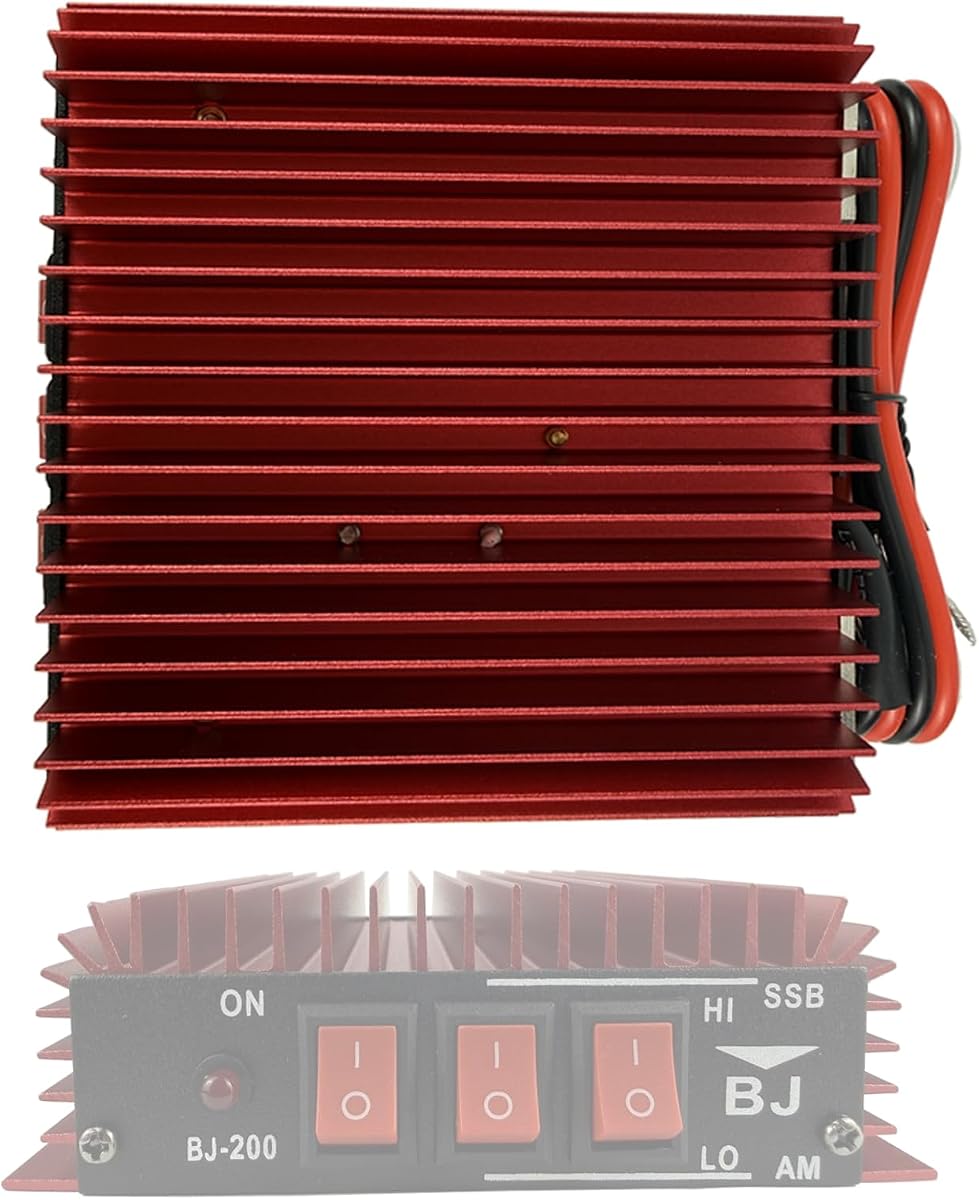
BJ-200 Linear Power AMP, 3-30MHz Radio AMP 50W FM 100W AM 150W SSB for 3-5W Input 2-Way Radio Transceiver, 13.8V
5.0Editor score
150W SSB output
Compact aluminum build
Simple power controls
Low voltage input
This guide compares the top linear amplifiers for ham radio including power output, compatibility, cooling, and protection features to help you choose the best
Linear amplifiers boost your ham radio signal to reach distant stations clearly. Choosing the right one depends on your transceiver power and desired output levels.
We reviewed ten top models focusing on efficiency, heat management, and band compatibility. Each unit offers unique features for QRP or high-power stations.
Read our detailed picks to find the best amplifier for your needs. Prices change often so verify current deals before purchasing your new equipment.
5.0Editor score

4.2Editor score

3.9Editor score
We compared ten linear amplifiers based on power output, cooling methods, and radio compatibility to help you find the ideal match for your ham station.


The Xiegu GPA100 delivers clean and stable RF power for Ham Radio operators needing 100W output. It features solid-state linear design ensuring low distortion across SSB and digital modes.
We may earn a commission when you buy through this link, at no additional cost to you.
Its flexible band switching with auto mode tracks frequencies automatically. Wireless Bluetooth control simplifies setup by eliminating extra cables between transceiver and amplifier.
Smart cooling and protection detect issues like high SWR or overheating. While limited to low power input, it is safe and reliable for most QRP stations.
Operators seeking efficiency and ease of use will find this amplifier ideal. It balances performance with advanced safety features for extended sessions.
Connect to compatible radios like IC-705 without extra cables. The built-in Bluetooth enables automatic band synchronization for a cleaner station layout.
Circuits monitor high SWR and overheating to prevent damage. The amplifier enters bypass mode during faults to keep your transceiver safe.
We may earn a commission when you buy through this link, at no additional cost to you.
This BJ-300 Plus offers up to 150W SSB output at a budget-friendly price. It supports AM FM SSB CW modes making it versatile for various Ham Radio activities.
We may earn a commission when you buy through this link, at no additional cost to you.
Its thermal management includes a cooling fan and aluminum heat sink to prevent overheating during extended use. Reverse polarity protection safeguards against power connection errors.
The design features simple power switches and mode selectors. However the lower rating suggests potential reliability concerns compared to more premium models.
Ideal for beginners needing significant power boost without high cost. It provides straightforward operation but lacks advanced features like auto tuning.
Deliver strong signals up to 150W on SSB. This extends communication range effectively for long-distance contacts with clear modulation support.
A built-in fan keeps internal components cool during transmission. The large red aluminum heat sink aids dissipation but may require airflow.
We may earn a commission when you buy through this link, at no additional cost to you.
This variant of the BJ-300 Plus provides similar performance with 150W SSB output. It uses standard connectors for quick installation with most HF transceivers.
We may earn a commission when you buy through this link, at no additional cost to you.
Built-in cooling and polarity protection help maintain safe operation. Input flexibility works with 3-5W for AM FM or 2-10W for SSB.
User friendly controls make setup simple. The fan and heat sink protect components during use but the build feels basic.
Suitable for those needing moderate power boost reliably. It offers good value but lacks the sophistication of higher-end amplifiers.
Works with low power inputs to boost signal strength. This compatibility ensures it adapts to different radios easily for various setups.
Power switch and mode selector allow quick adjustments. Standard PL-259 connectors simplify connection to antennas and transceivers.
We may earn a commission when you buy through this link, at no additional cost to you.
The BJ-300 delivers 150W output with overvoltage protection for safety. Its compact aluminum alloy sink dissipates heat efficiently during transmission.
We may earn a commission when you buy through this link, at no additional cost to you.
Dual power control switches adjust output strength based on needs. Standard ports allow quick installation with various radios and antennas.
It supports AM FM SSB CW modes making it versatile for HF bands. Input flexibility matches most QRP transceivers requiring low drive power.
A practical choice for those wanting high power at low cost. It lacks advanced control but offers reliable operation.
Built-in electronic switch protects against voltage spikes. This safeguard ensures your transceiver remains protected even during power fluctuations.
Aluminum construction resists wear and dissipates heat well. The small form factor fits easily on shelves or in portable setups.
We may earn a commission when you buy through this link, at no additional cost to you.
The BJ-200 holds a perfect rating for reliable power amplification. It delivers up to 150W SSB output making it strong for budget options.
We may earn a commission when you buy through this link, at no additional cost to you.
Its aluminum alloy heat sink manages heat efficiently during continuous use. Polarity reversal protection prevents damage from incorrect power connections.
Simple controls like HI/LO switches allow easy power adjustments. The compact build suits vehicle or base station installations easily.
An excellent choice for those prioritizing reliability and low cost. It may lack smart features but performs its core job well.
Users appreciate its consistent performance and value. The high rating indicates trust in its durability and output quality over time.
Red aluminum sink helps dissipate heat quickly. This ensures stable operation even when transmitting for long periods without overheating.
We may earn a commission when you buy through this link, at no additional cost to you.
The Xiegu XPA125B combines 100W amplification with an automatic tuner. Its tuner handles loads from 14 to 500 ohms across HF bands.
We may earn a commission when you buy through this link, at no additional cost to you.
A large LCD screen shows power SWR and temperature data for monitoring. Protection circuits enter bypass mode if SWR gets too high.
This unit simplifies tuning for QRP radios needing higher output. The tuner can be used independently as a standalone accessory.
Premium operators wanting efficiency will appreciate its dual function. It balances power and convenience but requires careful handling.
Adjusts antenna match automatically for efficient transmission. This saves manual tuning steps and ensures consistent performance across bands.
Shows real-time SWR and voltage details clearly. The backlit screen makes monitoring easier in low-light operating conditions.
We may earn a commission when you buy through this link, at no additional cost to you.
This LICAEVEY board provides 30W output for CW SSB modes. It spans 3 to 30MHz making it ideal for serious DXers needing compact boosts.
We may earn a commission when you buy through this link, at no additional cost to you.
The broadband circuitry delivers consistent gain without manual tuning. Heat sinks protect components during extended transmit cycles.
It is designed for integration into QRP kits or transceivers. Marked input/output ports simplify installation for those with technical skills.
Great for enthusiasts building custom stations or upgrades. It offers versatility but requires careful handling.
Delivers consistent gain across the entire shortwave range. The design uses efficient transistors to minimize distortion during transmission.
Integrated heat sink prevents overheating during cycles. Low loss PCB material supports stable operation for reliable radio performance.
We may earn a commission when you buy through this link, at no additional cost to you.
This BJ-200 version features 12-14V wide DC input for automotive stability. Its three-wire connection uses standard SO-239 connectors for easy use.
We may earn a commission when you buy through this link, at no additional cost to you.
The design ensures stable operation even during engine starts. Simple wiring makes it accessible for most CB radios and antenna systems.
It serves as a straightforward power boost for mobile setups. Basic functionality suits operators who prioritize simplicity and stability.
Recommended for those needing reliable power in vehicles. It lacks advanced options but delivers consistent results.
Wide input range handles engine start fluctuations safely. This ensures the amplifier keeps working even under changing power conditions.
Input output and power lines are clearly defined. Standard connectors reduce installation time for most antenna setups.
We may earn a commission when you buy through this link, at no additional cost to you.
This LNA covers 0.1 to 2000MHz with 32dB gain. It improves weak signal reception for Ham Radio SDR CB and shortwave listening.
We may earn a commission when you buy through this link, at no additional cost to you.
Its low noise figure enhances clarity in weak environments. Operates on 9-12V with only 27mA current draw for battery efficiency.
Unlike standard amplifiers it focuses on receiving signals not transmit. This makes it versatile for front-end applications and field use.
Ideal for listeners needing stronger signals without interference. It complements Ham Radio setups rather than replacing transmit amplifiers.
Works across multiple bands including VHF UHF. The gain helps pull distant stations into clear reception for better listening.
Low current draw supports portable field use. Works with standard lithium batteries for flexible outdoor listening setups.
We may earn a commission when you buy through this link, at no additional cost to you.
This Xiegu XPA125B version delivers 100W output with automatic tuning. It is specifically designed for compatibility with G90 and X6200 models.
We may earn a commission when you buy through this link, at no additional cost to you.
Consistent output is maintained automatically allowing operators to focus on communication. High-quality materials ensure durability and long-term reliability.
Automatic tuning simplifies setup reducing manual adjustments needed. Support from Xiegu technicians adds value for users of these radios.
Optimal for those already invested in Xiegu transceivers. It provides a seamless upgrade path for robust communication capabilities.
Optimized for Xiegu radios ensuring smooth communication. The integration reduces setup time and improves overall operational efficiency.
Constructed from durable materials for long service. This ensures reliable performance during continuous operation in various conditions.
We may earn a commission when you buy through this link, at no additional cost to you.
Selecting the right amplifier involves understanding power needs, radio compatibility, and cooling systems for reliable long-term use.
Determine how much wattage you need for your band. Most Ham Radio operators choose between 50W and 150W options based on distance goals.
Match output to your antenna limits for efficient transmission.
Ensure the amplifier accepts input from your current transceiver. Some units are built for QRP radios while others need more drive.
Check connector types and signal requirements to avoid mismatches.
Cooling fans and heat sinks are crucial for long transmit sessions. Overheating can cause damage to both amplifier and transceiver.
Look for units with robust airflow designs to prevent failure.
Advanced units include circuits to detect high SWR or overheating. These systems protect your gear by entering bypass mode during faults.
Prioritize models with reverse polarity protection for safety.
Manual switches are simple but automatic band tracking saves time. Bluetooth enabled options reduce cable clutter for a cleaner setup.
Choose controls that match your operating style preferences.
Confirm the amplifier supports the bands you operate on. Most cover HF but some include specific VHF or UHF sections.
Verify range specs to ensure full band operation.
Compact designs suit portable or vehicle setups better. Durability matters if you move equipment often for field day.
Check dimensions to fit your available station space.
Budget units offer basic power while premium ones include tuners. Compare value including support and return policies for peace of mind.
Invest in what fits your current needs and budget.
Connect the amplifier between your transceiver and antenna using proper connectors. Ensure the power supply matches the input voltage to avoid electrical issues.
Monitor the temperature during transmission to prevent overheating. Allow cooling intervals if the unit lacks a strong built-in fan for ventilation.
Regularly check all cables and connectors for wear. Clean the exterior vents to maintain airflow and ensure stable operation.
A linear amplifier boosts the output power from your transceiver to reach stronger signals. It maintains waveform integrity so your modulation remains clear across all modes.
Not always. Tuners help match impedance for efficient power transfer. If your antenna is poorly tuned, adding an amplifier might cause heat without better range.
Many units have built-in high SWR protection that reduces or stops power. Always ensure your antenna is properly tuned before transmitting with high power.
Yes but check input power requirements. Most SDR radios output low power so ensure the amplifier accepts that drive level without distortion.
Efficiency varies so some heat is normal during transmission. Ensure ventilation is not blocked and allow cool down between extended transmissions for safety.
Most mobile and compact units use 13.8V DC as this is common in car radios. Always verify voltage specs before connecting to your power supply.
While some support AM modulation they are usually designed for Ham Radio HF. Broadcasting regulations may require specific licensed equipment for commercial AM use.
Check the product specs for frequency range like 3-30MHz. Most HF amplifiers cover all standard Ham bands so verify before purchasing.
Our top picks include the Xiegu GPA100 for features and BJ-200 for value. Each offers distinct benefits depending on your station needs and budget.
Prioritize thermal management and safety features for reliable operation. A good amplifier enhances signal clarity and reach without risking your gear.
Verify current availability and prices before purchasing to ensure the best deal. Your choice should balance power with your station requirements.