
10Gb/s SFP+ Fiber Port Ethernet Adapter
4.3Editor score
Intel 82599ES Controller
PCIe x4 Interface
10Gb/s SFP+ Port
This guide compares the top fiber optic network interface cards for speed and reliability helping you choose the right NIC for your server or desktop.
Modern networks demand high speed and reliable connections. A fiber optic network interface card provides the bandwidth and stability needed for demanding workloads. These cards enable fast data transfers and low latency for servers and workstations.
We evaluated ten top rated products based on performance features and compatibility. Each card was assessed for its chipset quality port options and driver support. The list includes options for budget builds enterprise servers and high speed desktop networks.
Each pick highlights key strengths and ideal use cases for different users. Ratings reflect real user experiences with reliability and ease of setup. Prices vary by retailer and change frequently so verify current offers before buying.
4.3Editor score

5.0Editor score
4.9Editor score
The following table compares key specifications across all ten selected fiber optic network interface cards. Reviewing these details helps you match a card to your specific system requirements and network needs.


The StarTech 2-Port GbE SFP Network Card delivers solid performance for general network expansion. It holds a perfect rating and features a reliable Intel I350 chipset for stable connectivity on servers or desktops.
We may earn a commission when you buy through this link, at no additional cost to you.
Its open SFP slots support any MSA-compliant fiber or copper modules allowing flexible cable choices. The card supports link aggregation IPv6 and jumbo frames to optimize network efficiency and reduce packet overhead significantly.
While limited to gigabit speeds the card includes LED indicators for easy troubleshooting. The included low-profile bracket ensures it fits small form factor cases making it versatile for various desktop or server setups.
This card is ideal for users needing reliable gigabit fiber connectivity without vendor lock-in. It is a top choice for budget-conscious buyers who want enterprise features and broad compatibility.
The open SFP slots allow you to use Singlemode Multimode or Direct Attach Copper modules as needed.
A built-in heatsink keeps the controller chip at optimal temperatures for sustained performance under load.
We may earn a commission when you buy through this link, at no additional cost to you.
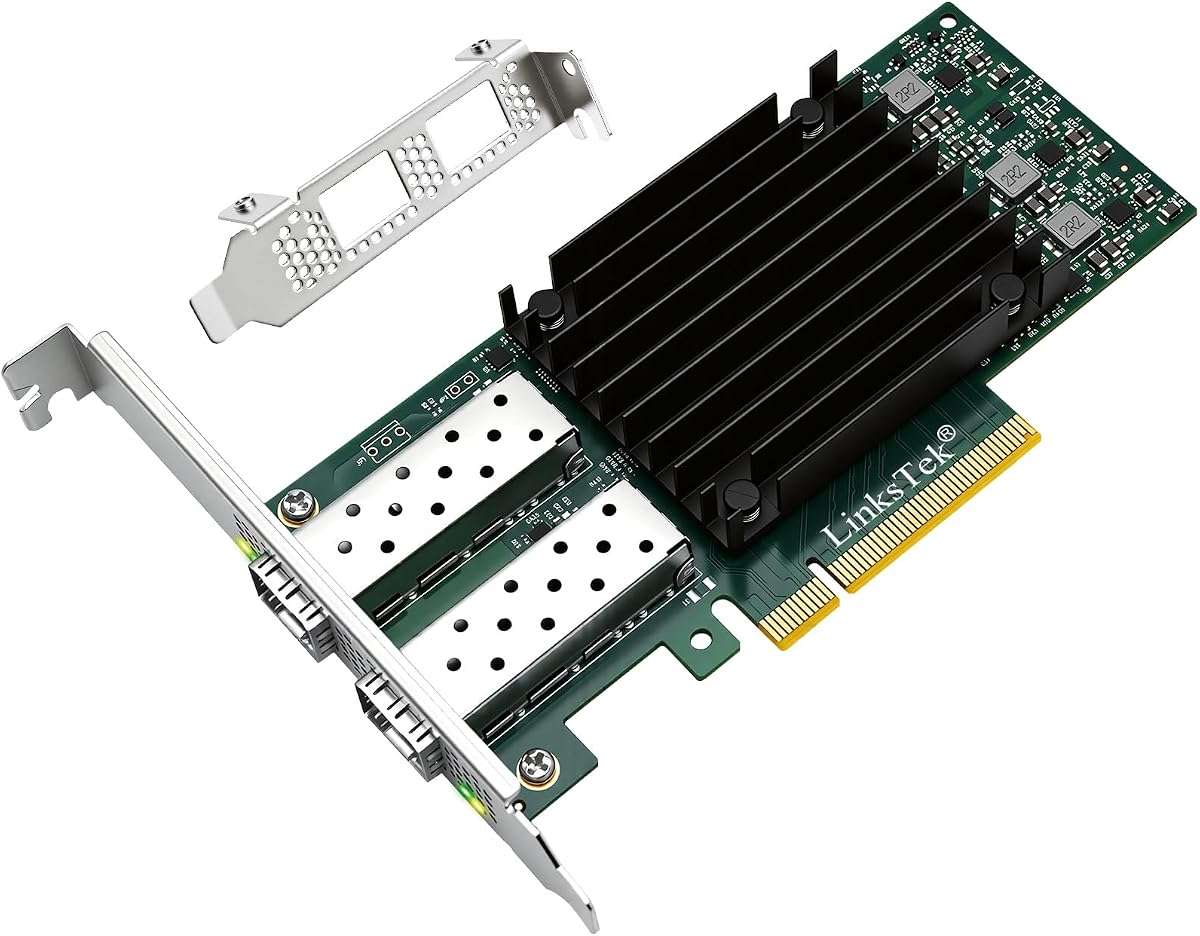
This LinksTek adapter brings affordable 10Gbps connectivity to NAS and desktop systems. It features the proven Intel 82599ES controller and supports both LAN and SAN networking for versatile home lab or small office use.
We may earn a commission when you buy through this link, at no additional cost to you.
The card supports advanced virtualization features like SR-IOV and QoS for traffic management. It is compatible with many Linux distributions and Windows Server versions making it a flexible choice for diverse environments.
Users should note that drivers are needed on Windows 11 and older client versions. The passive heatsink may require good case airflow to maintain cool temperatures during heavy data transfers or continuous use.
Ideal for budget conscious buyers seeking 10G speeds this card offers great value. It is perfect for home labs NAS upgrades and gaming setups requiring faster network throughput.
Features like SR-IOV and VMDq allow efficient resource sharing in virtualized environments.
Supports a wide range of operating systems including many popular Linux distributions.
We may earn a commission when you buy through this link, at no additional cost to you.
The Asus XG-C100F provides blazing fast 10Gbps speeds for demanding online tasks and large file transfers. Its built-in aluminum heatsink ensures the card stays cool during high performance usage without extra fans.
We may earn a commission when you buy through this link, at no additional cost to you.
Designed with fiber optic technology in mind it supports longer cable runs than copper. The SFP+ cage allows for both fiber and direct attach connections offering flexibility for different network setups.
Built-in QoS technology automatically boosts bandwidth for games or critical streams improving user experience. However the higher price compared to others means it suits users prioritizing brand quality and thermal management.
This card is best for gamers and enthusiasts needing reliable 10G connectivity. Its design and cooling make it a solid choice for systems where temperature and performance matter most.
A sophisticated aluminum heatsink keeps the adapter cool during sustained high speed operations.
Automatic QoS prioritizes important traffic to reduce lag during gaming or streaming.
We may earn a commission when you buy through this link, at no additional cost to you.
The 10Gtek NIC uses a high quality Intel 82599EN controller for stable server connectivity. It supports storage protocols like iSCSI and FCoE making it suitable for NAS and data center environments.
We may earn a commission when you buy through this link, at no additional cost to you.
The single SFP+ port allows connection to 10 Gigabit modules and DAC cables. It supports I/O virtualization which helps servers run virtual machines more efficiently with lower latency.
Setup on Windows 11 requires specific driver installation which can be a minor hurdle. The card does not support hot swapping so power down before installation or removal to avoid hardware issues.
This card is a robust choice for home labs and small server setups. Its support for modern protocols and solid chipset make it reliable for consistent data transfers.
Full support for iSCSI and FCoE ensures smooth storage over Ethernet operations.
I/O virtualization support improves performance when running multiple virtual machines.
We may earn a commission when you buy through this link, at no additional cost to you.
This Realtek powered card offers a modern PCIe Gen4 x1 interface for flexible installation. It supports wake up and diagnostic functions through exclusive RealWoW technology to enhance data stability.
We may earn a commission when you buy through this link, at no additional cost to you.
Users can quickly download drivers by scanning the QR code on the card. The card supports 10Gb speeds and includes both full height and low profile brackets for diverse case types.
Compatibility is strong on Windows and recent Linux kernels though FreeBSD and ESX are not supported. Ensure your Linux kernel is up to 6.15 for smooth operation without driver conflicts.
Ideal for desktop users needing fast networking without complex setups. Its ease of use and modern interface make it a convenient pick for general upgrades.
Scan the QR code on the card to instantly find and install the correct drivers.
The Gen4 x1 lane ensures wide compatibility across standard slots and systems.
We may earn a commission when you buy through this link, at no additional cost to you.
This card uses genuine Intel 82599EN silicon for reliable throughput and compatibility. It stands out by not locking users into specific SFP modules allowing any third party optics to work.
We may earn a commission when you buy through this link, at no additional cost to you.
It works out of the box on Proxmox TrueNAS Unraid and ESXI without extra drivers. On Windows users need to install the Intel Ethernet Adapter Complete Driver Pack for full functionality.
The card runs warm by design so ensure it has case airflow or add a small fan. It also supports stepping down to 1G or 2.5G which helps connect to slower switches easily.
Best for home lab and NAS users seeking flexibility. Its vendor lock free design and plug and play support make setup easy and cost effective.
Use any third party SFP modules without the card rejecting them due to brand checks.
Detected directly on Proxmox TrueNAS Unraid and ESXI with no extra driver steps.
We may earn a commission when you buy through this link, at no additional cost to you.
This Mellanox adapter delivers high speed dual 25GbE ports ideal for cloud and storage platforms. It features RDMA over RoCE for reduced CPU load and faster data transfers in virtualized environments.
We may earn a commission when you buy through this link, at no additional cost to you.
The card supports advanced overlay networks and IEEE standards ensuring seamless integration with modern data centers. It detects easily on Windows Server and Linux systems with robust driver packages provided.
While it is a premium option the performance justifies the cost for serious workloads. It is not for basic home use but shines in servers and analytics platforms needing high bandwidth.
Select this card if you need top tier throughput and RDMA capabilities. It is the best choice for enterprises and power users maximizing network performance.
Supports RDMA over RoCE to bypass CPU bottlenecks for storage and analytics.
Two 25GbE ports provide redundancy and increased aggregate bandwidth.
We may earn a commission when you buy through this link, at no additional cost to you.
This card offers fast 10Gb speeds with a multimode optical module included in the box. The 82599EN chip ensures low latency and efficient TCP/UDP/IP checksum offloading for better CPU usage.
We may earn a commission when you buy through this link, at no additional cost to you.
Gold-plate fingers provide reliable contact and reduce the risk of disconnection over time. The card adapts transmission rates automatically supporting both half and full duplex modes for compatibility.
It comes with both low-profile and full-height brackets to fit standard or slim cases. Setup is plug-and-play on most systems though you will need to match your switch with the correct module.
Great for users wanting an all-in-one fiber solution. The included module reduces extra costs and the build quality supports reliable long-term use.
Get a ready-to-use fiber module in the box to start connecting immediately.
Gold-plate fingers prevent oxidation and maintain stable hardware contacts.
We may earn a commission when you buy through this link, at no additional cost to you.
The TP-Link TX401 uses 10GBase-T technology to connect directly with copper Ethernet cables. It delivers speeds up to 10Gbps and comes with a 1.5m CAT6A cable to maximize performance.
We may earn a commission when you buy through this link, at no additional cost to you.
Its auto-negotiation handles different data rates smoothly making it versatile for mixed networks. QoS prioritizes gaming traffic to avoid congestion so online play remains lag-free even on busy connections.
The card is simple to install and works across many Windows and Linux versions. The two-year warranty and 24/7 support provide extra peace of mind for home users.
This adapter is best for those avoiding fiber modules and SFP costs. It simplifies 10G networking to a standard cable setup perfect for most home PCs.
Connect directly with standard CAT6A cables without extra SFP modules or switches.
Built-in QoS ensures your games get priority to reduce network lag.
We may earn a commission when you buy through this link, at no additional cost to you.
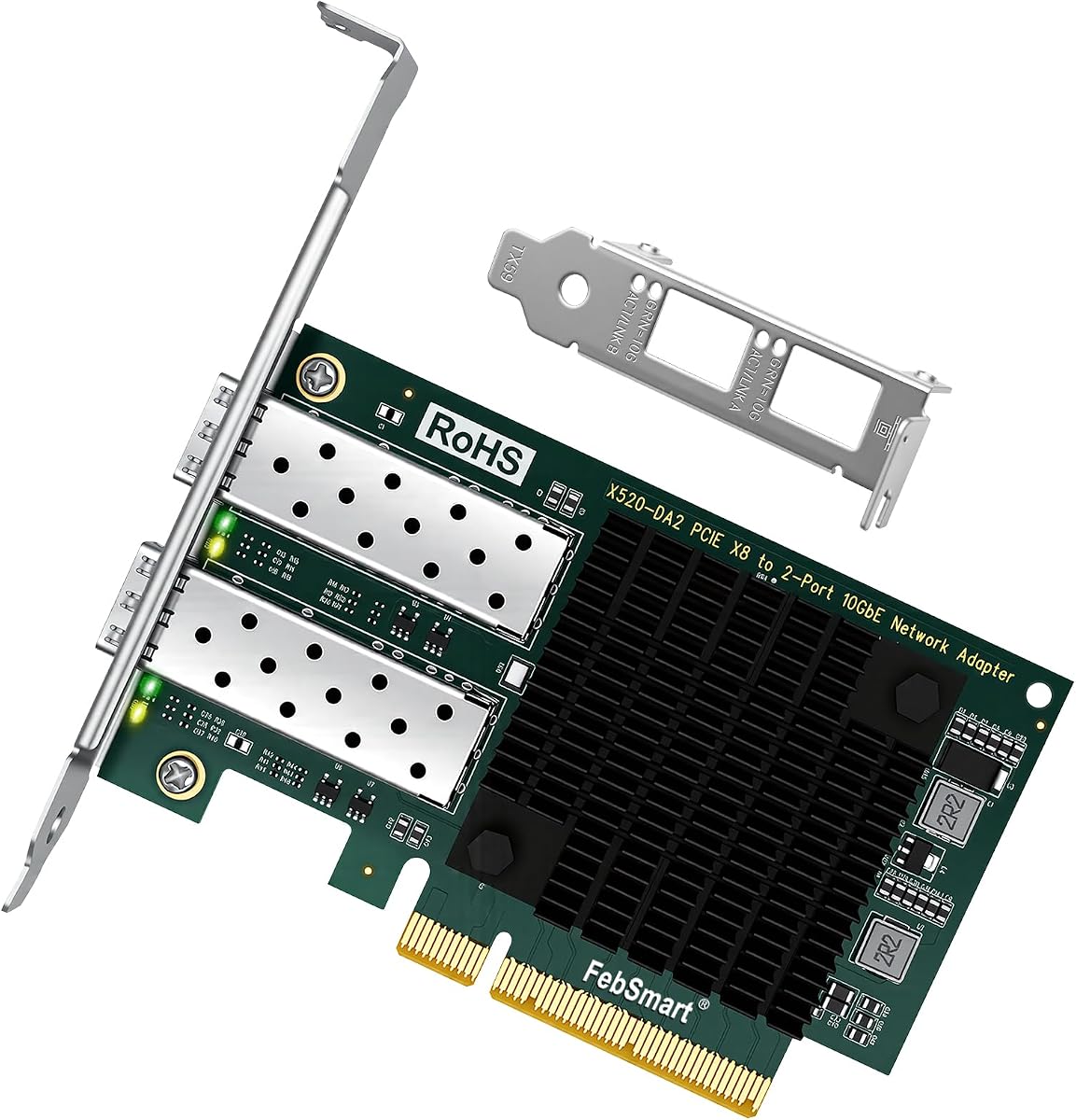
The X520-DA2 provides dual 10GbE SFP+ ports for flexible networking and redundancy. Powered by Intel 82599ES it delivers stable LAN and SAN connectivity for desktops servers and NAS systems.
We may earn a commission when you buy through this link, at no additional cost to you.
It supports Intel Virtualization Technology and SR-IOV enabling efficient VM network sharing. Storage over Ethernet protocols like FCoE help optimize data transfers across your network infrastructure.
Both full height and low profile brackets are included for case compatibility. The card requires SFP transceivers and LC cables which adds to the initial cost but offers maximum flexibility.
Choose this adapter for dual port reliability and virtualization needs. It is a powerful choice for users needing high throughput and connection redundancy.
Two ports allow link aggregation or failover to ensure continuous network access.
SR-IOV and VMDq support enhance network performance in virtual machine setups.
We may earn a commission when you buy through this link, at no additional cost to you.
Choosing the right fiber optic network interface card depends on your speed needs system compatibility and budget. Review these key factors to narrow down options effectively.
Determine if you need gigabit or 10Gbps plus speeds. SFP slots support fiber modules while some cards use SFP+ for higher throughput.
Match the card speed to your network switch capabilities to avoid bottlenecks in your setup.
The chipset defines performance and features. Intel and Mellanox controllers offer advanced virtualization and stability for servers.
Check that the chipset is supported by your operating system for reliable driver availability.
Ensure your motherboard has the required PCIe slot like x4 x8 or x16. Most cards work in larger slots but not x1 unless specified.
Verify your system version of PCIe 2.0 or 3.0 to guarantee compatibility and bandwidth.
Confirm that the card works with your OS like Windows Linux or VMware. Some cards need driver installs for specific versions.
Check documentation for supported distributions to avoid installation issues after purchase.
Passive cards need good case airflow to stay cool under load. Some include heatsinks but fans may be needed in tight spaces.
Prioritize cards with robust cooling if you plan on heavy daily data transfers or virtualization.
Look for cards that include both full height and low profile brackets. This ensures fit in standard cases and mini towers.
Check package contents to confirm brackets are included if you have a small PC case.
If you run VMs ensure the card supports SR-IOV and VMDq. These features allow better network distribution to virtual systems.
Review specs for virtualization support if you use VMware Proxmox or similar platforms.
Some cards vendor lock specific SFP modules while others allow third party optics. Open cards reduce recurring costs.
If using fiber verify the card works with standard SFP or SFP+ modules before buying.
Start by powering down your system and removing the case panel. Insert the card firmly into the compatible PCIe slot and secure it with the mounting screw. Reattach the case and power on.
Install the required drivers from the manufacturer or OS repository before connecting cables. Use certified SFP modules and fiber cables ensuring they match the card's specs for best performance.
Monitor LED indicators for link status and activity. Keep the system clean and ensure case airflow to prevent overheating. Update firmware periodically to maintain stability and security.
Yes fiber cards use SFP or SFP+ modules and LC fiber cables or direct attach copper cables. Ensure your cables match the speed and port type of the card for reliable connections.
You can use Direct Attach Copper (DAC) cables to connect fiber NICs to switches with SFP+ ports. For standard copper ports use adapters or switch to a different card type.
SFP ports support up to 1Gbps while SFP+ supports up to 10Gbps speeds. The physical connectors are similar but SFP+ cards handle higher bandwidth for faster networks.
Most Linux systems have built-in drivers for common chipsets. For newer cards or specific versions check the manufacturer site for IXGBE or OFED packages to ensure full support.
Yes many cards support SR-IOV to allow multiple virtual machines to access the network adapter efficiently. This feature is vital for server virtualization setups.
Ensure the card is seated properly and the slot is functional. Check BIOS settings to confirm PCIe devices are enabled and verify you have the correct drivers installed.
Some branded cards lock specific modules but many third-party cards work with any compliant SFP modules. Check product details for lock policies to save on future modules.
Passive cards usually come with a heatsink but need airflow to stay cool. In confined cases adding a small fan can prevent overheating during heavy data transfers.
These ten cards cover a wide range of speeds and use cases from gigabit to 25Gbps. Whether you need basic connectivity or advanced virtualization there is a suitable option here.
Prioritize chipset quality OS compatibility and thermal design for reliable long-term performance. Matching the card to your switch and cabling ensures you get the full speed potential.
Always verify current availability and offers before purchase as models and pricing change often. Choosing the right card now can future-proof your network for years to come.