
Upgraded Watt Power Meter Plug
4.6Editor score
7 display modes available
Overload protection included
Data memory function
This guide compares the top electricity meters for RVs to help you monitor usage, manage costs, and ensure safe power management while on the road or parked.
Finding the right electricity meter for your RV is essential for managing power consumption and avoiding costly surprises at campgrounds. These devices provide accurate readings of your energy usage, helping you optimize battery life and generator run times efficiently.
We evaluated ten top-rated models based on accuracy, ease of installation, durability, and feature sets. Each product was analyzed for its compatibility with standard RV electrical systems and its ability to provide clear, real-time data for informed decision-making.
Our picks cover a range of needs from simple plug-in monitors to advanced submeters for complex setups. Keep in mind that availability and pricing can change frequently, so always check current listings before making your final purchase decision today.
4.6Editor score

4.8Editor score

3.5Editor score
The following comparison table breaks down the key specifications of each model to help you quickly identify which device fits your specific RV electrical system requirements best.


This digital electric meter stands out as a top choice for RV owners seeking reliable power monitoring. With a high rating and precision engineering, it ensures you never lose track of your energy usage while traveling or stationary.
We may earn a commission when you buy through this link, at no additional cost to you.
Its high definition display provides sharp data visualization, making it easy to read consumption metrics even in bright sunlight. The unit meets strict industry standards, ensuring safety and accuracy across various electrical environments.
While it requires a standard socket for installation, the plug-in design simplifies the process significantly. Some users may prefer professional installation to ensure optimal performance in complex wiring setups.
For anyone needing a balance of precision and usability, this meter delivers exceptional value. It is highly recommended for RV parks and households wanting trustworthy data without compromising on quality.
The meter utilizes advanced sensors to maintain consistent accuracy across varying load conditions.
Triple resistance to dust and water ensures long-term reliability in outdoor settings.
We may earn a commission when you buy through this link, at no additional cost to you.
This plug-in meter offers an excellent entry point for those monitoring specific appliances in their RV. Its affordable price and versatile features make it a practical tool for budget-conscious users.
We may earn a commission when you buy through this link, at no additional cost to you.
You can switch between seven display modes to view different metrics like voltage, amps, and cumulative cost. The data memory function ensures you don't lose critical usage info even when unplugging the device.
While the overload protection is helpful, the default limit might be lower than some heavy RV appliances require. Adjusting settings can help, but be mindful of high-load devices to avoid warnings.
Ideal for checking individual equipment efficiency, this meter is a cost-effective addition to your RV toolkit. It helps identify power-hungry devices without needing a full system upgrade.
Seven modes allow you to customize the data view based on your immediate monitoring needs.
Overload protection alerts you when an appliance exceeds safe power limits, preventing potential hazards.
We may earn a commission when you buy through this link, at no additional cost to you.
This premium protector combines robust surge defense with detailed energy monitoring capabilities. It is designed to safeguard your RV's sensitive electronics while providing granular insights into power usage.
We may earn a commission when you buy through this link, at no additional cost to you.
The unit monitors six key electrical parameters simultaneously, helping you balance loads to prevent breaker trips. An internal temperature sensor adds an extra layer of safety by detecting overheating connections.
The advanced feature set may be overwhelming for casual users, and the price reflects its higher-end positioning. However, the comprehensive protection and data insights justify the investment for serious RV owners.
For those prioritizing equipment safety alongside precise metering, this device is a top-tier choice. It ensures peace of mind during storms and helps optimize your electrical setup for long-term use.
With 16000 joules of protection, it acts as a powerful shield against lightning and grid spikes.
The internal temperature sensor alerts you to abnormal heat, preventing potential fire hazards.
We may earn a commission when you buy through this link, at no additional cost to you.
This sub-meter is designed for precise energy tracking across multiple circuits or tenants. It offers a reliable solution for RV parks or rentals where fair cost allocation is essential.
We may earn a commission when you buy through this link, at no additional cost to you.
Installation is straightforward in standard socket bases, with labeled terminals simplifying the wiring process. The bright LCD ensures you can read consumption data clearly without straining your eyes.
It is primarily suited for permanent installations rather than plug-and-play mobility. Technical knowledge helps when connecting Modbus or pulse outputs for advanced system integration.
Ideal for property managers or RV owners with complex setups, this meter provides the data needed for efficient energy management. It is a robust choice for long-term monitoring needs.
Separate power usage across different areas to ensure fair billing and better energy management.
Pulse and Modbus outputs allow seamless connection with external monitoring tools and controllers.
We may earn a commission when you buy through this link, at no additional cost to you.
This energy monitor is built for robust systems that require high current handling. It is an excellent fit for heavy-duty RV electrical setups or workshop environments needing accurate data.
We may earn a commission when you buy through this link, at no additional cost to you.
Engineered for long-term reliability, it supports up to 200A while maintaining precise measurements. The backlit display ensures readability in any lighting condition, from bright days to dark nights.
While it offers excellent performance, it is designed for fixed installations in sockets rather than portable use. Users needing a plug-in solution might find this too specialized for their needs.
For those managing high-load systems, this meter provides the accuracy and durability required. It is a strong choice for anyone needing a reliable long-term monitoring solution.
Handles up to 200A, making it suitable for heavy-duty electrical systems without strain.
ANSI Form 2S standards ensure compatibility with a wide range of standard sockets.
We may earn a commission when you buy through this link, at no additional cost to you.
This upgraded plug-in monitor provides extensive data options for tracking appliance efficiency. Its eight modes and cost calculation help you understand exactly how much electricity your gear consumes.
We may earn a commission when you buy through this link, at no additional cost to you.
The ABS material body ensures the device withstands daily wear and tear. The easy reset function allows you to clear data quickly for new testing sessions without extra tools.
The default overload limit may restrict use with high-power RV devices like air conditioners. You might need to adjust settings or use it for smaller loads to avoid constant warnings.
Perfect for monitoring lights, fans, and small electronics, this unit offers great value for basic needs. It helps identify power-hungry devices without complex installation steps.
Track cumulative costs to manage your RV's energy budget effectively over time.
Reset the device with a simple button press, saving time and effort during data checks.
We may earn a commission when you buy through this link, at no additional cost to you.
This sub-meter is designed for advanced energy tracking and system integration. Its RS485 Modbus communication allows for centralized monitoring in professional RV park setups.
We may earn a commission when you buy through this link, at no additional cost to you.
It measures both imported and exported energy, which is crucial for solar users. The clear LCD provides immediate feedback on voltage, current, and accumulated energy consumption.
The setup requires technical knowledge to configure communication settings properly. It is best suited for users with experience in electrical systems or professional assistance.
For those needing detailed integration and bidirectional tracking, this meter is highly capable. It bridges the gap between simple monitoring and comprehensive energy management.
Measures both import and export energy, ideal for solar and battery storage systems.
RS485 Modbus support enables connection to gateways and data loggers for central control.
We may earn a commission when you buy through this link, at no additional cost to you.
This digital KWH meter earns a perfect rating for its straightforward and effective design. It is ideal for RV pedestals and trailer setups using standard 240V two-wire systems.
We may earn a commission when you buy through this link, at no additional cost to you.
The plug-in design simplifies installation, requiring no specialized tools for compatible sockets. The clear LCD allows you to check consumption data quickly without complicated reading steps.
It is limited to 2-wire systems, so it may not fit three-wire configurations. Check your setup carefully to ensure compatibility before purchasing this specific model.
For standard trailer and camper needs, this meter delivers reliable performance. Its simplicity and accuracy make it a trustworthy choice for daily power monitoring.
The Type C1S design ensures quick compatibility with standard sockets and pedestal bases.
CL200 energy monitoring provides reliable tracking for common RV and home power needs.
We may earn a commission when you buy through this link, at no additional cost to you.
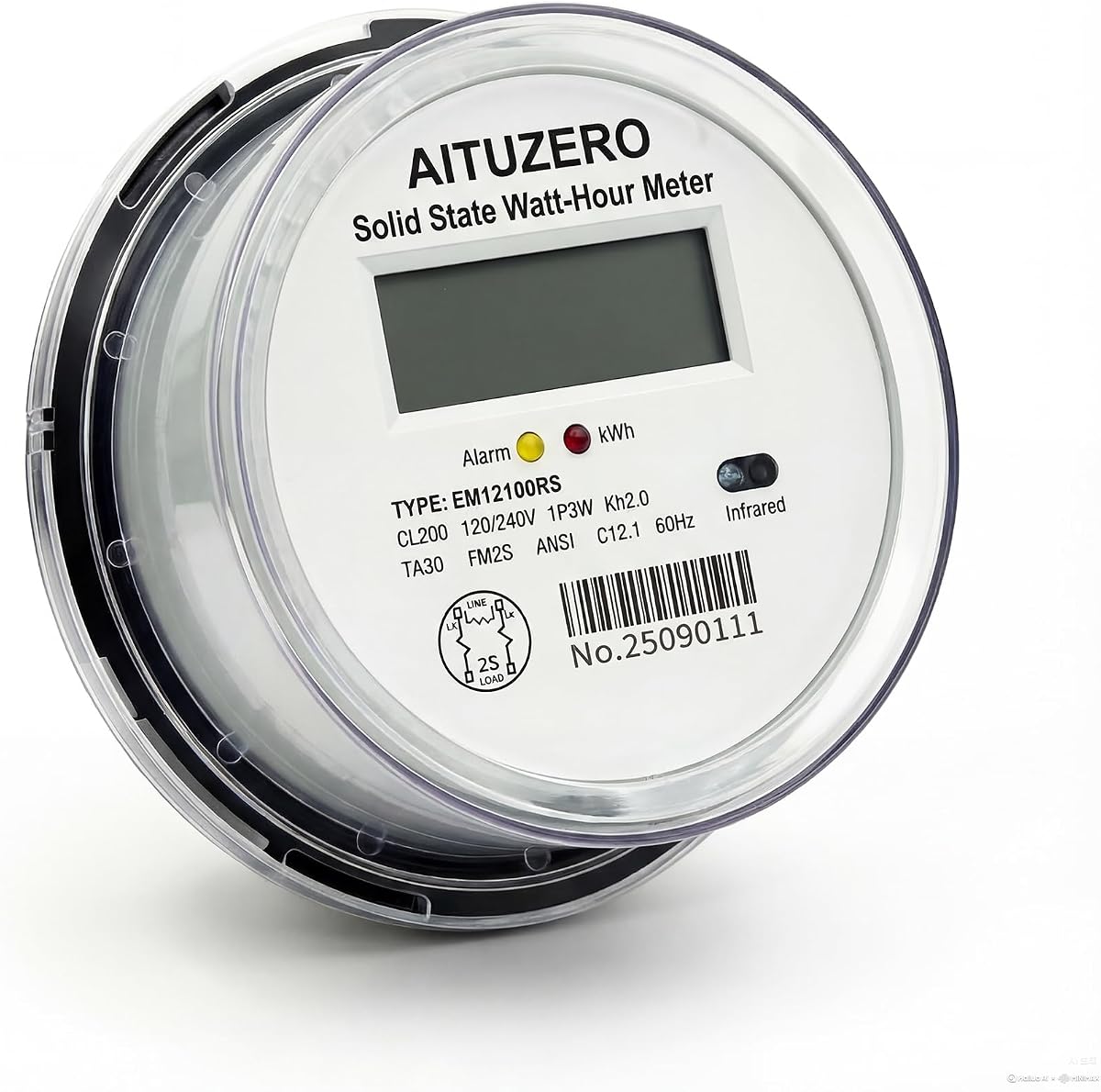
This meter meets strict safety standards while delivering precise measurements for residential and RV systems. It is built to handle harsh conditions with dust and water resistance.
We may earn a commission when you buy through this link, at no additional cost to you.
The high-definition display ensures intuitive data readouts, making it easy to track power consumption. Its C1S structure allows straightforward installation in compatible 4-jaw sockets.
Like other fixed models, it requires a solid installation process rather than quick portability. The protective features add bulk, but they significantly extend the device's service life.
Ideal for those needing professional-grade monitoring, this unit balances precision with durability. It is a reliable choice for maintaining consistent energy visibility in tough environments.
ANSI C12.1 compliance ensures the meter meets strict electrical safety requirements for all users.
Triple dustproof, waterproof, and pressure-resistant protection ensures stable operation over time.
We may earn a commission when you buy through this link, at no additional cost to you.
This hardwired meter uses a split-core transformer to clamp around wires without cutting them. It is useful for retrofits and light commercial monitoring projects where wiring changes are difficult.
We may earn a commission when you buy through this link, at no additional cost to you.
The split-core design simplifies installation on live conductors, though care is still required for safety. It offers memory retention for settings, ensuring your data persists through power cycles.
The 100A limit may not suit larger RV electrical systems. Also, the fixed nature requires more effort to install compared to plug-in models.
Best for workshop or generator monitoring, this meter provides practical load balancing insights. It is a solid option for those needing flexible hardwired solutions.
The included 100A transformer clamps around conductors, removing the need to cut wires.
Data is stored after power loss, ensuring you don't lose vital tracking information unexpectedly.
We may earn a commission when you buy through this link, at no additional cost to you.
Choosing the right electricity meter for your RV involves understanding your power needs and how you plan to use the device.
Ensure the meter supports your RV's specific voltage and amperage ratings. Most RVs use 120/240V systems, and the meter should be rated for at least 50A if you have a large setup.
Selecting a meter that matches your system prevents overloads and ensures accurate readings.
Decide between plug-in models for temporary or single-appliance monitoring and hardwired or socket-based meters for permanent setups. Plug-in units are easier to install but have lower capacity.
For full system monitoring, a socket-based meter is necessary to measure total energy consumption.
Look for meters that meet industry standards like ANSI C12.1 for reliability. Higher accuracy levels (like 0.5) ensure your usage data is trustworthy for billing or efficiency planning.
Accuracy is critical if you are using the data for financial or detailed technical decisions.
A clear LCD with backlight is essential for reading data in varying lighting conditions. Ensure the display shows key metrics like kWh, voltage, and current clearly.
Visibility matters for quick checks while camping or troubleshooting power issues.
Choose a model that retains data during power outages or unplugging. This ensures you do not lose historical usage trends that help manage long-term efficiency.
EEPROM or similar memory technologies are key for reliable tracking over time.
Outdoor or portable meters should have dust and water resistance to withstand road conditions. Look for units with protective housing for long-term reliability.
Durability reduces replacement costs and ensures continuous operation in tough environments.
Advanced setups may benefit from Modbus or pulse outputs for integration with other systems. These features allow centralized monitoring for multiple RVs or complex electrical networks.
Communication capabilities are valuable for managing larger or more sophisticated energy setups.
For plug-in meters, simply connect the device to a standard outlet and plug your appliance into the meter. Ensure the wattage does not exceed the device's limit to avoid safety issues.
For installed meters, follow local electrical codes and use proper tools to connect wires to terminals. Verify the display is functioning before relying on data for billing or usage decisions.
Regularly clean the display and housing to maintain visibility and prevent dust buildup. Store portable units in a dry place when not in use to protect internal components.
Plug-in meters are best for monitoring single appliances due to their limited capacity. To measure your entire RV, use a socket-based or hardwired meter installed at the main electrical panel.
High-quality meters meeting industry standards offer accuracy within 0.5% to 1%. This precision is sufficient for billing, efficiency tracking, and system diagnostics.
While plug-and-play designs exist, socket-based meters involve main power connections. Hiring a certified electrician ensures safety and compliance with local regulations.
120V meters track standard household power, while 240V meters measure high-power circuits used in larger RVs. Check your system specs before choosing to ensure compatibility.
Yes, many models support bidirectional measurement to track solar input and consumption. This helps optimize charging and understand net energy usage over time.
Most units have a reset button or hold-function to clear cumulative readings. Consult the user manual for specific instructions on resetting values.
Our top picks offer a range of solutions from simple plug-in monitors to advanced submeters for complex setups. Each model provides the accuracy needed to manage your power consumption effectively.
Prioritize safety, installation type, and required features when making your choice. Consider whether you need total system tracking or appliance-level monitoring for your specific needs.
Always check current availability and product details before buying to ensure the model fits your latest requirements. The right meter can help you save energy and avoid unexpected power issues on the road.