
QWORK RC Battery Capacity Checker
4.7Editor score
Affordable multi cell support
Clear digital voltage display
Lightweight portable design
This comprehensive guide compares the top ten Li Ion Battery Tester models available in October 2026 to help you find the perfect device for your specific
Finding the right Li Ion Battery Tester can save you money and extend the life of your rechargeable cells. Whether you are a hobbyist or a professional, accurate data matters.
We evaluated ten top-rated models based on accuracy, ease of use, and compatibility with various battery types like Li Po and Ni MH. Our analysis covers everything from basic voltage checks to full capacity cycling.
Each pick in this list highlights specific strengths such as portability or advanced internal resistance measurement. Please note that prices and availability change frequently so verify details before purchasing.
4.7Editor score

4.7Editor score

4.4Editor score
The following table provides a side-by-side comparison of all ten selected Li Ion Battery Tester models allowing you to quickly identify key specifications and capabilities for your specific application requirements.




This digital battery tester stands out for its advanced features and ease of use. With a high rating from users, it offers detailed insights into battery health and performance metrics.
We may earn a commission when you buy through this link, at no additional cost to you.
It supports BattGO technology which provides full knowledge of cell voltage and working parameters when connected. The auto balancing function ensures individual cells are optimized for better lifespan.
While it is more expensive than basic models, the protocol analysis capabilities like PWM and PPM make it versatile for complex RC setups. The trade-off is justified by the depth of data provided.
Ideal for serious hobbyists who need reliable data on their Li-ion packs. If you value precision and advanced diagnostics this is the top recommendation for your toolkit.
The device supports multi-protocol analysis including PWM PPM and S.BUS for comprehensive receiver testing.
You can use the tested battery as a power bank for mobile devices with QC 2.0 and 3.0 support.
We may earn a commission when you buy through this link, at no additional cost to you.
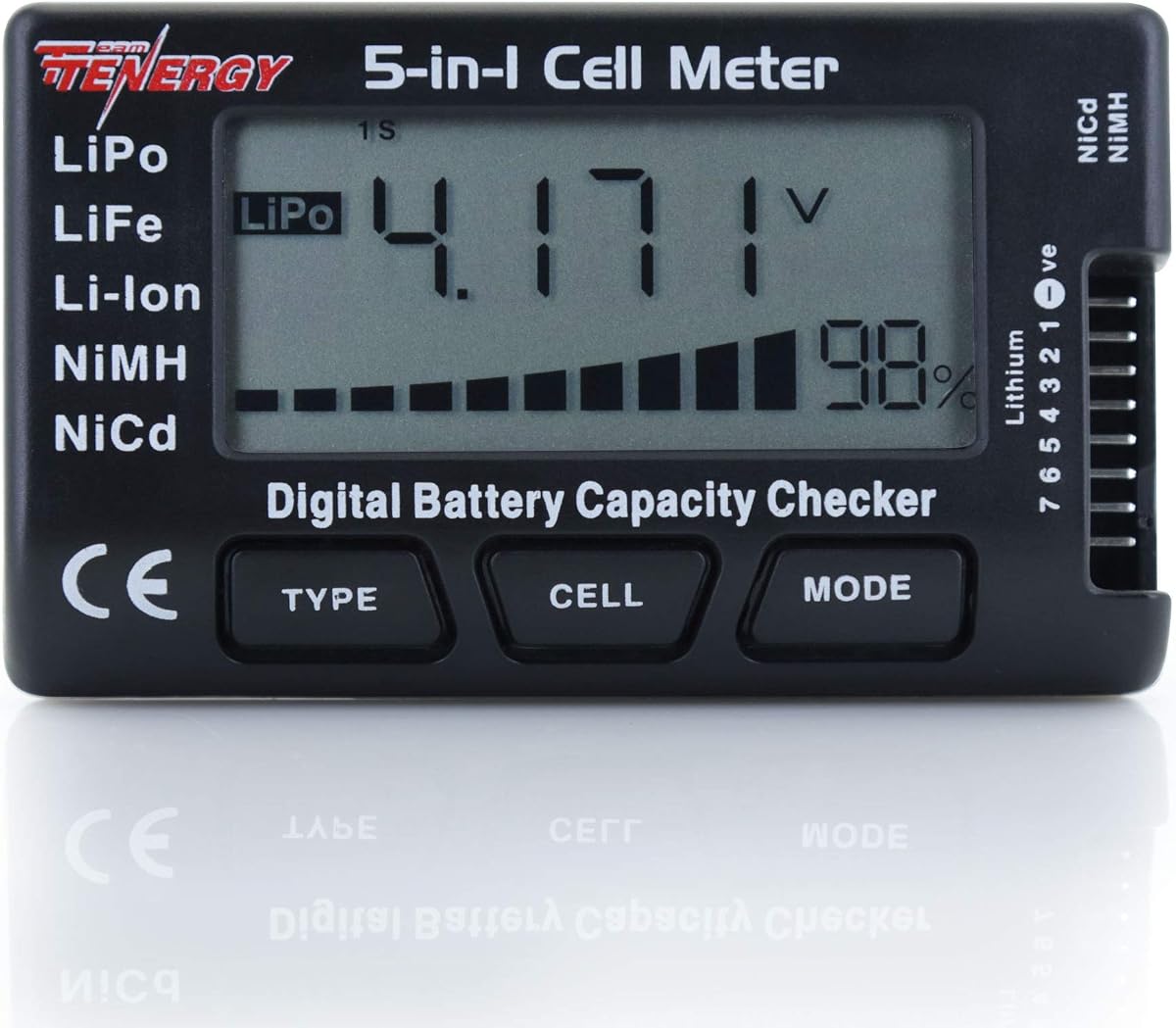
This checker offers excellent value for RC enthusiasts looking for quick field checks. It provides clear voltage information without breaking the bank making it accessible for beginners.
We may earn a commission when you buy through this link, at no additional cost to you.
The digital screen displays total voltage per-cell voltage and the difference between highest and lowest cells instantly. This helps identify weak cells before they cause crashes or poor performance.
It is limited to balance connectors which means it cannot test single loose cells. However for most RC applications this limitation is acceptable given the low cost and portability.
Buy this if you need a reliable tool for drones and cars at a minimal investment. It simplifies battery monitoring for casual users who do not need complex diagnostics.
Its lightweight design makes it easy to carry in a flight bag for instant readings on the field.
The screen shows max and min cell voltage differences to ensure pack balance before flight.
We may earn a commission when you buy through this link, at no additional cost to you.
This premium tester integrates smart technology to monitor battery cycles and health efficiently. It is designed for users who want deep insights into their Li-ion battery performance over time.
We may earn a commission when you buy through this link, at no additional cost to you.
The advanced auto balancing algorithm ensures every cell is well balanced extending the overall life of your packs. Additionally it can act as a power bank with high output capabilities for charging devices.
While the price is higher the versatility and smart features justify the cost for professionals. The ability to connect via XT60i or balance leads adds significant convenience for diverse setups.
Opt for this model if you manage multiple battery types and need high performance features. It combines testing and charging utility into one robust device for demanding environments.
Supports Qualcomm QC 2.0 and 3.0 for fast charging mobile devices up to 12V 2A.
Cooperates with BattGO technology to provide full knowledge of detail parameters like cell voltage.
We may earn a commission when you buy through this link, at no additional cost to you.
This device is perfect for workshops or enthusiasts who need to test multiple 18650 batteries at once. The eight independent channels allow for efficient batch testing without interference between units.
We may earn a commission when you buy through this link, at no additional cost to you.
It features a 2.4 inch color screen that displays real-time voltages and currents during charge or discharge cycles. The active heat dissipation system ensures stable performance even during long duration tests.
The main downside is its larger size which might not fit on a crowded desk easily. However for accuracy and throughput the design offers substantial benefits for serious battery management tasks.
Choose this if you need to validate capacity and health for multiple cells simultaneously. It is a robust tool for anyone building custom packs or maintaining large battery inventories.
Eight channels allow you to test multiple batteries at the same time efficiently.
Active heat dissipation ensures accurate results even during extended charging or discharging cycles.
We may earn a commission when you buy through this link, at no additional cost to you.
This meter serves multiple functions by estimating voltages and balancing battery packs without extra accessories. It is powered directly by the battery pack being tested making it convenient for field use.
We may earn a commission when you buy through this link, at no additional cost to you.
At a discharge rate of 180mA it can discharge lithium-based packs to an adjustable threshold which helps optimize runtime. The balance function ensures individual cells are matched to extend the overall lifespan.
It requires a balance or Hitech connector so it may not work with all battery types directly. For RC users with standard connectors this limitation is minor compared to the functional versatility offered.
This is a great choice for users who want a simple tool that manages and tests in one go. It simplifies the maintenance process for Li-ion and NiMH packs significantly.
Helps to optimize battery performance by ensuring individual cells are balanced properly.
Powered by the testing battery pack so you do not need an external power supply.
We may earn a commission when you buy through this link, at no additional cost to you.
This universal tester is designed for everyday household batteries including Li-ion and alkaline types. The magnetic slider secures the battery firmly so you can test with one hand easily.
We may earn a commission when you buy through this link, at no additional cost to you.
It displays precise voltage and health status indicating if a battery is good weak or poor. The USB-C rechargeable design means you do not need to replace batteries in the tester itself.
While it is great for general use it is not as specialized for high-performance Li-ion packs as dedicated RC meters. This makes it ideal for home storage rather than professional analysis.
Buy this for a practical solution to check remotes and toys quickly. Its simplicity and universal support make it a handy addition to any home utility kit.
The magnetic slot ensures the battery stays in place during the test process.
Rechargeable unit lasts up to 15 hours so you avoid frequent battery changes.
We may earn a commission when you buy through this link, at no additional cost to you.
This module is specially used to check capacity internal resistance and power of 18650 batteries. It integrates charge and discharge functions which saves tedious operations when replacing equipment.
We may earn a commission when you buy through this link, at no additional cost to you.
The 1.77 inch screen displays internal resistance voltage current and battery level for comprehensive analysis. You can measure up to 99999mAh with a discharge load of 10W for practical testing.
Users should note that manual availability requires a specific process with the seller which may be inconvenient. Also measurement error is about 10% which is acceptable for hobbyists but not lab grade.
If you want a dedicated tool for 18650 cells this module offers detailed data at a low cost. It is suitable for DIY projects where moderate accuracy is sufficient.
Supports four-channel capacity and internal resistance measurement for thorough battery analysis.
Integration of charge and discharge saves tedious disassembling and assembling operations.
We may earn a commission when you buy through this link, at no additional cost to you.
This 8 in 1 cellmeter offers precise voltage testing for LiPo Li-ion NiMH and Nicd batteries. It is a must-have tool for any RC enthusiast needing quick checks on battery health.
We may earn a commission when you buy through this link, at no additional cost to you.
The large LCD screen and one-click measurement button make it easy to use even for those new to battery testers. It ensures safety with a minimum operating voltage of 1.2 volts.
While it lacks advanced internal resistance details it covers the essentials for voltage and capacity well. The simple design reduces the learning curve for beginners entering the RC hobby.
Choose this for reliable basic monitoring of your RC devices. It provides enough data to ensure your batteries are safe and ready for the next flight or drive.
The large LCD screen and one-click button make it easy to use for everyone.
Minimum operating voltage of 1.2 volts prevents damage to your devices and batteries.
We may earn a commission when you buy through this link, at no additional cost to you.
This lightweight and compact meter delivers excellent performance for field checks. It applies to check batteries quickly and conveniently allowing you to read your cell voltage at a glance.
We may earn a commission when you buy through this link, at no additional cost to you.
It shows battery cell voltages total voltages and the voltage gap between highest and lowest cells. This data helps you assess remaining battery capacity percentage effectively before using your device.
The trade-off is a very small screen which might be hard to read in bright sunlight. However its durability and low price make it an excellent backup tool for RC users.
Get this for a budget-friendly portable option that gets the job done. It is ideal for quick checks where portability is more important than detailed analytics.
Displays the voltage gap between highest and lowest cells to identify unbalanced packs.
Provides remaining battery capacity percentage for quick assessment of charge levels.
We may earn a commission when you buy through this link, at no additional cost to you.
This tester uses patented Pulse Load Technology to measure charge and life under a load making it more reliable than just a voltage readout. It is simple to use with no switches or settings.
We may earn a commission when you buy through this link, at no additional cost to you.
A fully automatic 2-second test easily identifies weak or failing batteries including Li-ion and NiMH types. It saves you money by allowing you to test remaining percentage before recycling.
The analog display does not give detailed numbers which some might find limiting. But for a quick yes or no health check it is extremely effective and reliable for home use.
Choose this if you want a durable no-fuss tool for general household batteries. Its compact design and automatic function make it a favorite for those who value simplicity.
Pulse Load Technology measures charge and life under a load for more reliable results.
Fully automatic two-second test with no switches or settings to adjust.
We may earn a commission when you buy through this link, at no additional cost to you.
Choosing the right tester depends on your specific battery types and the depth of data you need. This guide breaks down the key factors to consider before buying.
Ensure the tester supports the specific chemistry and size of batteries you use. Some devices are specific to Li-ion packs while others handle NiMH or alkaline as well.
Check the voltage range and connector types like balance leads or standard probes to avoid compatibility issues with your existing collection.
Accuracy is critical for determining the true health of your batteries. Look for testers with low error rates especially when measuring internal resistance.
Precision ensures that small variations in cell voltage are detected which helps in balancing packs effectively.
A clear and large screen makes it easier to read data quickly. Digital LCDs are common and provide direct numerical values for all parameters.
Color screens can offer more intuitive status indicators which are helpful in varying lighting conditions.
Decide if you need basic voltage checks or advanced features like capacity cycling and balancing. Advanced testers provide more value but often cost more.
Some models include internal resistance testing which is key for assessing battery health beyond simple voltage levels.
If you test batteries in the field a compact and lightweight design is essential. Portability ensures you can carry the tool easily in a bag or pocket.
Rechargeable testers are more convenient than those that require disposable batteries for their own operation.
Price varies significantly from basic models to advanced digital units. Determine your budget and balance it with the features you really need for your projects.
Check for warranty coverage to ensure you have support in case of defects or failures during normal use.
A user-friendly interface reduces the time spent setting up tests. Look for one-click measurements or intuitive button layouts that simplify the workflow.
Manuals and customer support are also important factors when learning how to use complex testers effectively.
Internal resistance measurement is a key indicator of a battery's health and ability to deliver power. Lower resistance usually means a healthier and more efficient battery.
Testers that include this feature help you identify weak cells that might cause problems under heavy load conditions.
Start by ensuring the tester is charged or has fresh batteries before you begin any testing. Connect the battery securely to the appropriate terminals or balance connector to avoid loose readings.
Select the correct battery type and chemistry on the device to get accurate results. For multi-cell packs use the balance connector to read individual cell voltages for better analysis.
After each use store the tester in a dry and cool place to prevent damage. Clean the probes regularly to maintain good contact and extend the device's lifespan.
Beginners often benefit from simple models like the RC Cellmeter 8 which offer easy operation and clear displays. These tools provide essential voltage and capacity data without complex setup requirements.
Yes advanced models support capacity measurement by discharging the battery and calculating the total mAh delivered. This gives you a true view of how much charge the battery can hold.
Internal resistance is crucial as it shows how well the battery can deliver power without losing voltage. High resistance can indicate a worn-out cell that may fail under heavy load.
For multi-cell Li-ion packs a balance connector is essential to test individual cell voltages safely. Single cell testers might not work with these packs unless they have specific adapters.
It is a to test batteries before and after usage to monitor their health over time. Regular checks help identify degradation early and prevent unexpected failures during use.
Digital testers provide precise numerical data and are easier to read accurately. They are generally preferred for technical applications where exact voltage and resistance values matter.
Check that the battery is connected correctly and that the device is properly calibrated. Ensure the battery type selected matches the actual battery to avoid incorrect readings.
Many testers are versatile and support NiMH NiCd and alkaline batteries in addition to Li-ion. Always verify the supported types in the product specifications before purchasing.
We reviewed ten top models ranging from budget-friendly options to advanced testers with balancing features. The ISDT BG-8S Battery Meter stands out for its smart technology while the QWORK RC checker offers great value.
Prioritize compatibility and accuracy based on your specific needs such as RC hobby or home use. A tester that fits your workflow will save time and improve your battery maintenance routine.
Always verify current prices and stock before making your purchase since these details can change. We hope this guide helps you find the perfect Li Ion Battery Tester for your projects.